Did you know you can find places in the heart of the capital where time seems to slow down? Vilnius is home to dozens of parks and smaller green spaces for a break or a picnic. Here you can escape the daily rush, take a peaceful walk, or meet loved ones for a picnic. Some parks invite you to enjoy historic surroundings, while others offer more nature sounds and a sense of space just for you. Often, these places are right next to us, but we walk by without realizing how much they have to offer. That’s why we invite you to rediscover Vilnius parks for a break or a picnic.
Vilnius parks for a break or a picnic: from beloved green areas to hidden corners, the city pauses and offers a breath of nature.

Where to find your green haven? Vilnius parks for a break or a picnic
Vilnius is a city in a forest – a true city of elves. You can count its parks, but the shades of green are countless. When was the last time you had a picnic in a meadow, with the city buzz, busy streets, and skyline just in the background? Vilnius parks for a break or a picnic – use “Neakivaizdinis Vilnius” recommended list of parks and gardens for a break or a picnic and dive into beautiful nature experiences in the capital. In addition, we recommend exploring the playful sculpture route through Vilnius streets, which will surely bring lots of fun moments and discoveries.
Vilnius parks for a break or a picnic (click on the name to easily navigate the list)
Jeruzalė pond park
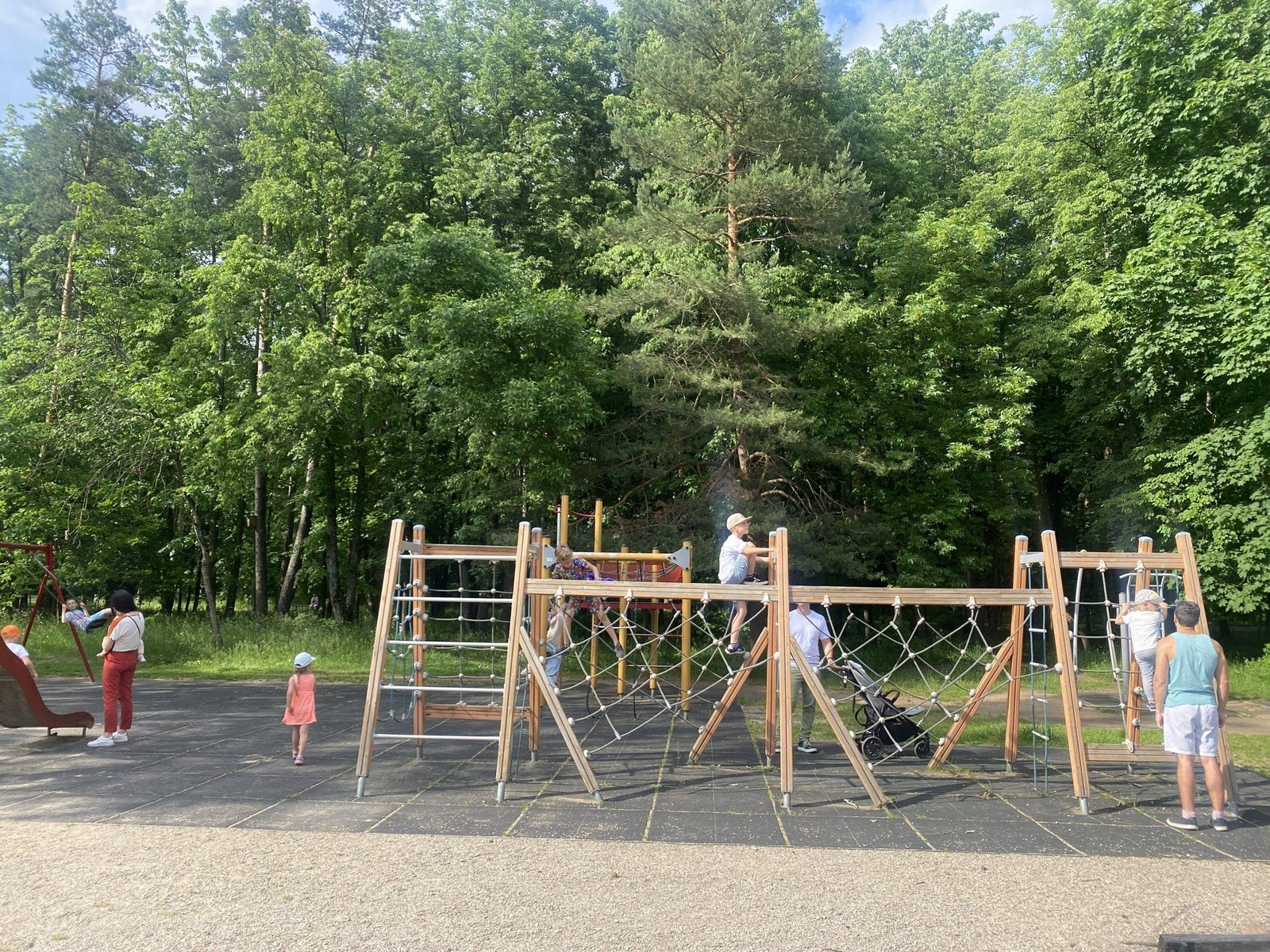
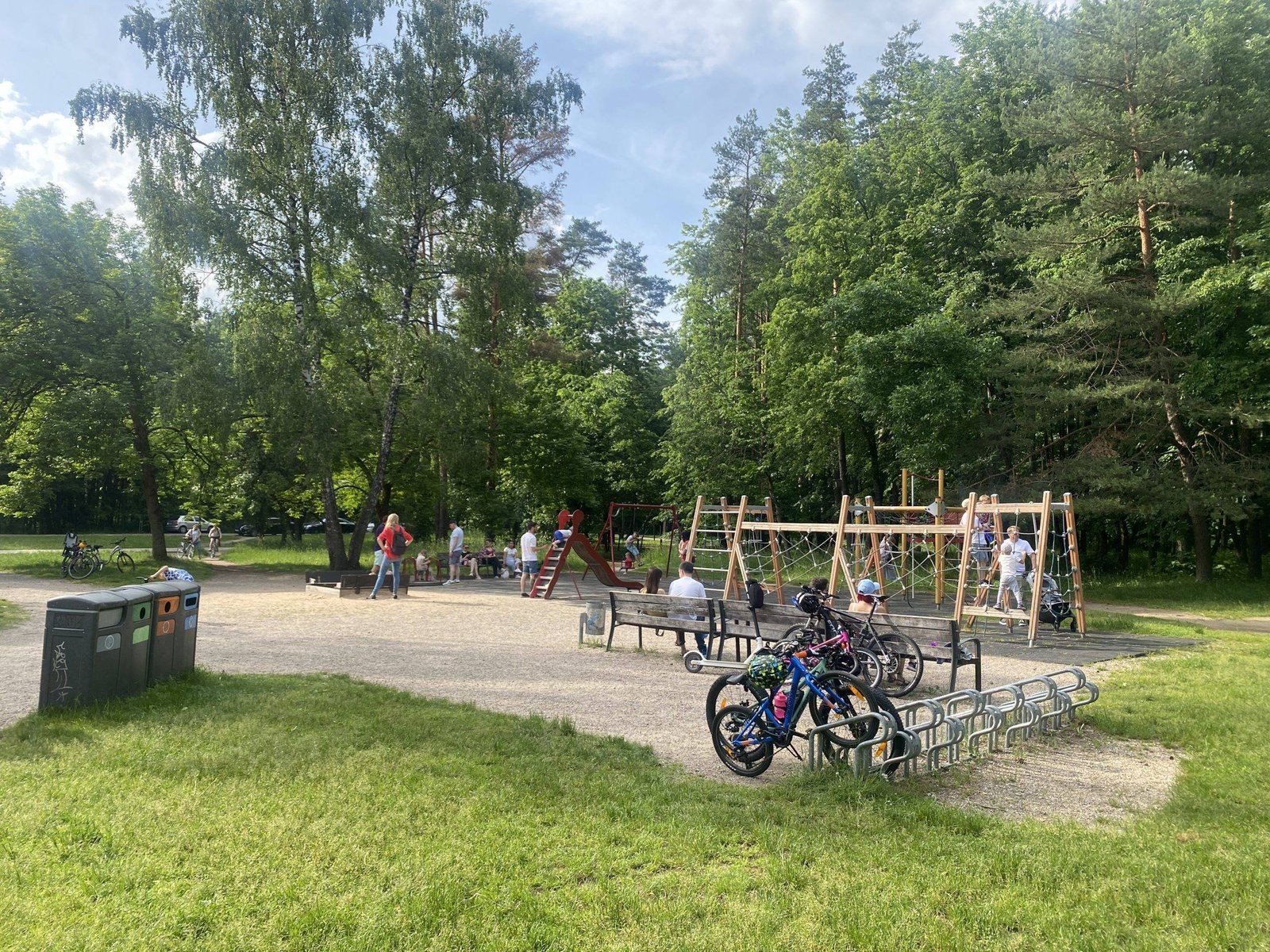
To begin with, the area around Jeruzalė pond has changed beyond recognition. Now, you can walk around the water body with a fountain in the middle on a special path with terraces and resting places, or, if you prefer, turn onto peaceful forest trails. Along the path, you’ll also find playful information boards about the beavers living here, the great bitterns hiding in the reeds, and even some gnomes. In addition, you’ll come across one of the oldest lindens in Vilnius, and a modern children’s playground has been installed nearby. Finally, Jeruzalė pond is located within the territory of the Verkiai manor.
Location: Jeruzalės St. (entrance from Žalieji Ežerai bus stop)
↩︎ Back to list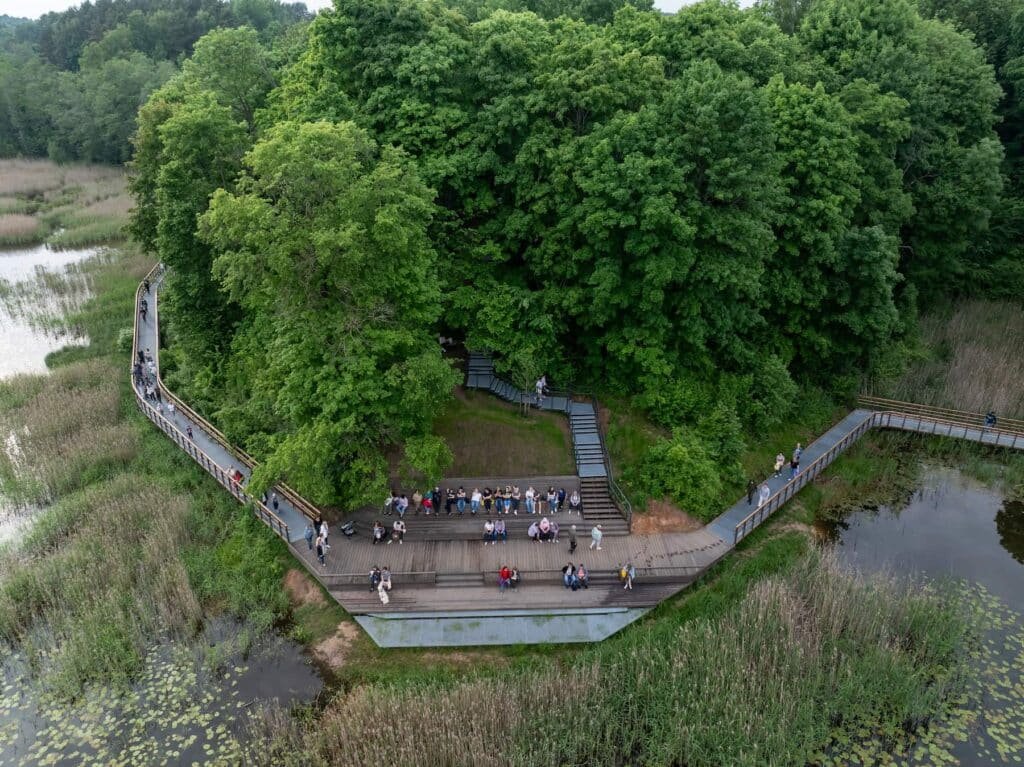
Aušros vartai garden
If you boldly turn through the yards to the left of the Gates of Dawn towards the “Domus Maria” hotel, you’ll reach the entrance to… the Middle Ages. Indeed, after entering through the gates of Aušros vartai garden, you can feel like you’re in the 16th century. Here, the walking path stretches along the defensive wall of Vilnius, the bells of St. Teresa’s Church ring mysteriously, and you can’t hear any city noise. In the former Discalced Carmelite Monastery courtyard, an inner garden with a fountain, rose beds, and cross-shaped alleys was installed in the summer of 2025. The courtyard is open every day from 8 am to 8 pm, but this is a sacred space, meant for contemplation, spiritual renewal, silence, and reading.
Location: inner courtyard of St. Teresa’s Church (Aušros Vartų St. 14)
↩︎ Back to list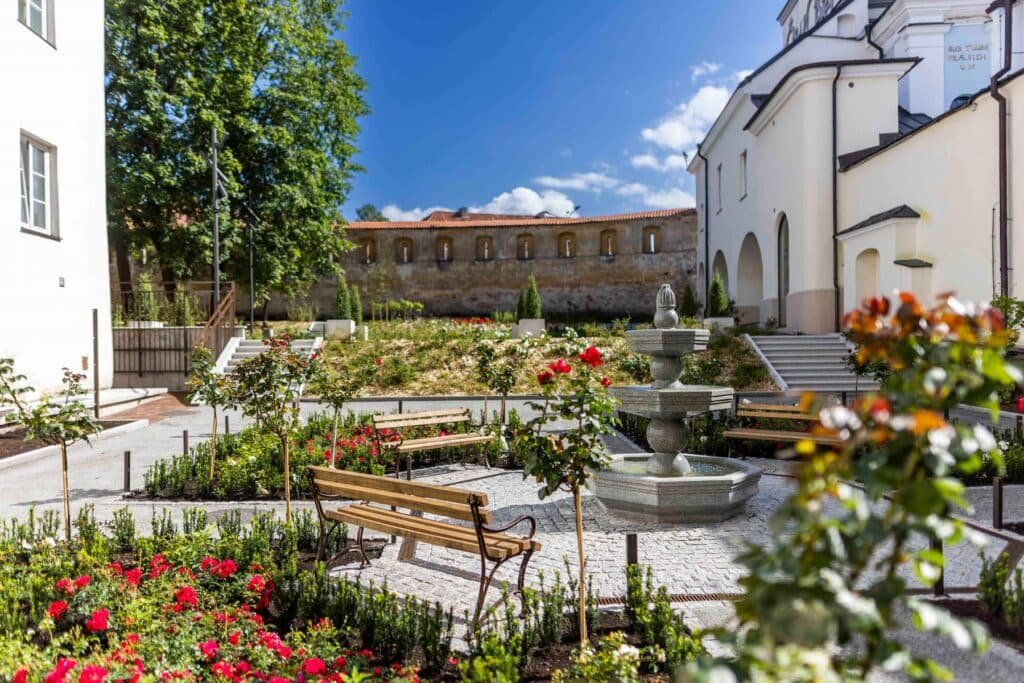
Jomantas park
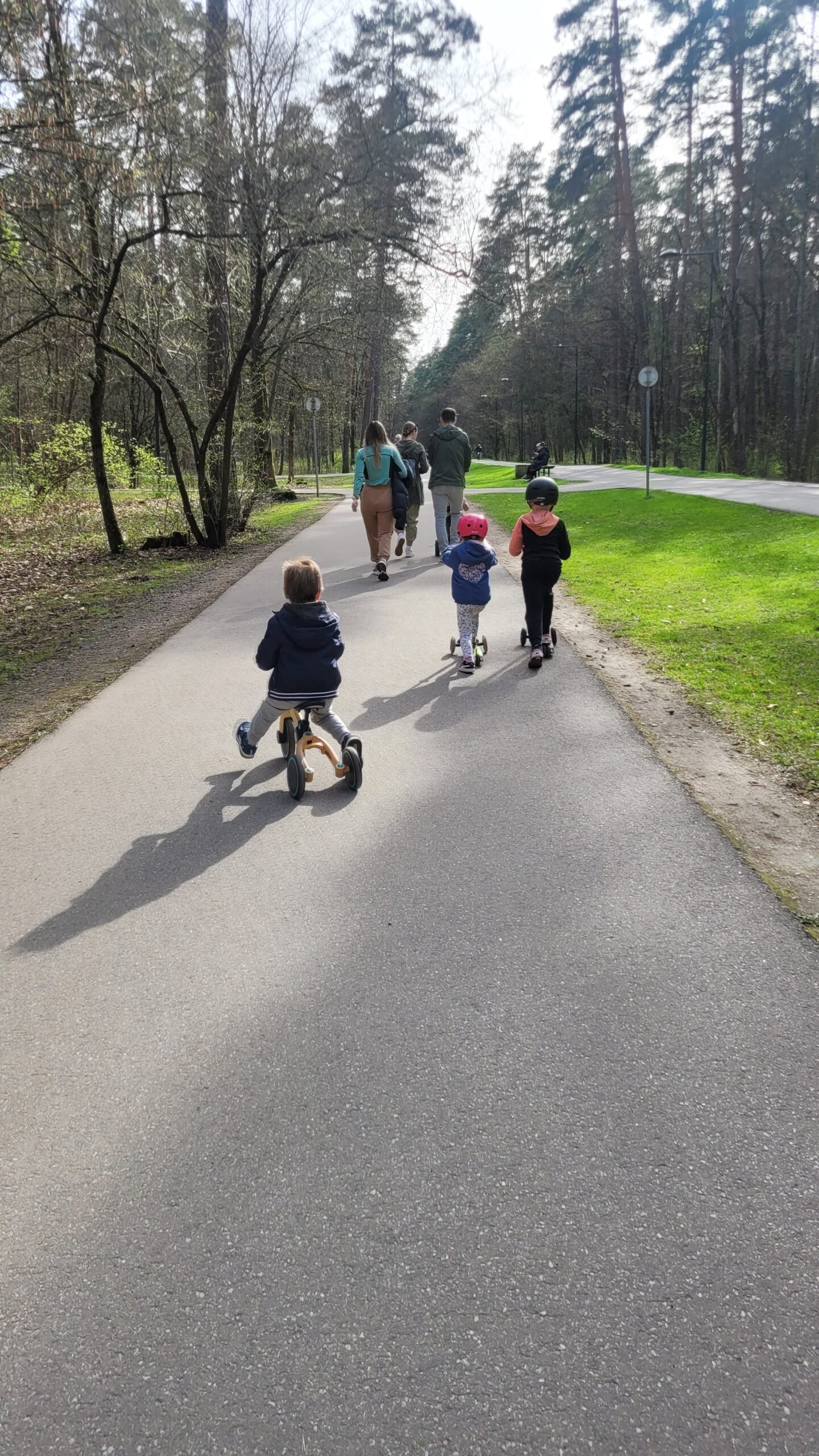
Jomantas park, located in Baltupiai, is a forest park. Here, giant pines grow, as well as birch groves; the smallest birds in the country – goldcrests – chirp, great tits, woodpeckers, pied flycatchers nest, squirrels, badgers, and other green Vilnius residents live here. You can walk along paved paths and rest on benches. The park features a section of the 100 km trail around Vilnius.
Moreover, in this park, thumb-sized little people have taken up residence! They hide in their miniature houses. The gnome village, which you’ll notice while walking the forest path along the park’s edge, consists of Vinkšnos village, a house in the rock, and a treehouse village. Next to the houses, you’ll find traces left by their mysterious inhabitants: an axe, stacked firewood, a broom, or even a lamp made from an acorn. The houses were created by Agata Četverikova on behalf of “Vilnius City Parks.”
Location: between Baltupis and Kalvarijų streets (gnome houses at Didlaukio St. 21B)
↩︎ Back to list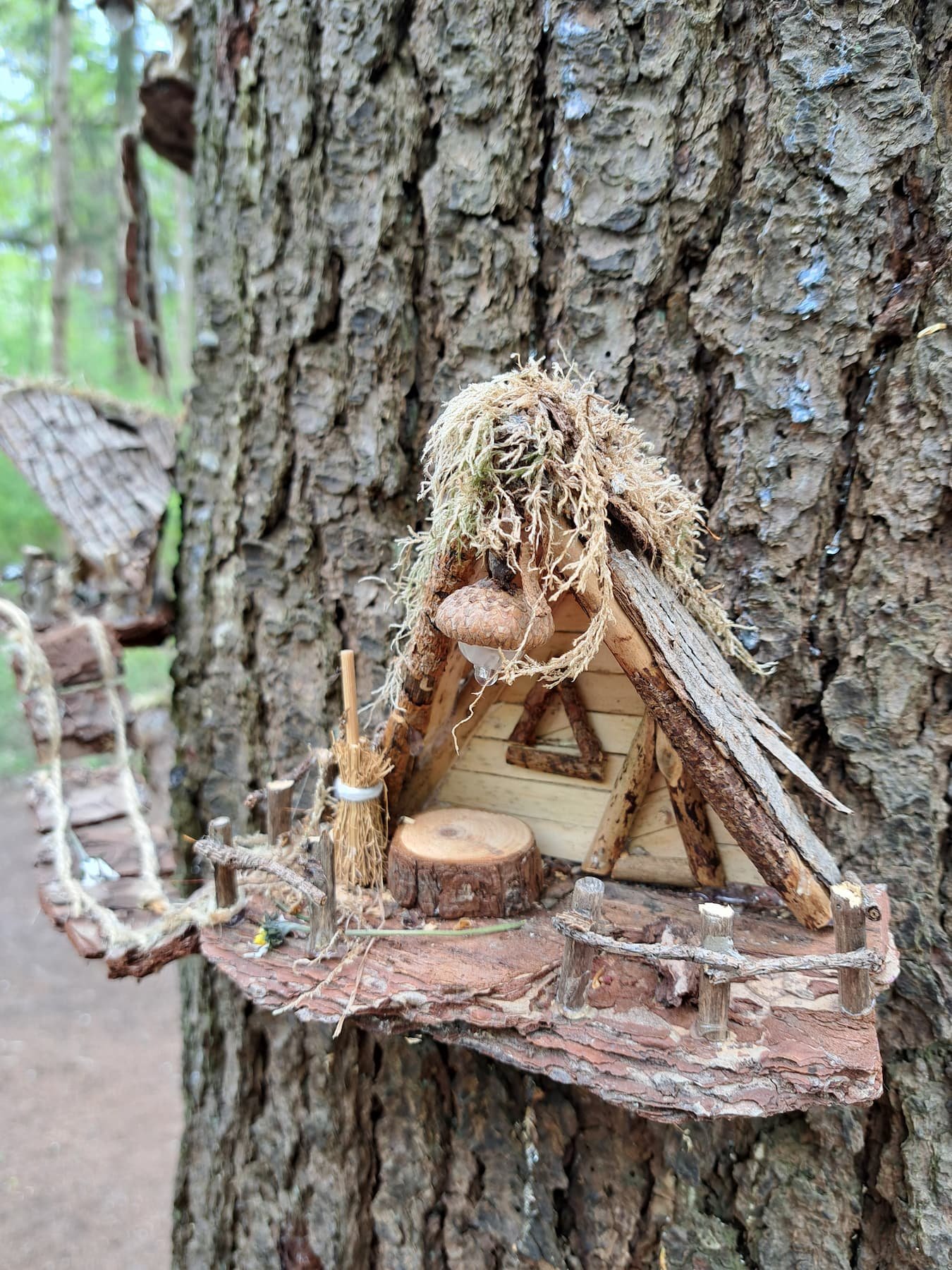
Lutheran garden
Next to the Marriage Palace, you can find the newly renovated, extremely calm, and lushly green Lutheran garden. Indeed, this is a real haven from the city’s bustle. In the early 19th century, this area served as the cemetery of Vilnius Evangelical Lutherans, where for 150 years, scientists, artists, doctors, clergy, and officials were buried.
After World War II, the cemetery was liquidated, and the neoclassical chapel was demolished. Today, the garden’s memorial signs and information boards remind visitors of the site’s history. Furthermore, in the remaining authentic cemetery wall, plaques in the niches list the names of the most notable people buried here. The garden is also full of benches and walking paths, making it an ideal spot for peaceful reflection.
Location: on Tauras Hill (entrance from the Marriage Palace)
↩︎ Back to list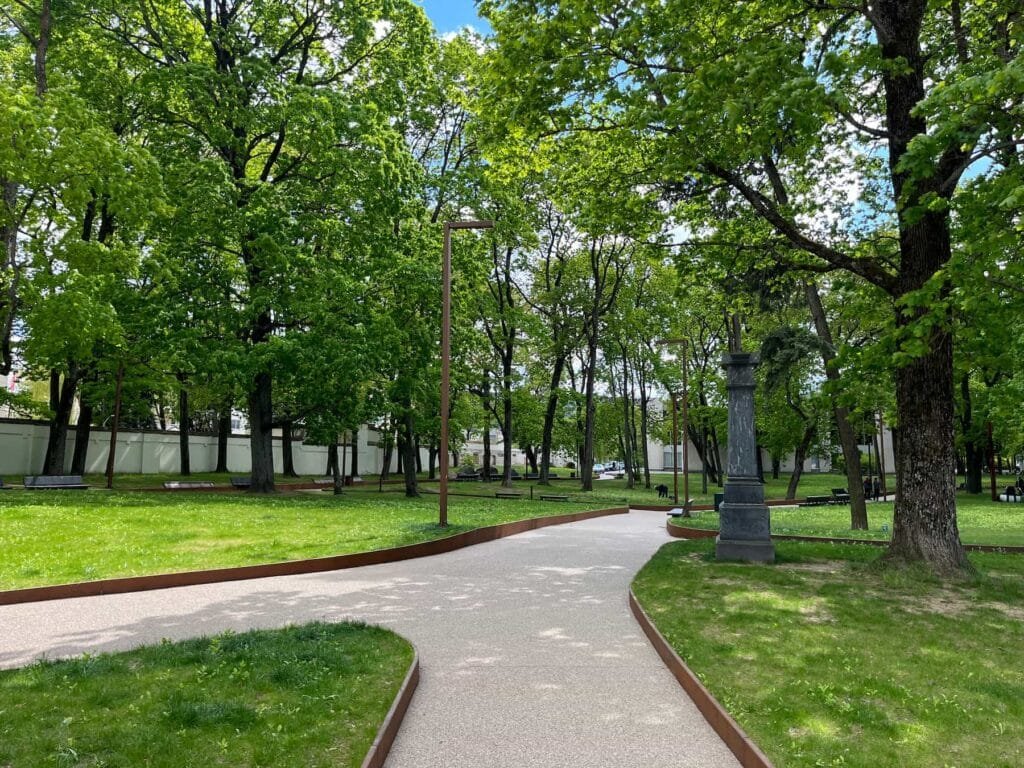
Neries senvagės park
To begin with, this park can take you back ten thousand years, to a time when the old Neris riverbed flowed where today’s ponds are found. Nowadays, this is a modern, well-developed recreational area that has nevertheless retained its ancient geological origins.
In addition, you’ll now find the banks of the valley’s ponds – dating back to the era of mammoths and the Ice Age – adapted for relaxation: there are stairs, wooden terraces over the water, a children’s playground, an outdoor sports area with fitness equipment, a petanque court, a dog training area, and green spaces for relaxation. Along the shores and in the water, you’ll also find reeds, water lilies, and other aquatic plants.
Furthermore, one of the ponds features an unexpected sculpture by Linas Šinkūnas, “Calm Man.” A person’s head submerged in water encourages reflection on humanity’s place in nature. And if you walk with your head down along Linkmenų Street next to this pond, you won’t miss the “Art Path” installation – six transformed manhole covers turned into art.
Location: Linkmenų St.
↩︎ Back to list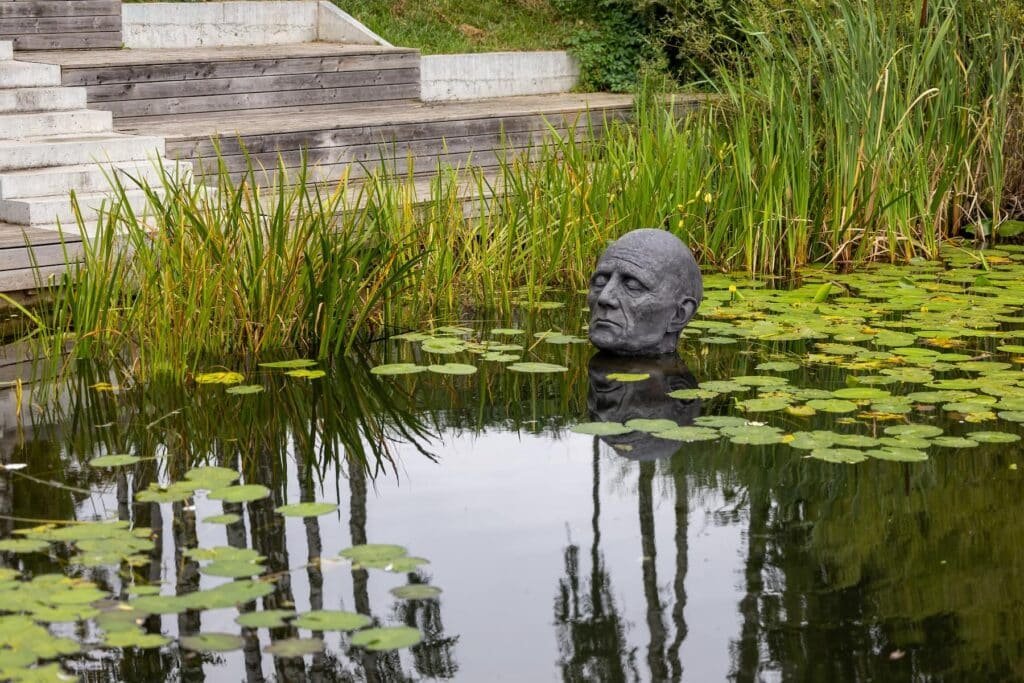
Reformatai garden
The area near Pylimo Street has changed beyond recognition. To begin with, walking paths now crisscross the park, flowerbeds bloom, there are plenty of benches, and an impressive curved pergola has been planted. In the western part, children’s laughter rings out, where slides, a climbing wall, swings, and a sandbox await. Meanwhile, in the shade of trees, you can relax in hammocks and listen to the stream flowing through the park. Notably, since the 16th century, this area has been an Evangelical Reformed cemetery – information boards recall the site’s history and buildings. In the future, a monument to the Reformation and the pioneers of Lithuanian literature is planned.
Location: Reformatų Sq. 1
↩︎ Back to list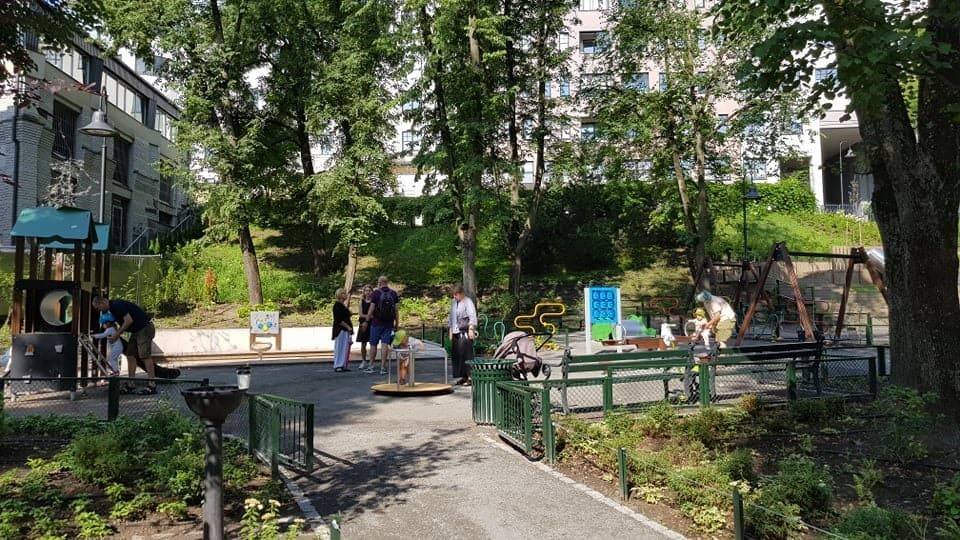
Rain park
Rain and picnics are usually not compatible. However, “Rain park” is the unofficial name of a recreation area in Šeškinė. Most importantly, the unique feature of this territory is Lithuania’s largest stormwater treatment facility and clean water reservoir. In the green space surrounded by trees, you will also find pedestrian and bicycle paths, a children’s playground, benches with tables on the grass, resting spots, and information boards about the local plants.
Interestingly, the clean rainwater reservoir can hold 20,000 cubic meters of water. In the event of a heavy storm, it would fill in just 42 minutes. The maximum depth is 4 meters.
Location: near Ozo and Siesikų streets
↩︎ Back to list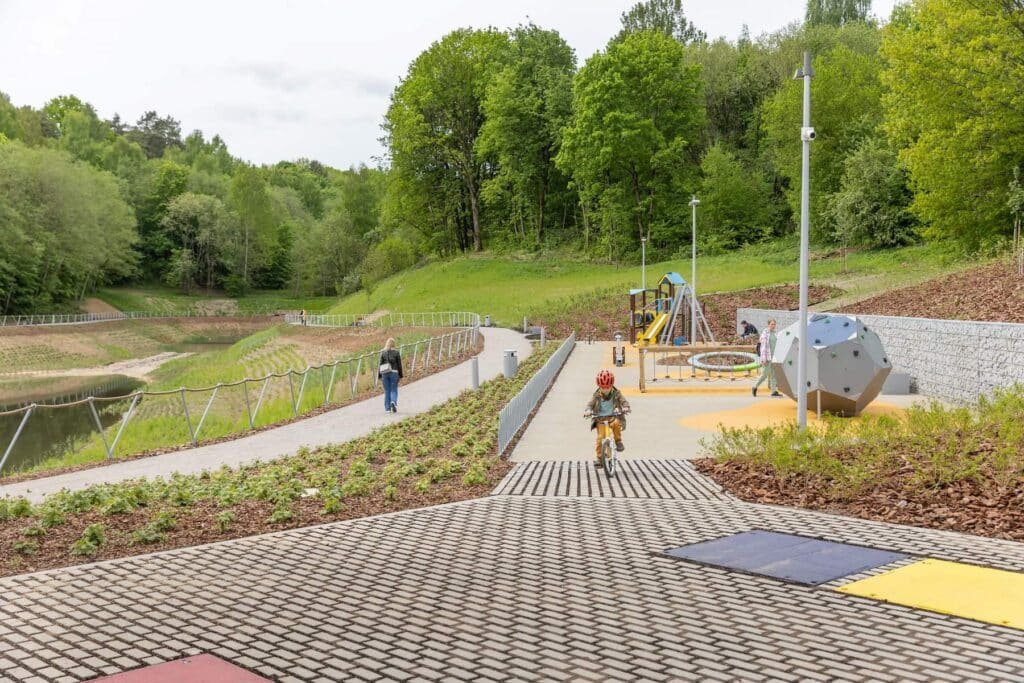
Sapiegų park
Visiting the revived Sapiegų Palace, built by Grand Hetman Kazimieras Jonas Sapiega, you must also visit the palace park. Created in the 17th century, this garden stands as one of the oldest and most prominent examples of formal baroque gardens in Lithuania. Here, mature trees, birds, and people coexist peacefully. Scattered throughout the park are single-story brick buildings – these are 19th-century hospital wings, used for this purpose until 2015. One now houses the startup center “Vilnius Tech Park.”
Contemporary sculptures by Donatas Jankauskas-Duonys featuring human-monkey figures adorn the park, and near the Antakalnis ward, Vytautas Poška’s “howling” iron wolf stands as well. The “City Laboratory” community education center, with a mural by Artur Širin, is also located here, as is the National Visitor Center.
Location: Antakalnio St. 17
↩︎ Back to list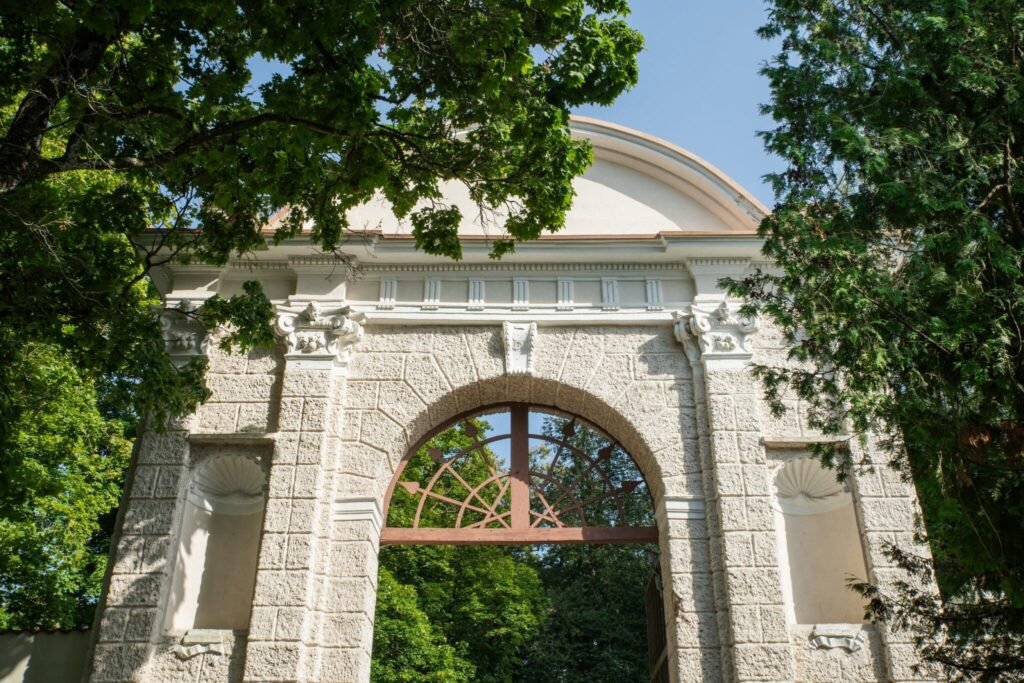
Kūdrų park
“Neakivaizdinis Vilnius” community named this park the most fun place for a picnic in Vilnius on social media. For example, the lawn near the defensive wall bastion (“Barbakanas”) often fills with colorful blankets as people gather to watch hot air balloons rise or admire the Old Town panorama.
Kūdrų park is part of the Missionaries’ Gardens, named after the 17th-century Missionary Order that owned the area. On the slope of Saviour’s Hill, you can still see apple trees, gooseberries, and other remnants of the old garden. The park has three ponds, home to ducks, reed warblers, and nightingales.
Location: Maironio St.
↩︎ Back to list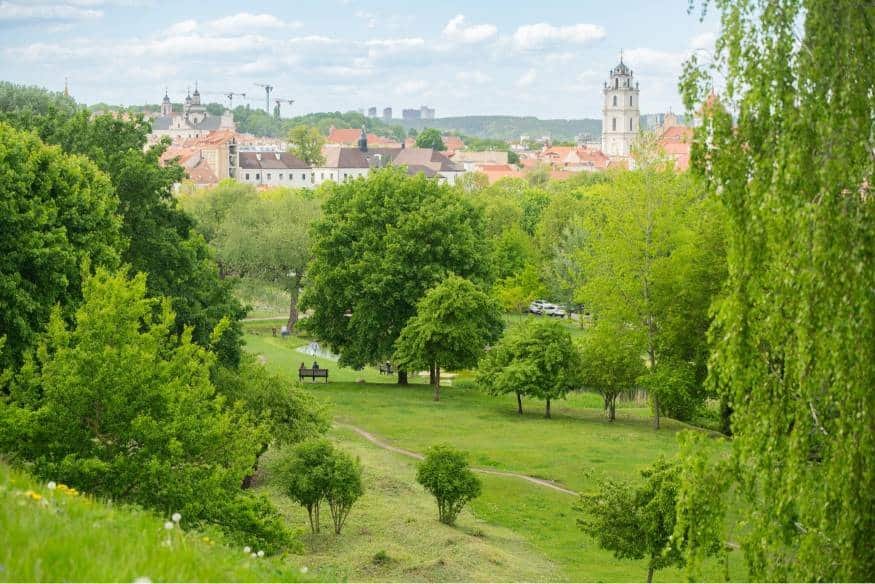
Trakų Vokė manor park
Is Trakų Vokė part of Trakai or Vilnius? Officially – it’s Vilnius. True, the location is rather remote, but you can look at that creatively. Do you enjoy traveling by train? If so, it’s fun to hop on the Vilnius–Vokė train (runs several times a day) and, passing the monkey bridge and old ponds, arrive at the late 19th-century Tiškevičius Manor.
First of all, the impressive century-old gates lead to the recently renovated Trakų Vokė manor with one of the most beautiful landscape-style parks in Lithuania. Moreover, the park was designed by the renowned French landscape architect Édouard André. As you explore, you’ll see a leafy alley, hundreds of wild roses. Also, an apple orchard, a linden hedge, a restored historic fountain, and inviting walking paths.
Inside the palace, which is open to visitors, you’ll find restored interior details – ornate ceilings, authentic floor tiles, and orangery floors, as well as old shutters. Guided tours reveal the renovated cellar, the water tower with a Muslim-style roof, the Tiškevičius chapel-mausoleum, the neo-baroque stables, and other manor buildings.
The manor’s exhibition space regularly hosts exhibitions, events, and educational activities. You might also recognize Trakų Vokė Manor from films such as “Catherine the Great,” “Anna Karenina,” “War and Peace,” “Letters to Sofia,” and more.
Location: Žalioji Sq. 2A
↩︎ Back to list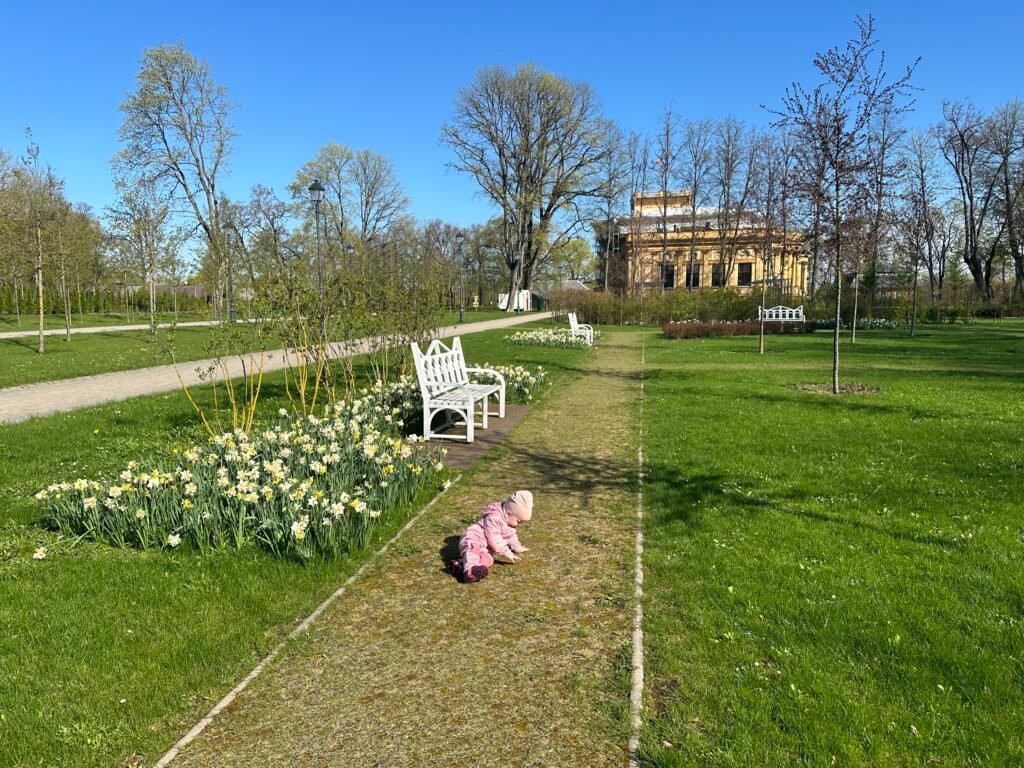
Bernardinai park
Once called Jaunimo Garden and Sereikiškės Park, after its 2013 renovation, it regained its Bernardinai park name. Not only the name but also the original park structure with its rich botanical collection now attracts Vilnius residents and guests. This is the perfect place if you don’t want to stray far from the main Old Town attractions but still crave closeness to nature.
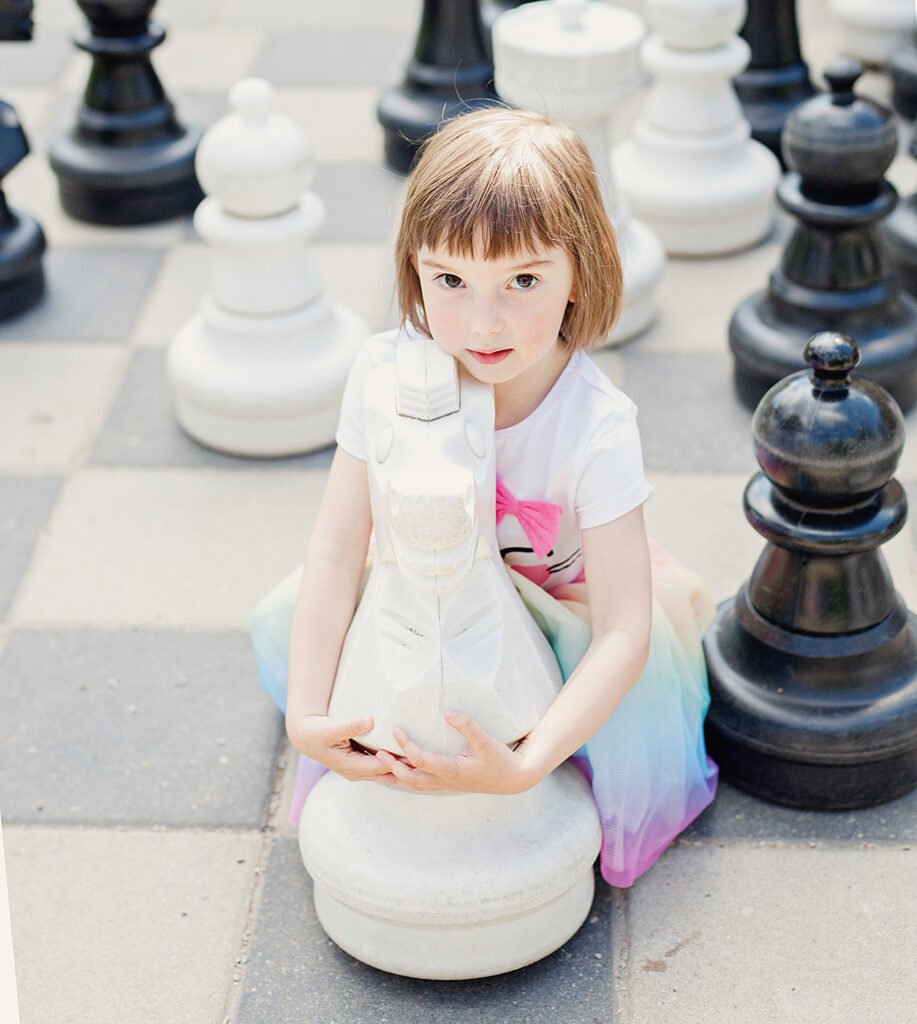
Families with children can enjoy carousels and playgrounds in Bernardinai Park. If you like chess, bring your pieces and use the outdoor tables for a match to the sound of the Vilnelė stream. There is also a petanque court, popular in France. Nature lovers will discover an impressive diversity of plants, including Vilnius’s oldest oak – almost 400 years old – near the entrance from Šv. Brunono Bonifaco Street.
Location: B. Radvilaitės St. 8A
↩︎ Back to list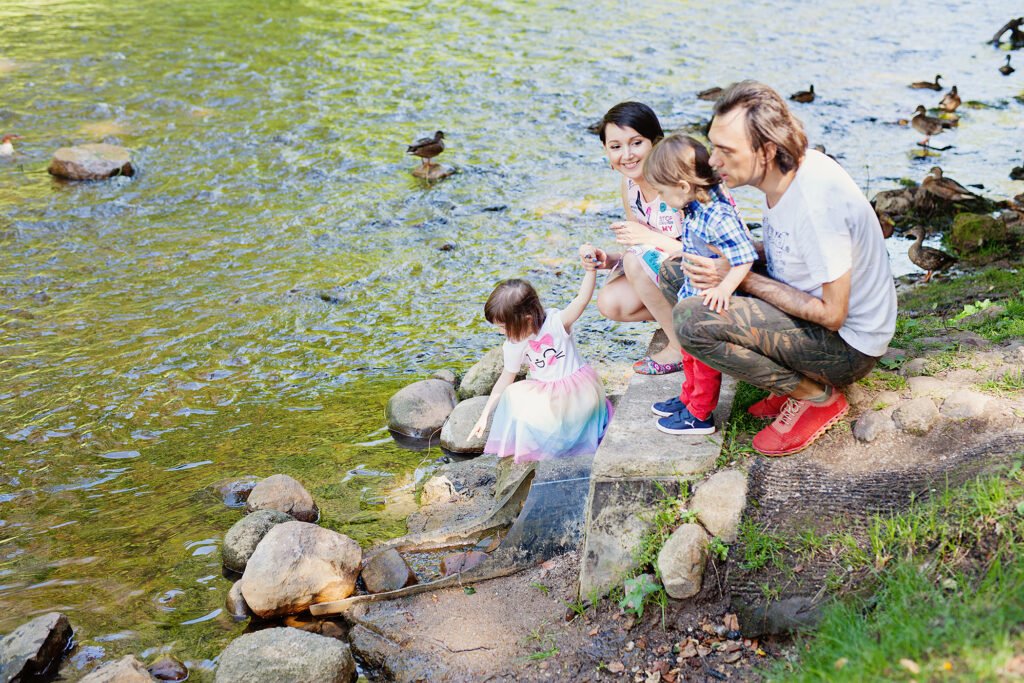
Šeškinė ozas
Nestled between Šeškinė, Fabijoniškės, Baltupiai, Geležinio Vilko Street, and the “Akropolis” shopping center lies a beautiful natural oasis. Most notably, Šeškinė ozas – a unique snake-shaped landform created by a melting glacier – stands out as the park’s main feature. In recent years, they renovated this natural monument, adding new walking paths and informative boards. From several higher points, you can enjoy wonderful landscapes, while near the ozas, in the lowlands, you’ll find a small thermokarst lake. As a result, it’s a perfect spot to read a book or even take a nap. In the nearby forests, you might also meet a hedgehog or a squirrel. Overall, this corner of the city is ideal for cycling as well.
Location: Gelvonų St.
↩︎ Back to list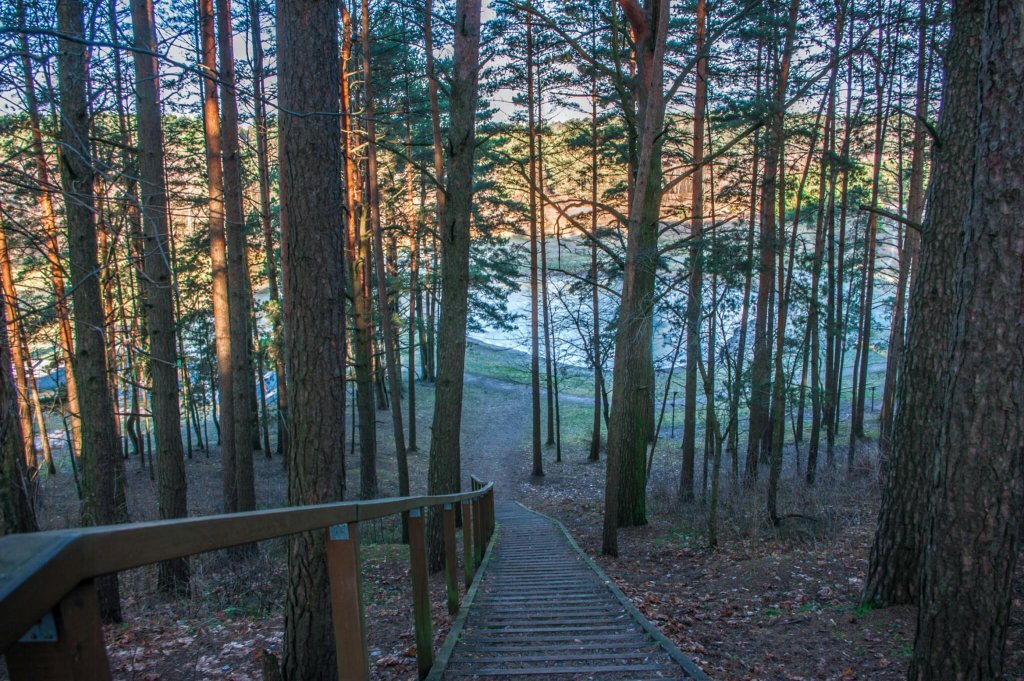
Japanese garden
From now on, people can call Šnipiškės the district between two Japans – from the Chiune Sugihara Sakura Park on Upės Street to the new Japanese garden on Linkmenų Street.
The latter follows the requirements of a traditional Japanese garden, featuring main elements such as a hill symbolizing Mount Fuji, stones, dry rivers, footbridges, a pond, and a waterfall. In spring, visitors are especially drawn by the 20-tree cherry blossom alley. Additionally, the five-hectare Japanese garden preserves old trees and has 700 new plantings. Families with children will also find a playground, lighting, walking paths, benches, and drinking water fountains.
Moreover, the Japanese believe that to regain spiritual balance, you should walk in a garden. For the best experience, relaxing walks are recommended clockwise.
Location: Linkmenų St. 2a
↩︎ Back to list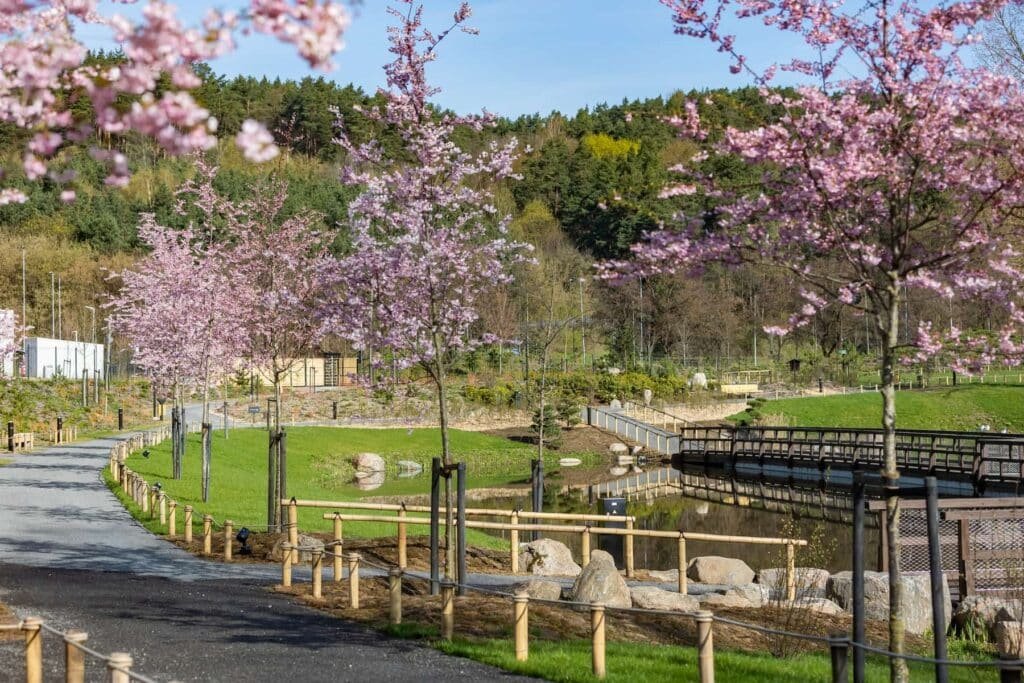
Chiune Sugihara Sakura Park
The cherry blossom festival – hanami – is celebrated not only in Japan. In fact, the Chiune Sugihara Sakura Park on the right bank of the Neris, along Upės Street, becomes the most visited spot in Vilnius every spring. Furthermore, the profusely blooming sakuras leave no one indifferent – people rush to take photos with the pink clouds seemingly resting on the grass.
The 200-tree cherry alley was planted in 2001 to mark the 100th anniversary of Japanese diplomat Chiune Sugihara’s birth. It’s a gift from the Japanese government to Lithuania and Vilnius, honoring a man who saved more than 6,000 Jews during World War II.
Although the sakuras bloom only for a couple of weeks in late April, it is worth organizing a picnic with a book or a cup of tea on the lawn overlooking the Neris at any time of year.
Location: Upės St.
↩︎ Back to list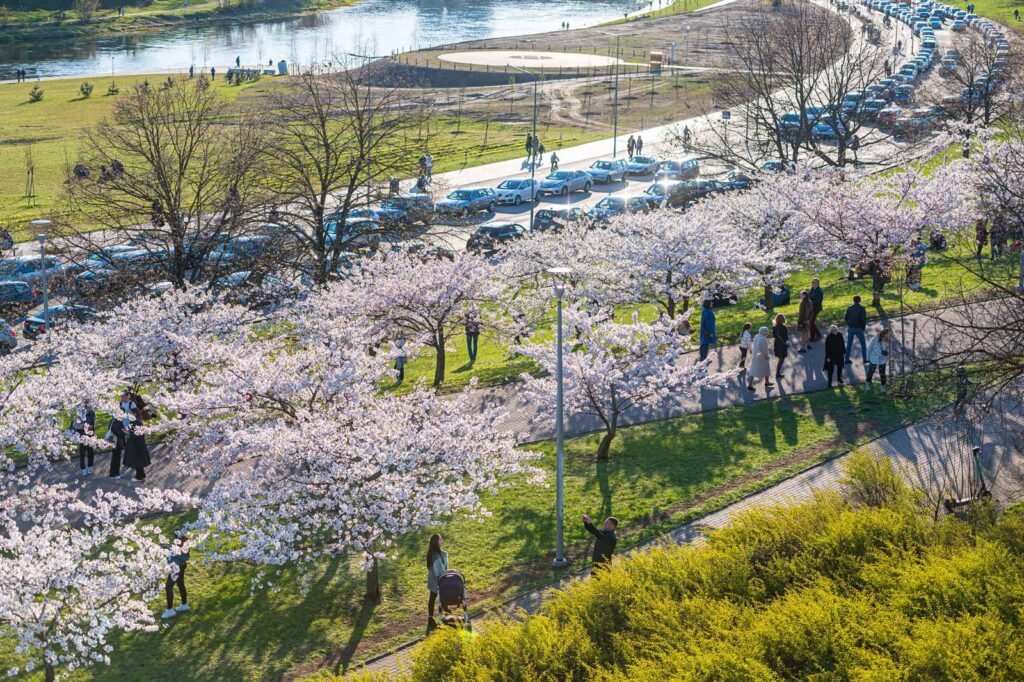
Vilnius University botanical garden in Kairėnai
This is a true treasure trove of flora! About 9,000 plants are grown in the Vilnius University botanical garden in Kairėnai. Some are very familiar, but you’ll certainly find species that transport your mind to distant corners of the world. Kairėnai also features a Japanese-style garden designed for walking. In summer, open-air concerts are often held here. The garden contains charming manor buildings and an old park with ponds. You can see modern achievements in the Green Building. It uses geothermal heating and solar collectors, and offers a terrace with panoramic views of the garden. Kairėnai is farther from the city center, so plan to spend at least a couple of hours here.
Location: Kairėnų St. 43
↩︎ Back to list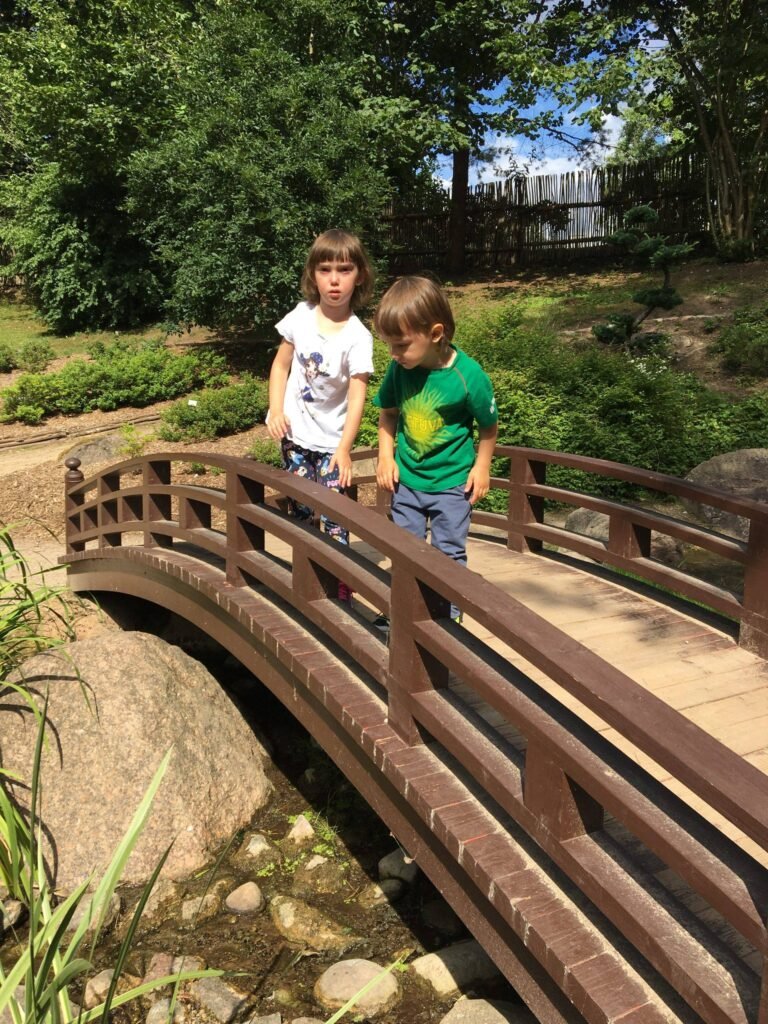
Fairy Tale park
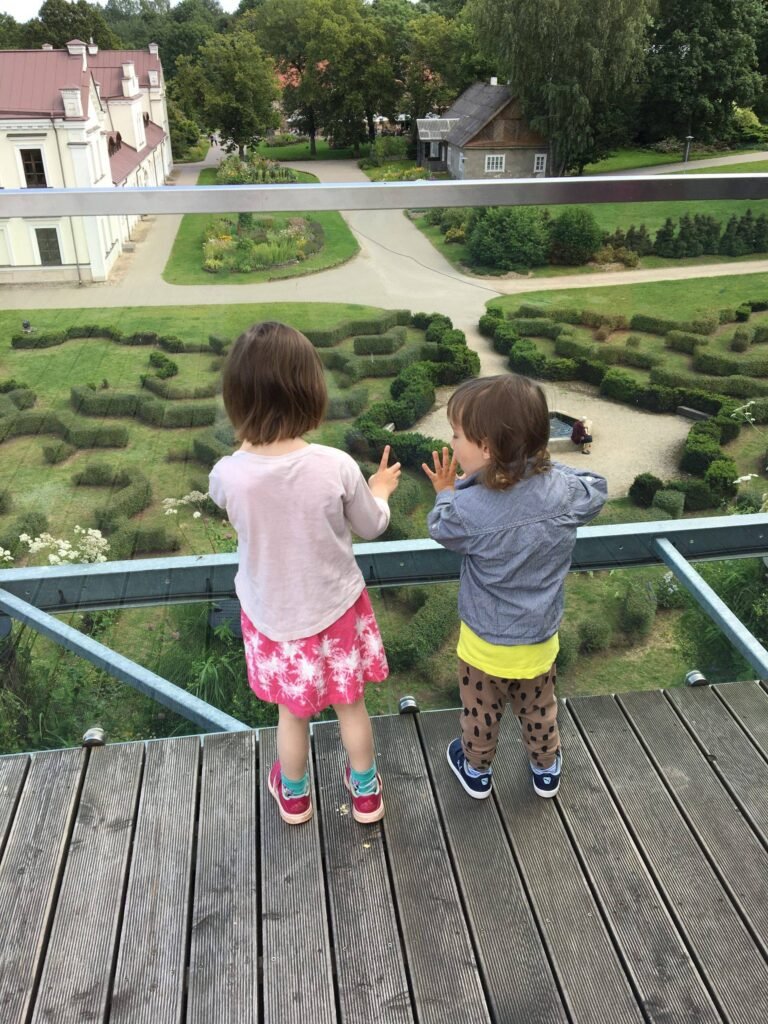
When designing residential neighborhoods, green zones were always included between them. One such place is Fairy Tale park, opened in 1987 between Karoliniškės and Lazdynai, designed by landscape architect Romualdas Jurgilis. Winding pine-wood paths display wooden sculptures featuring fairy tale and mythological characters. It’s a great place to walk, exercise, or picnic in the fresh air. Don’t be surprised if you spot a squirrel or a rarer bird. Since 2019, the park has featured an artistic installation. Projectors in the treetops cast colored illustrations of city legends and stories onto the ground, and nearby information stands tell more about Vilnius’s most famous tales.
Location: L. Asanavičiūtės St.
↩︎ Back to list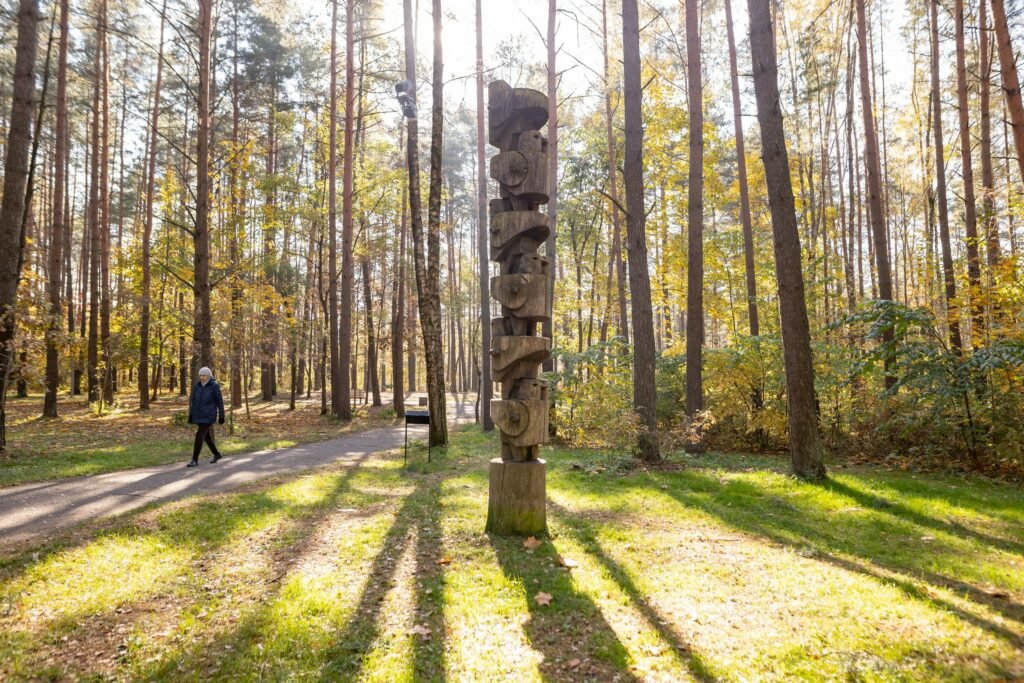
Viršuliškės park
Both visitors and Vilnius residents often focus on the city center, expecting to find everything beautiful and interesting there. Outlying districts, with their gray buildings and rather bleak architecture, seem unlikely to change this view. However, writer and sculptor Mykolas Sauka decided to bring artistic life to the otherwise unremarkable Viršuliškės Park. Here you’ll find the “concrete Vilnians” – sculptures that belong not in a white-walled gallery for the art elite, but out in the open for everyone to enjoy.
Viršuliškės park is a small woodland on a hill, right beside a kindergarten and not far from residential blocks. M. Sauka intentionally chose this location for his sculptures, aiming to release his works into the freedom of public space.
Location: Laisvės Ave.
↩︎ Back to list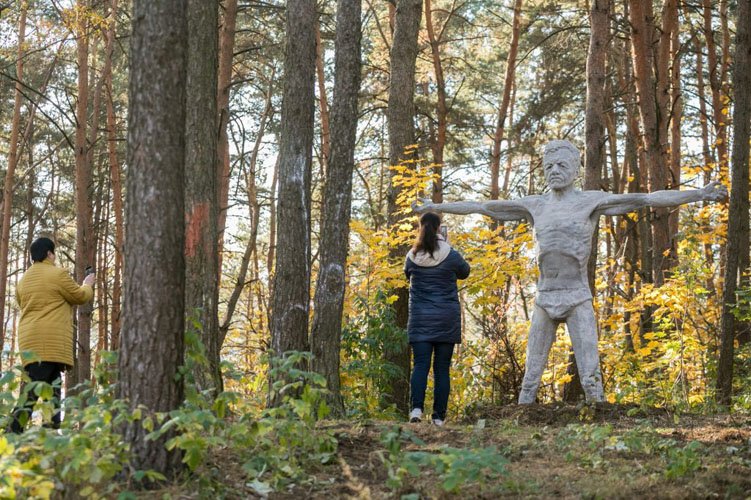
Markučiai park
Markučiai park is a small, cozy park with ponds at its center. There are no designated walkways, so it’s best to come here if you want some peaceful time in nature, to enjoy a sandwich or a cup of coffee. Next to the natural park area, on the hill, stands a wooden villa built in the late 19th century, home to the Markučiai manor museum. Nearby, you’ll find St. Barbara’s Chapel and a small cemetery. Markučiai Park is right next to the railway, so it’s perfect for trainspotters. And if you head the other way, down a steep slope, you’ll reach the Vilnia River. You can get here by bus, or simply walk – Subačiaus Street starts in the Old Town and leads about 2.5 km directly to Markučiai.
Location: Subačiaus St. 124
↩︎ Back to list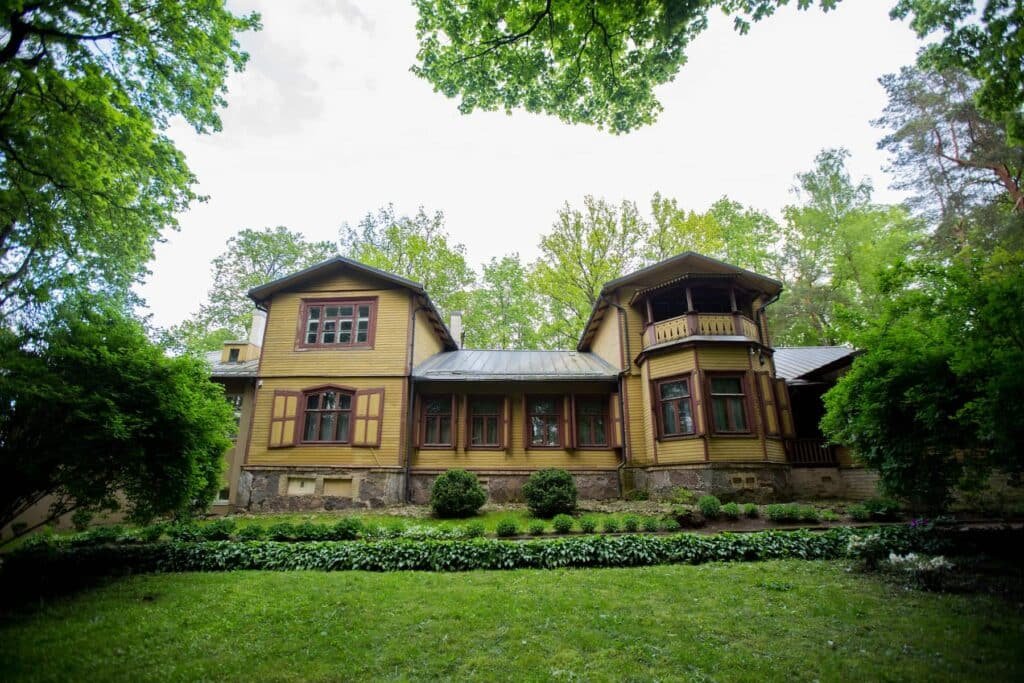
Antakalnis bench park
In 2016, a small park was opened in the meadow between V. Žalakevičius and Lizdeika Streets, featuring six sculptures by different artists along its path. The goal was for people to not only see the sculptures, but also to be able to sit on them. It’s a great place for reflection and for getting to know contemporary Lithuanian sculpture. Out of more than 20 proposals, the selection committee chose six projects: by Rytas Jonas Belevičius, Kęstutis Musteikis, Dalia Matulaitė, Arvydas Ališanka, Kazys Venclova, and Mindaugas Juntys.
Location: V. Žalakevičiaus St.
↩︎ Back to list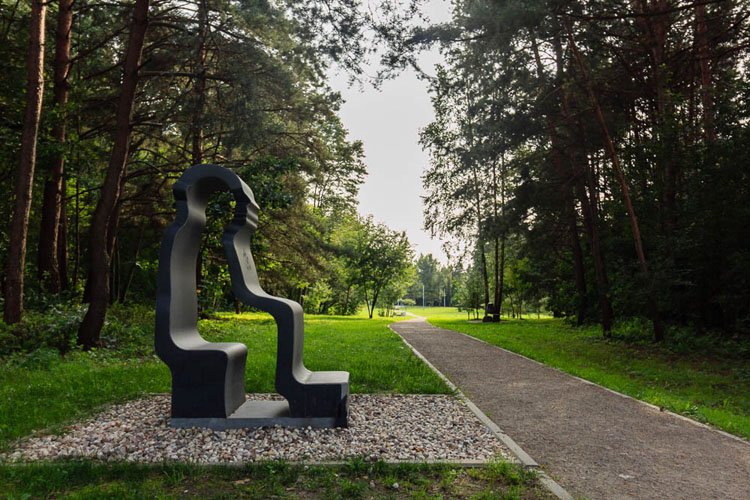
Japanese Garden SEI SHIN En
A small Japanese garden – one of Vilnius’s most beautiful places – now graces the area beside Kalnų Park and the Neris River, featuring the Sei Shin En (“Pure Heart”) spring.
We invite you to stroll through the garden, sit in the pavilion, and enjoy the spring’s gentle sounds, the plants, and the birds’ song. Entrance is free, and no registration is needed. You can also join guided tours, which include visits to the Japanese Culture House and matcha tea tastings as part of the Japanese tea ceremony.
The idea for the garden originated with artist Dalia Dokšaitė, who paints using Japanese techniques and has a long-standing interest in Eastern culture. Landscape architect Laura Popkytė Fukumoto (who has worked in Japanese gardens in Kyoto), together with her teacher, temple landscape architect Kitayama Yasuo, prepared and implemented the garden plan.
The garden reflects key Japanese aesthetic principles. Seasonality, simplicity, harmonious and natural integration with the environment, respect for water, wood, stone, and more. The greatest attention was devoted to arranging the spring.
Location: T. Kosciuškos St. 26
↩︎ Back to list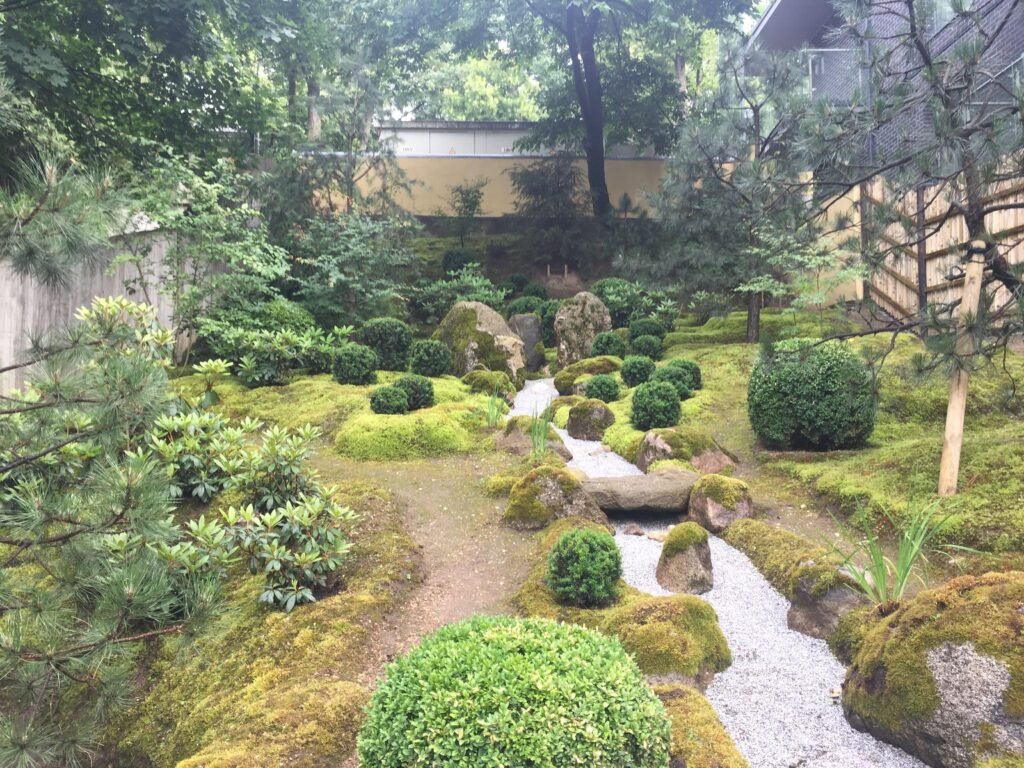
Vingis park
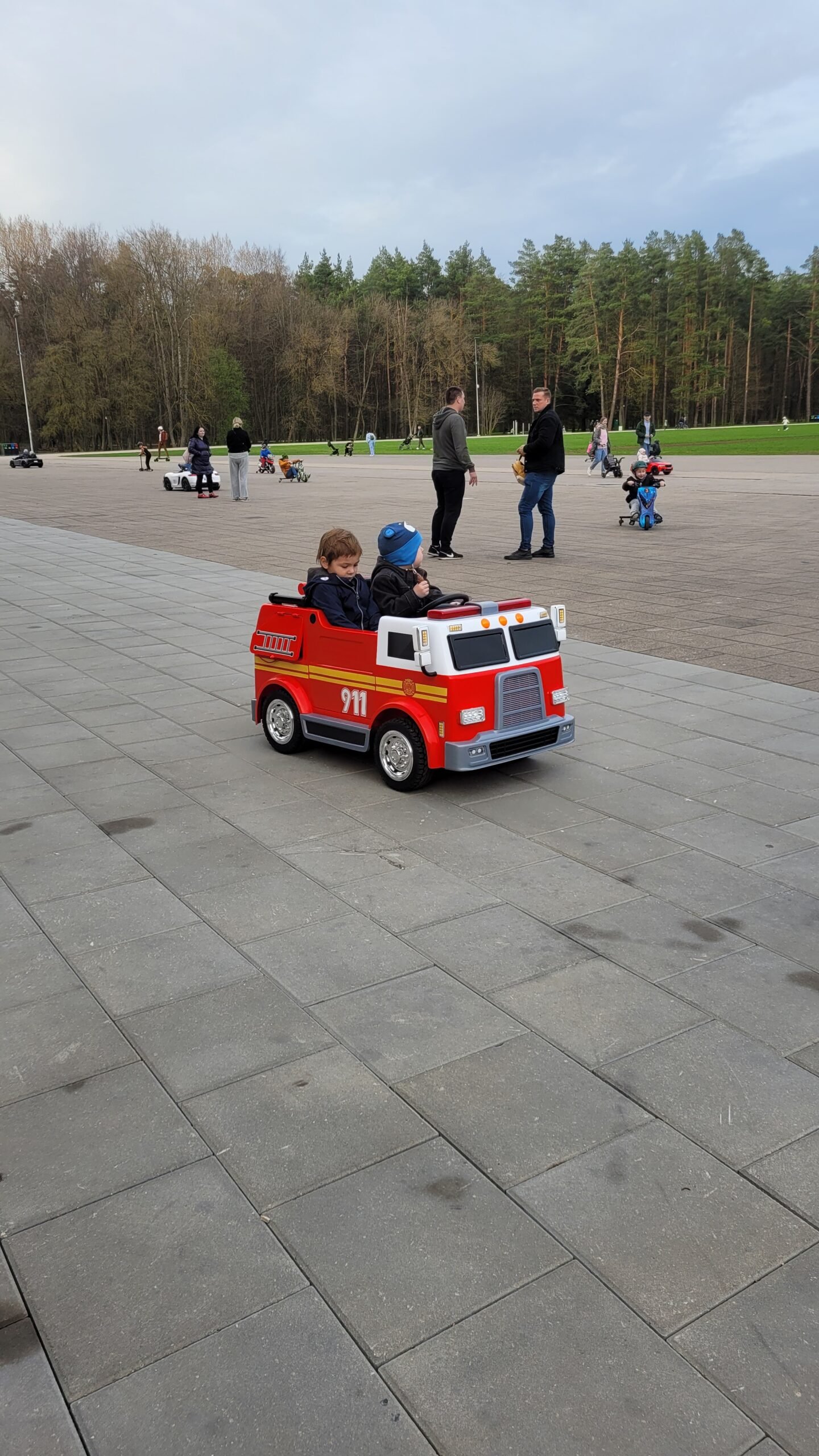
Visitors from abroad often discover a vast old forest just a short walk from the center of Vilnius. It’s no wonder that Vingis Park is the favorite park for Vilnius residents. In its huge 160-hectare area, people of every age and character can find their place. Families with children will find roller skate, bike, and scooter rentals, delicious ice cream, and snack kiosks near the stage. If you want to have a picnic with your own treats, the northern part of the park (by the pedestrian bridge to Žvėrynas) has a grill area with a unique mushroom-shaped sculpture.
Nature and history lovers can explore the park’s botanical garden in the west and marvel at the grand buildings that once stood here. Meanwhile, sports enthusiasts value Vingis for its great bike paths and outdoor fitness equipment among the pines. In addition, every Saturday, “Parkrun” running enthusiasts gather here.
Be sure to walk the paths in Vingis Park named after M. K. Čiurlionis’s paintings (“Žalčio sonata,” “Karalių pasaka,” “Ramybė,” and more) and try the Vingis Park beach by the Neris River (it’s also suitable for visitors with pets!). From there, you can explore the scenic Beaver Trail along the river.
Location: M. K. Čiurlionio St. 100
↩︎ Back to list