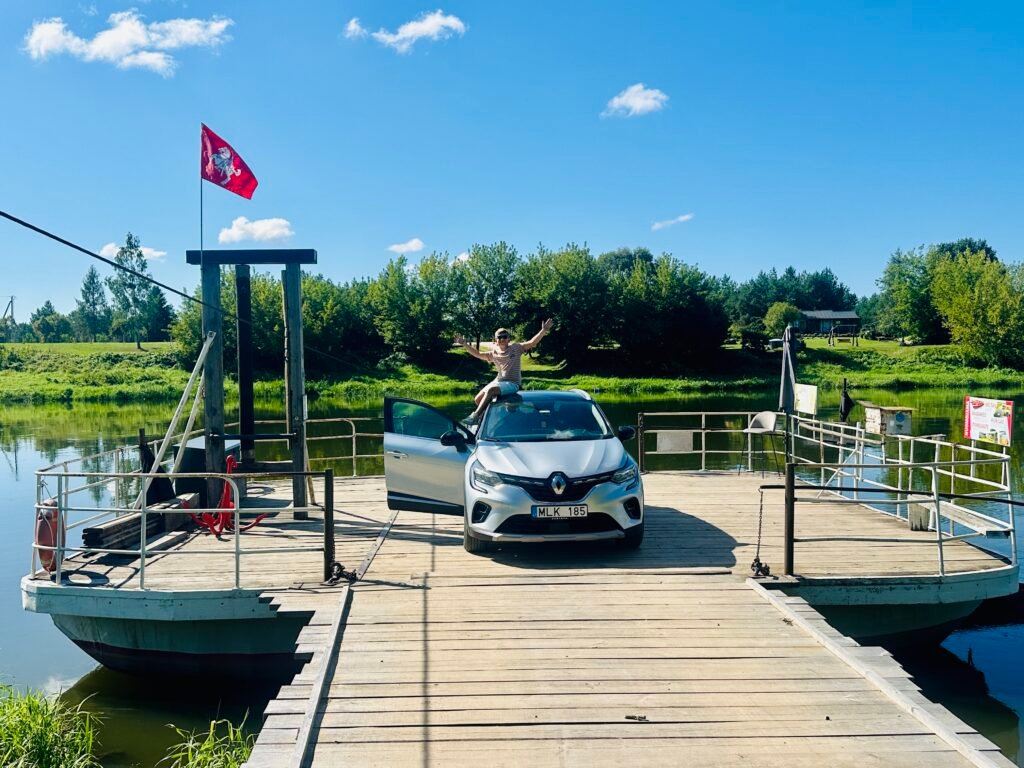
The Čiobiškis ferry across the Neris is one of those unusual places in Lithuania that makes you want to ask again: how does it even work? Here, you can cross the Neris not only as a pedestrian but also with your car. However – note – the ferry has neither an engine nor oars. The river current alone carries it to the other bank. And this is not a museum exhibit, but a still-operating ferry you can try out when traveling with your whole family.
The Čiobiškis ferry across the Neris, also known as the Padaliai–Čiobiškis ferry, connects the Širvintos and Kaišiadorys districts. On one side of the Neris is Čiobiškis, on the other – Padaliai. This is the only cable ferry in Lithuania powered by the river’s current and equipped with no motors or oars. The ferry is held by a strong steel cable, and when the ferry’s angle is changed, the river’s current pushes it from one bank to the other.

Čiobiškis ferry across the Neris: how does the ferry move without an engine?
The Čiobiškis ferry across the Neris left a strong impression on our kids, and while visiting the Kaišiadorys region, it was truly a memorable place. It seems like you’re stepping onto a regular ferry, but soon you realize that no one starts any engine.
The whole system is based on a very simple but clever principle. The cable holding the ferry above the river prevents it from being carried away downstream, and the ferry’s angle to the Neris’ flow is changed with special rudders. The current starts to push the ferry sideways, carrying it to the other side. To return, the ferry operator changes the ferry’s angle to the opposite side.
No fuel. No engine. Just a cable and the power of the Neris. That’s why even a short crossing becomes an unusual travel experience.
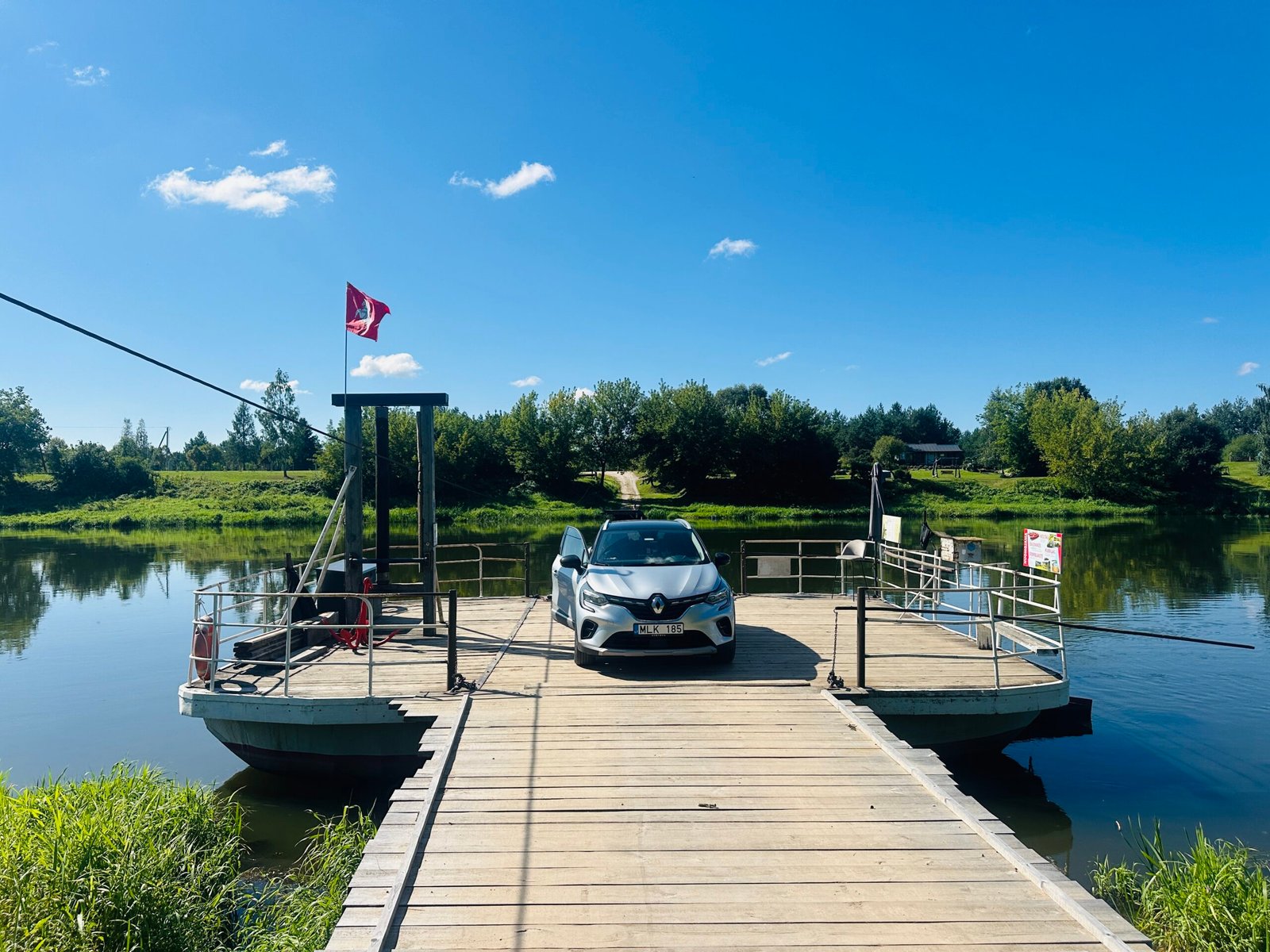
The Čiobiškis ferry even carries cars
What’s even more fun is that you can cross not only on foot, but also with your car. The ferry can carry several passenger cars at once, although the exact allowed weight also depends on pier conditions.
And that’s exactly what we like about this place – it’s not something people created artificially as a tourist attraction. It’s a real, still-used means of transport, and today it’s also one of the most interesting technical heritage experiences in Lithuania.
The ferry’s history goes back almost a century
The history of the crossing at this spot is even older. Historical sources mention crossings at this place as far back as the 19th century. Participants in the 1831 and 1863 uprisings crossed here.
The current ferry tradition dates back to 1935. There used to be a bridge here, but when it became unsafe, they dismantled it, so the locals needed another way to cross the Neris.
Today’s ferry operator, Gediminas Dzeventauskas, is a third-generation ferryman. Before him, people were ferried across the Neris by his father and grandfather. So, here they preserve not only old technology, but also a family tradition passed down through generations.
Another fun detail – this same ferry has two names. People from the Širvintos side more often call it the Čiobiškis ferry, while on the Kaišiadorys side, it’s called the Padaliai ferry. Both names are correct, as the ferry simply connects two villages on different banks of the Neris.
At the same time, it shortens the route between the two districts, as the nearest bridge is quite far away.
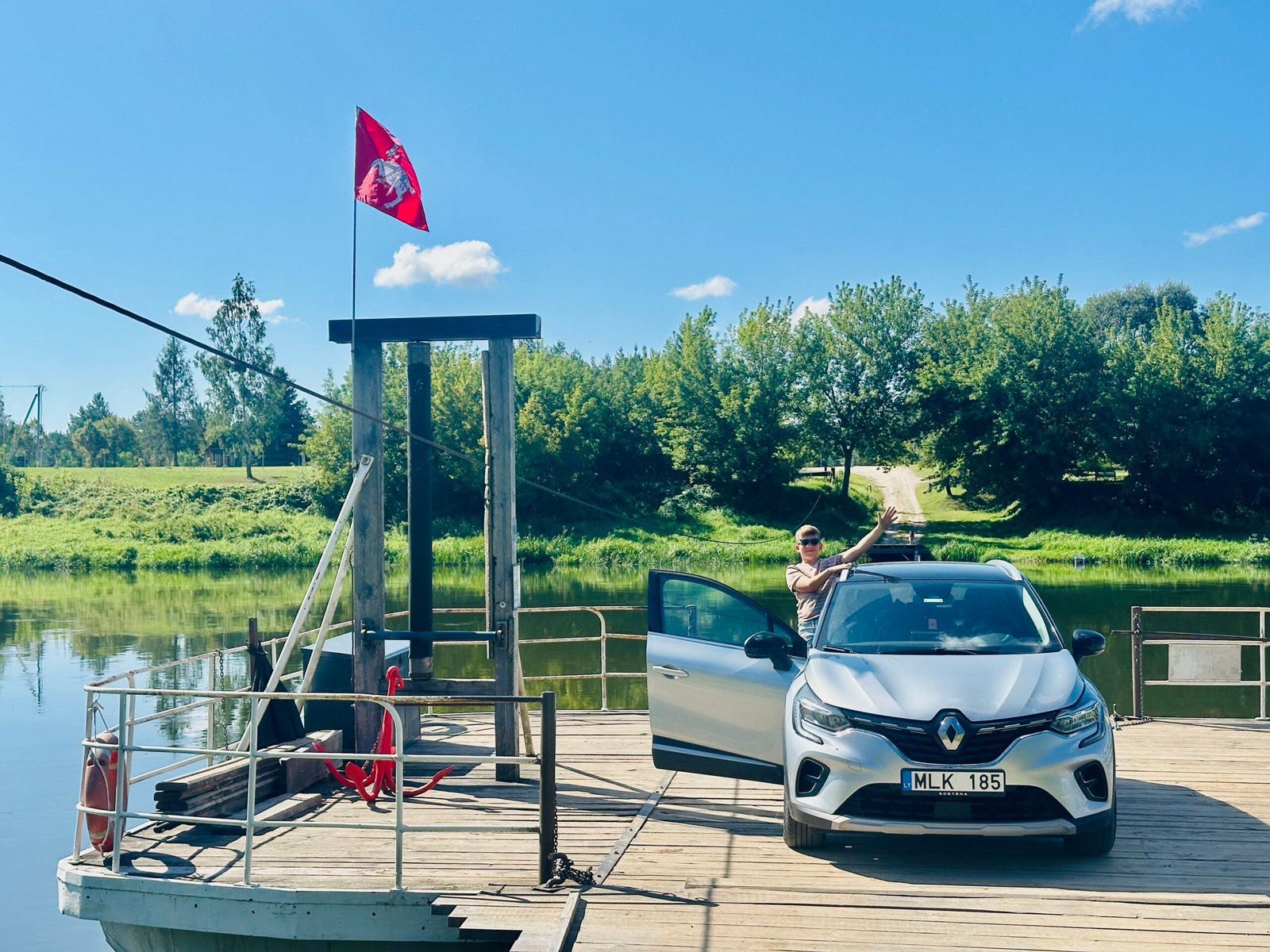
An experience we recommend trying with kids
For the 2026 season, the Čiobiškis ferry started operating on April 25. Usually, the ferry runs during the warm season until early November, daily from 8:00 to 20:00.
However, if you plan a special trip to the ferry, it’s important to keep one thing in mind – its operation depends on the Neris’ water level and other natural conditions. If the water level isn’t suitable, the ferry operator may not transport cars, so before making a longer trip, it’s worth checking whether the ferry operates that day.
You don’t need to plan a whole day for the Čiobiškis ferry. You can include it as one of the most interesting stops while traveling around the Širvintos or Kaišiadorys region, driving towards Kernavė, or just looking for a weekend route with kids. We highly recommend, if you are going to Kernavė, to try the ferry and return with the kids to Vilnius by a different route.
And sometimes, it’s places like this that leave the biggest impression on kids. No screens, rides, or complicated technology. You drive your car onto the ferry, the ferryman turns the rudder, the Neris starts to do its work – and after a few moments, you’re on the other bank. If the kids want, the ferryman will even let them steer the ferry. The owner, Gediminas, and his wife are wonderful people. Not only do they let the kids steer the ferry, but they also share interesting stories.
Nearby, you can try a unique tour in Žasliai with a horse-drawn carriage ride through the town.