During winter and colder weather, we often spend time in indoor swimming pools and spas. However, when summer arrives, we enjoy outdoor pools and water parks instead. For many of us, summer holidays abroad would not be complete without swimming in warm pools. Although we often take care of our skin after swimming, we tend to forget about our hair and scalp. Most importantly, many people still wonder whether they need to wash their hair after swimming in a pool. Dermatologists say they often hear the same argument: “But chlorine disinfects the pool water.” However, specialists warn that chlorinated water can affect both hair and the scalp more than we might expect. Therefore, if you enjoy swimming pools and water parks, take a look at dermatologists’ recommendations and remember to protect your hair.
Should you wash your hair after swimming in a pool?
Should you wash your hair after swimming in a pool, or is rinsing it with water enough? Perhaps you do not need to do anything at all and can simply let your hair air-dry after swimming. According to dermatologists, chlorinated water can contribute to dry, brittle hair and, in some cases, a scalp that becomes oilier more quickly. Some people notice only a slight roughness after swimming. Others, however, experience more noticeable changes, such as an itchy scalp, dry ends, or even increased hair shedding. Therefore, dermatologists generally recommend washing your hair as soon as possible after swimming, using gentle hair-care products.
What happens to your hair when it comes into contact with chlorinated water?
Chlorine is used in swimming pools to kill bacteria and keep the water clean. However, it can also affect the hair shaft. According to dermatologists, chlorine may damage the hair’s natural protective layer. As a result, hair can lose moisture, feel rougher, and become less elastic.
This is particularly relevant for:
- People with dyed hair.
- People with bleached hair.
- Those with sensitive scalps.
- Children and athletes who swim regularly.
Chlorine can remain on your hair and scalp after swimming. Therefore, simply rinsing your hair with water is often not enough.
How does pool water differ from seawater?
Although your hair may feel drier after swimming in both the sea and a pool, the effects are not exactly the same.
Seawater mainly affects hair because of its salt content. Pool water, on the other hand, usually contains chemical disinfectants that come into direct contact with the scalp and hair.
Dermatologists note that chlorinated water can:
- Irritate a sensitive scalp.
- Weaken the skin’s protective barrier.
- Contribute to hair dryness.
- Increase hair breakage.
Why does your scalp feel dry and itchy after swimming? Can chlorine cause hair loss?
One of the most common problems after swimming is a tight, itchy scalp. This may happen because chlorine removes natural lipids that help maintain the skin’s moisture balance.
As a result, some people experience a dry scalp, increased sensitivity, flaking, and itching.
Interestingly, some people notice that their hair becomes oilier rather than drier after swimming. Dermatologists explain that an irritated scalp may sometimes produce more sebum in an attempt to compensate for lost moisture.
Recently, there has also been discussion about whether chlorine can contribute to hair loss. However, chlorine itself does not usually cause hair loss directly. Over time, though, it may weaken the hair and contribute to breakage. If your scalp becomes sensitive, irritated, or dry, your hair may look weaker and lose some of its shine and volume.
Proper scalp care and suitable hair-care products are especially important for people who:
- Swim regularly.
- Take part in water sports.
- Have a sensitive scalp.
- Are prone to hair loss.
If you are planning a trip to a warm destination, you may also find our dermatologist-informed advice on how to care for your hair while on holiday helpful.
How should you care for your hair after swimming in a pool?
Dermatologists recommend washing your hair as soon as possible after swimming because chlorine can remain on both your hair and scalp. Simply rinsing with water is often not enough, especially if your scalp feels tight or itchy or your hair becomes rough.
After exposure to chlorine, it is important not only to remove residue but also to help restore the scalp’s balance and reduce irritation. Therefore, dermatologists often recommend gentle products designed for sensitive scalps.
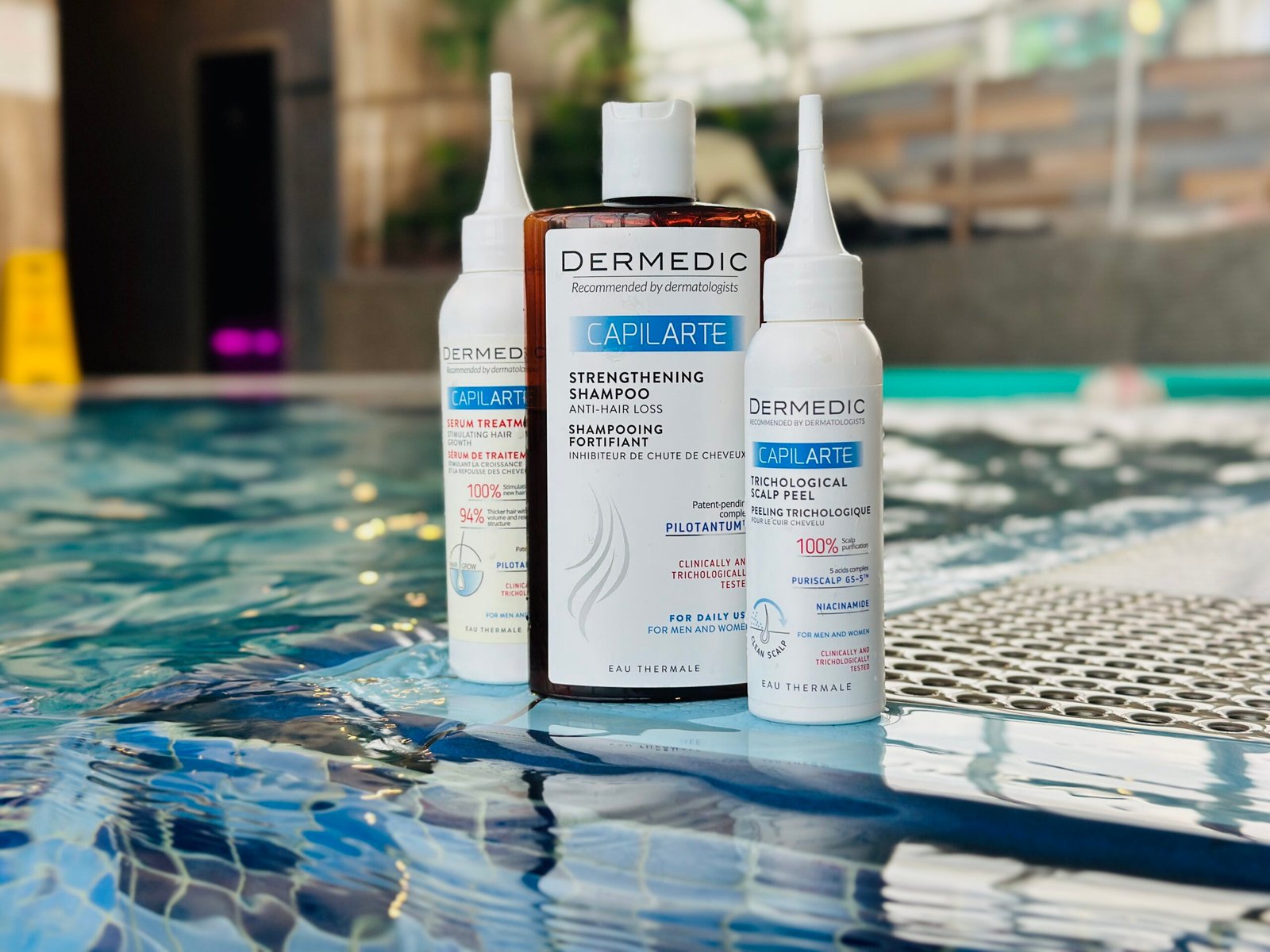
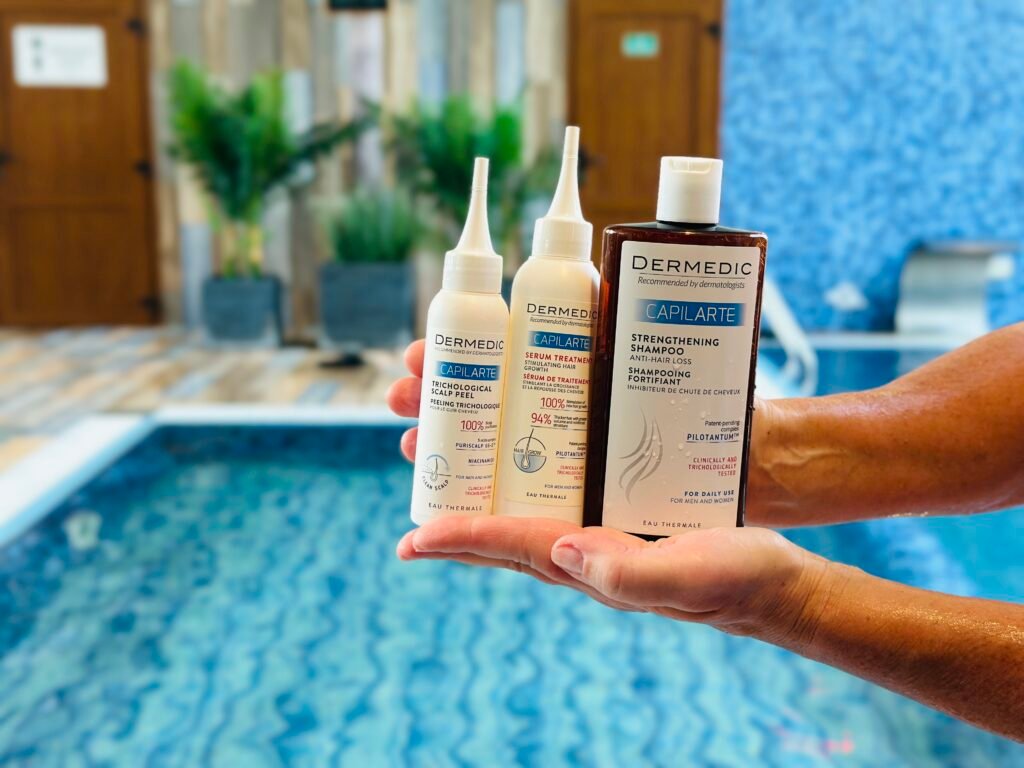
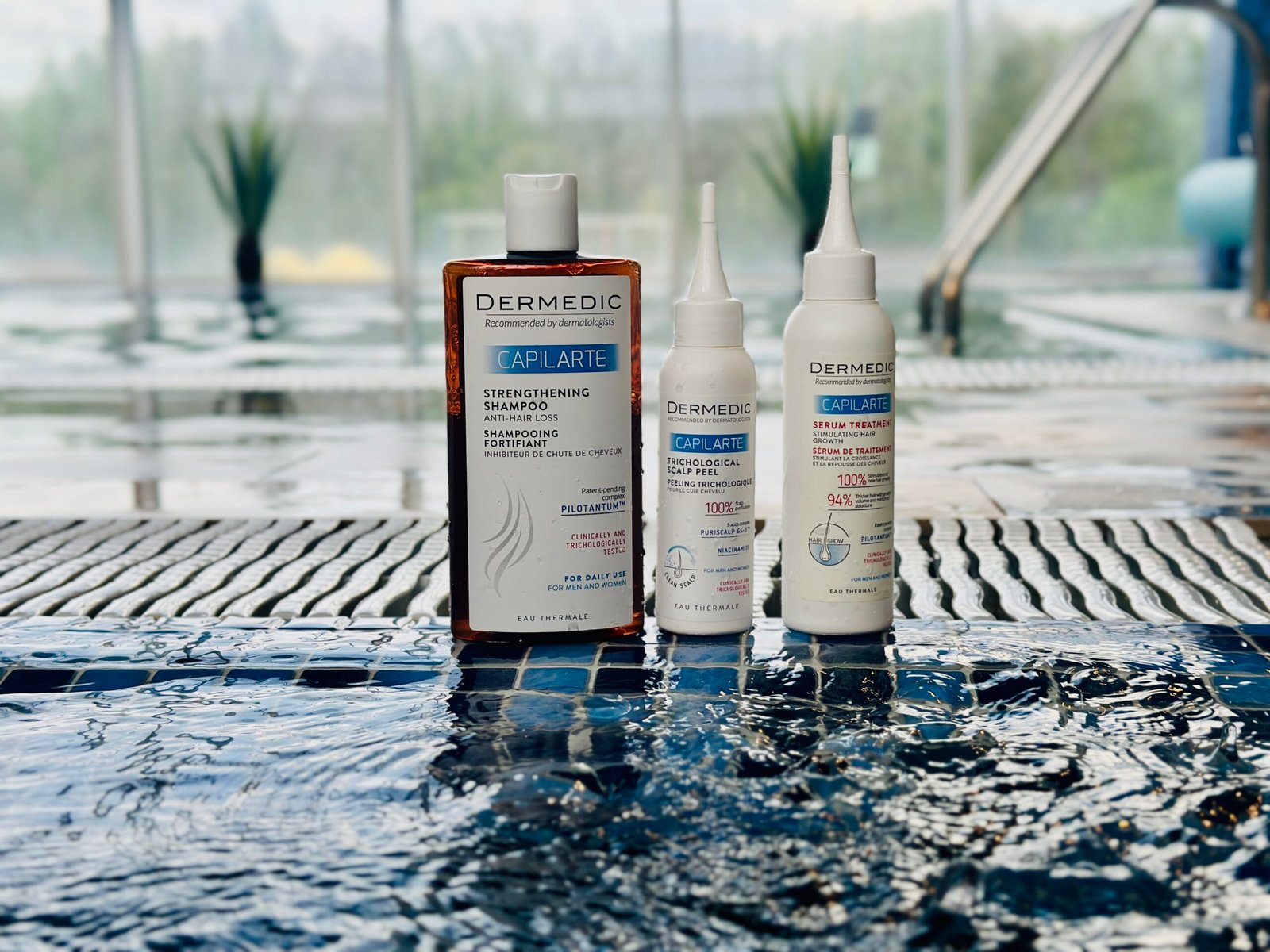
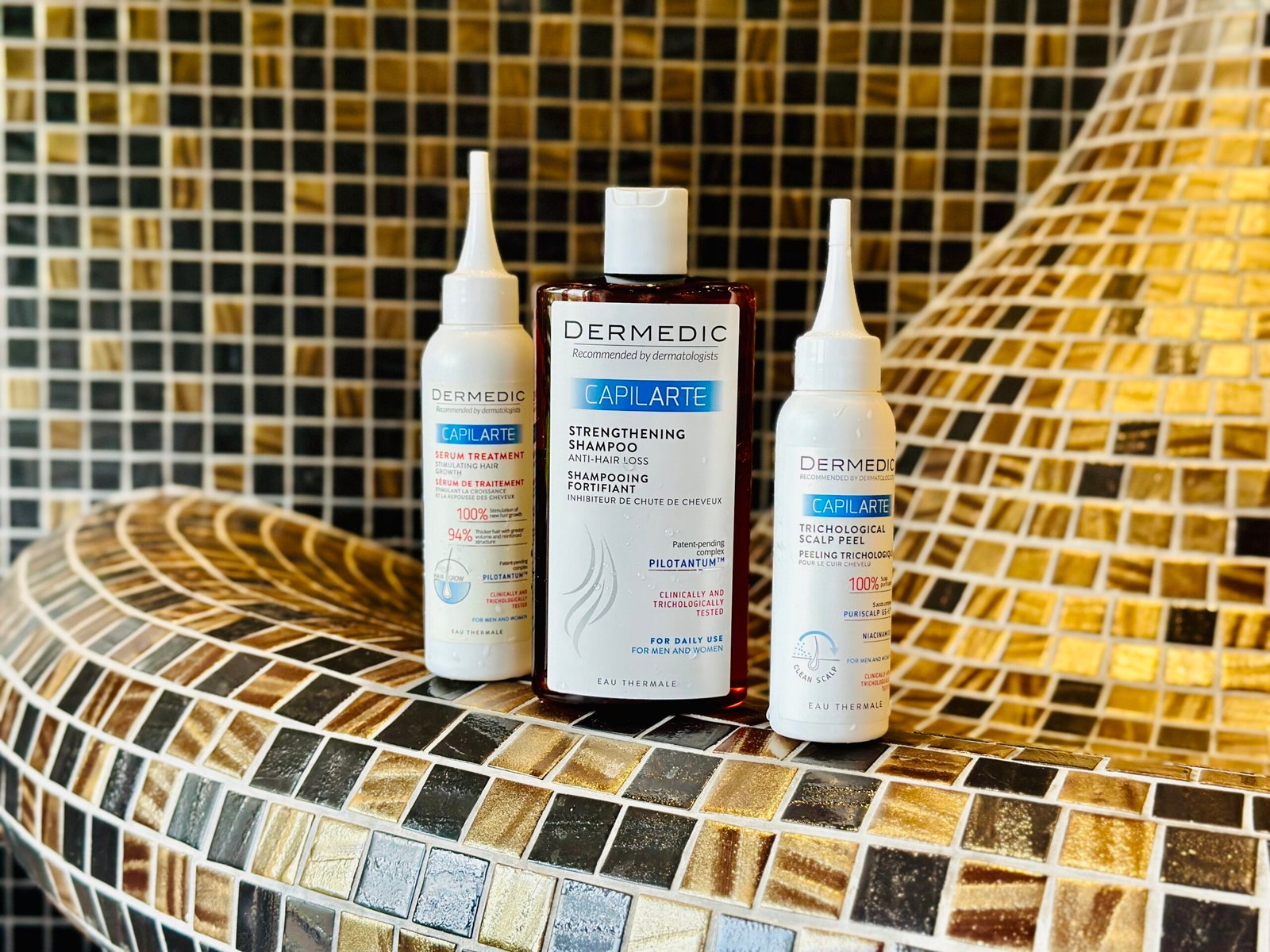
One option is the DERMEDIC CAPILARTE line, which is designed to support scalp comfort, help maintain moisture balance, and strengthen hair. Our whole family loves swimming pools, and our older son, Motiejus, goes swimming every day. As a result, the DERMEDIC CAPILARTE line has become a real help in our hair- and scalp-care routine.
DERMEDIC CAPILARTE Soothing Shampoo is designed for sensitive and irritated scalps. Therefore, it can be a suitable option after swimming in a pool. Its ingredients, including D-panthenol and polidocanol, help relieve discomfort after swimming and support the scalp’s natural pH balance.
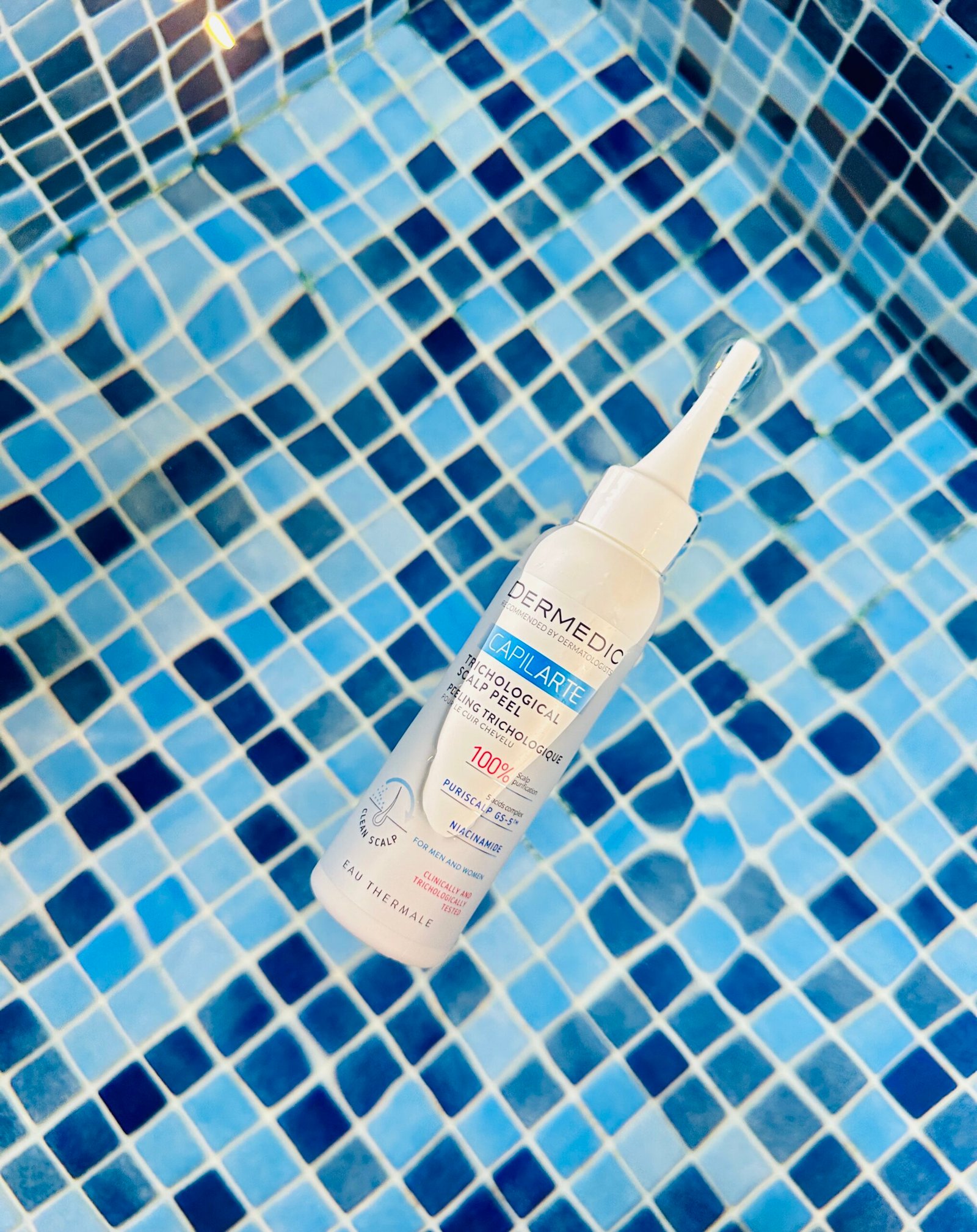
For people who swim regularly, deeper scalp cleansing can also be important. Chlorine, styling-product residue, and sebum can build up on the scalp. Therefore, occasional use of gentle yet deep-cleansing scalp products may be beneficial. DERMEDIC CAPILARTE Exfoliating Scalp Serum helps remove accumulated impurities and dead skin cells. At the same time, it prepares the scalp for further care.
If your hair looks weaker, loses its vitality, or starts breaking more easily after regular swimming, dermatologists may also recommend adding a hair serum to your routine. DERMEDIC CAPILARTE Hair Serum is designed to strengthen hair. Its formula contains caffeine, the Procapil complex, and thermal water to help support scalp condition and strengthen the hair.
How to protect your hair before and after swimming
Dermatologists also recommend wetting your hair with clean water before swimming. This helps reduce the amount of chlorinated water your hair absorbs. After swimming, however, the goal should not be to scrub your hair aggressively. Instead, focus on restoring moisture and caring for your scalp, which may be affected even more than the hair itself.