Overall, across Lithuania, cities hide both large and small animal sculptures that bring joy to children and adults. In fact, this article introduces some of the most charming examples, especially those that attract younger visitors the most. At the same time, Lithuania offers a different side beyond its grand monuments, where small stories often leave a strong impression. For example, you may come across a tiny magical mouse that invites passersby to whisper wishes. Moreover, playful cats appear in unexpected corners of cities. In addition, loyal city dogs and even a full pack of Lithuanian hounds can also be found across different locations.
As a result, each city gains a unique and playful character. Therefore, animal sculptures in Lithuania surprise curious travelers. In fact, they often impress adults just as much as children. Overall, these small details make a big difference. In addition, they create memorable experiences for visitors. As a result, Lithuanian cities feel more playful and unique.
Animal sculptures in Lithuania: from hidden gems to the most famous landmarks
“Lithuanian hound” in Vilnius
At the foot of Gediminas Hill, on Barboros Radvilaitės Street, stands a sculptural composition dedicated to Lithuanian hounds – the only hunting dog breed developed in Lithuania. Notably, the 2015 composition depicts a hound family: a female, a male, and their puppy. Rimantas Keturka and Feliksas Volčakas created this striking sculpture.
↩︎ Back to list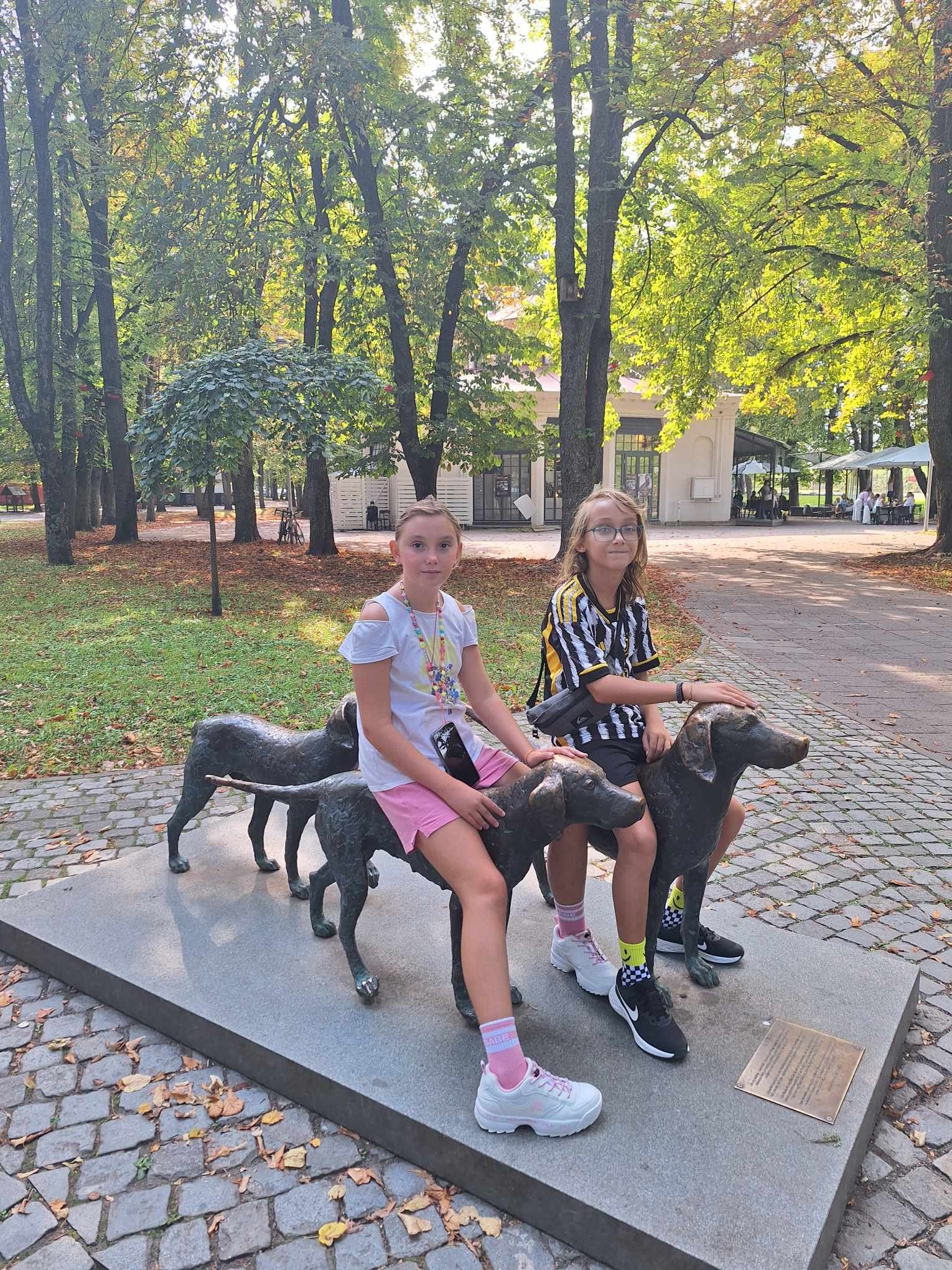
The cat in Vilnius
In Jurga’s Square on Aguonų Street, you’ll find a cozy sculpture called “The Cat,” dedicated to the writer Jurga Ivanauskaitė. Importantly, sculptor Ksenija Jaroševaitė intentionally chose this animal, as cats often appeared in the writer’s works and were dear to her in real life. Additionally, the sculpture’s soft, slightly comic form brings warmth and coziness to the square.
↩︎ Back to list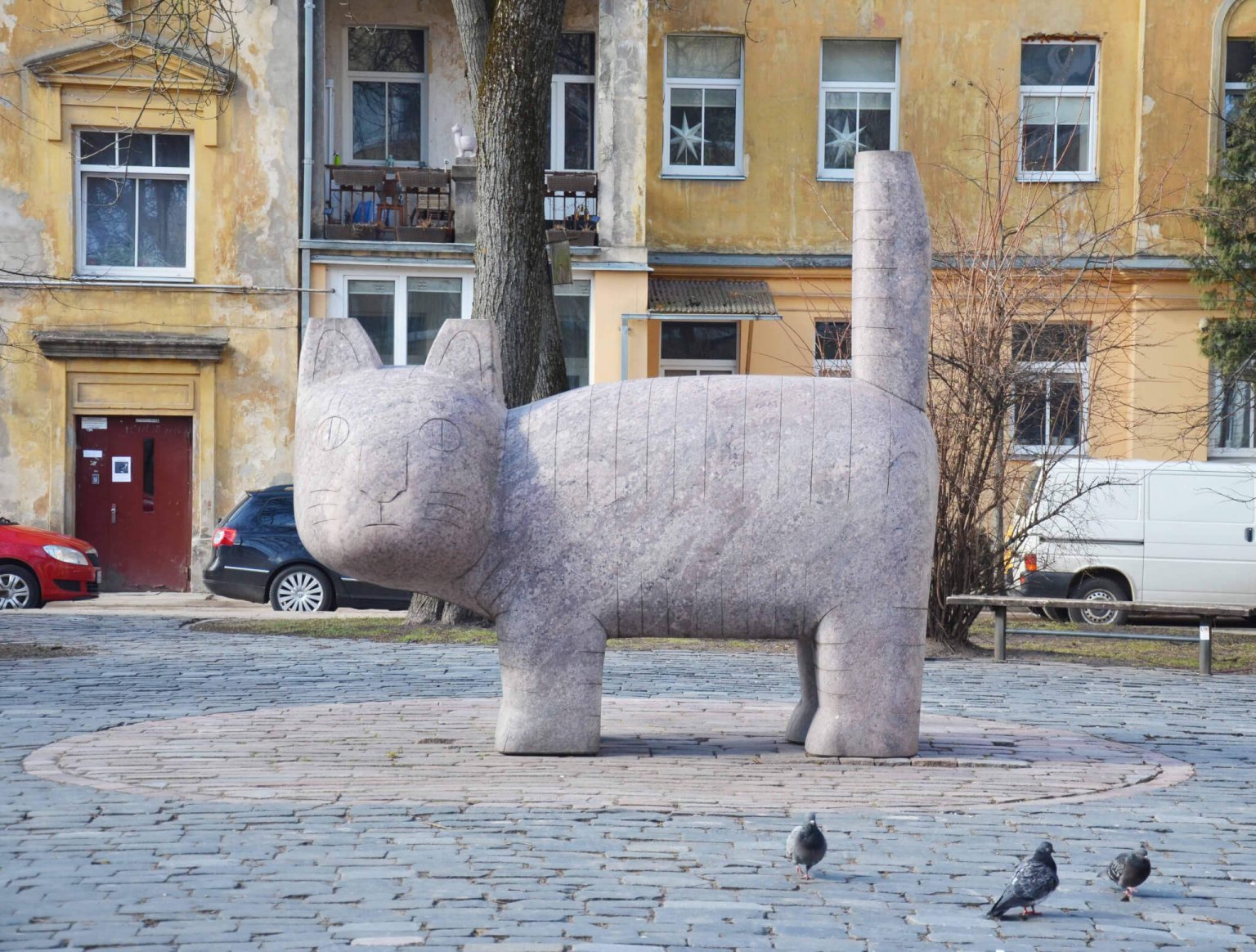
Doberman in Vilnius
On Gediminas Avenue, a Doberman sculpture attracts many passersby. In fact, it often becomes one of the most noticed objects in the area. Firstly, the sculpture was created in the 1980s by artist Svajūnas Kižys. He based it on his own pet. Later, the sculpture was restored several times. Moreover, the current version includes glasses. Today, it stands as a guardian in one of Vilnius’s busiest streets.
↩︎ Back to list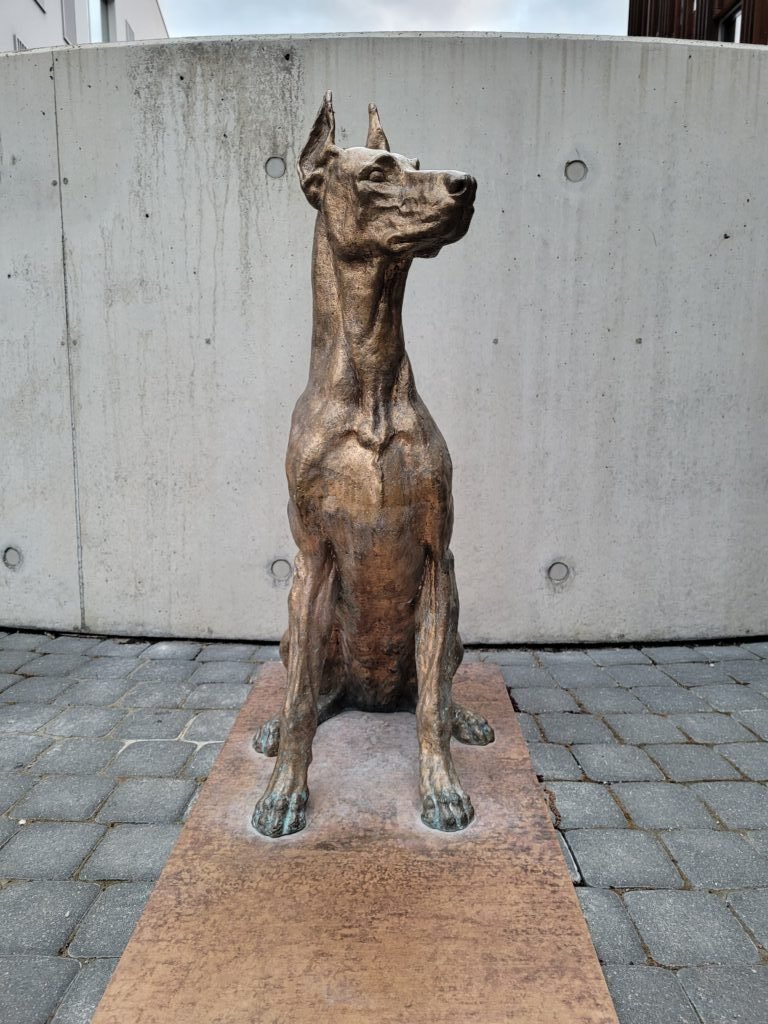
Užupis cat in Vilnius
Perched on the fence of Polocko Street, the earring-wearing cat is one of Užupis’s most playful sculptures. Created by artist Jonas Gelčius, this work became a symbol of the district.
According to local legend, if you scratch the cat’s ear, your fears will disappear. As a result, this small but lively sculpture draws in passersby. At the same time, it reminds everyone of Užupis’s bohemian spirit.
↩︎ Back to list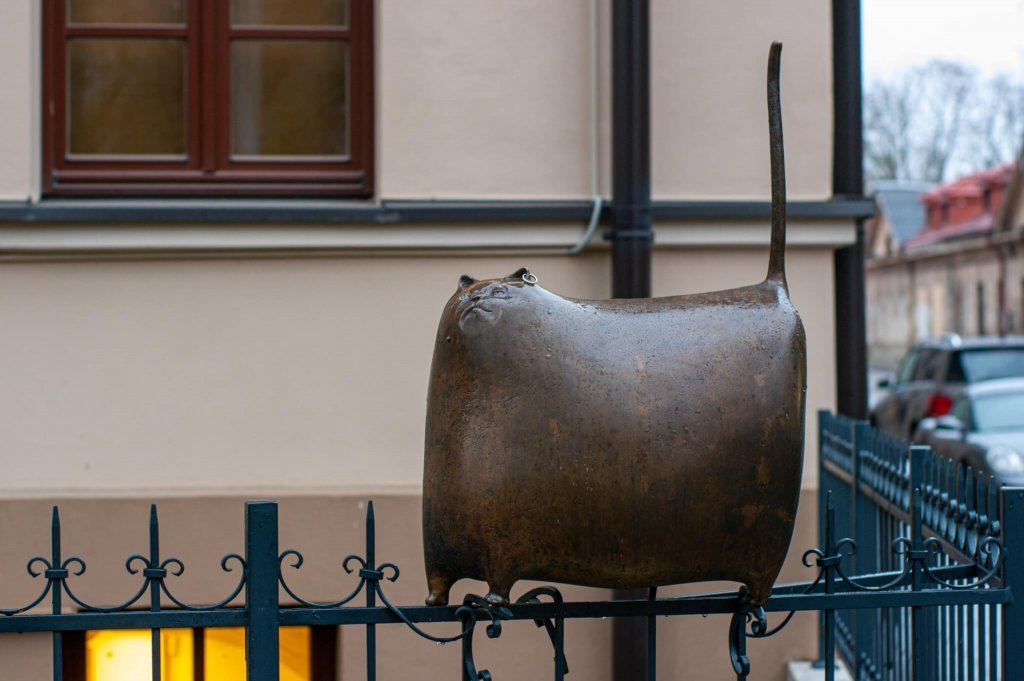
“Medeinė” on a bear in Vilnius
In the courtyard of the Glass Quarter on M. Antokolskio Street, you will see the bronze sculpture “Medeinė,” representing the Lithuanian goddess of forests and hunting. Moreover, the artist depicted her sitting on a bear – the ruler of the forest – thereby emphasizing the strength of nature. Marius Grušas sculpted this work in 1988.
↩︎ Back to list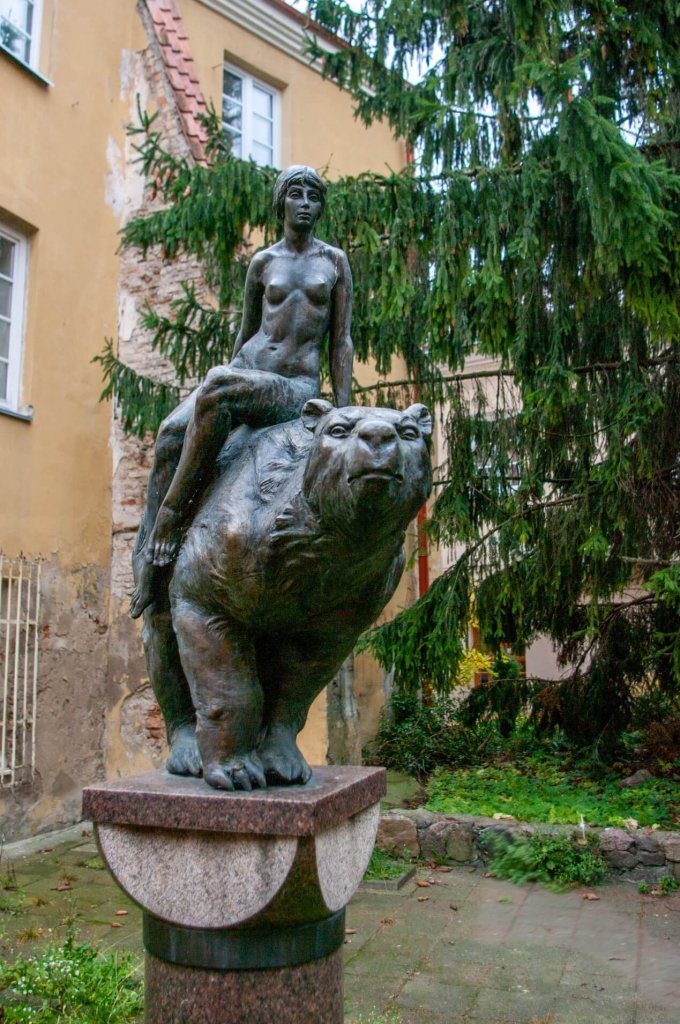
Džiugas sculpture in Vilnius
One of the most interesting pieces in this “Animal Sculptures in Lithuania” collection stands at the entrance to the “Džiugas” house. Here, you’ll notice a piece of cheese depicted as an unattainable treasure, with a mouse reaching for it – a truly symbolic detail. Moreover, Romualdas Inčirauskas created this artwork to encourage visitors to pause and, as a playful ritual, rub the golden mouse’s nose before stepping inside.
↩︎ Back to list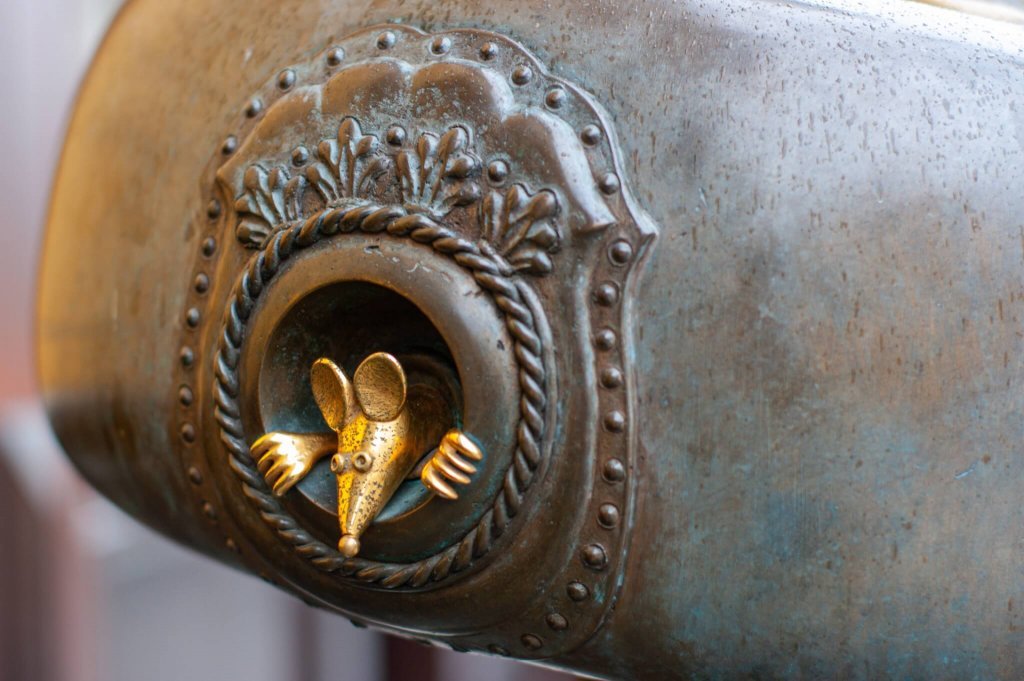
Grasshopper in Vilnius
On the wall of a building along Konstitucijos Avenue, a giant grasshopper with a human face gazes out. This is “Grasshopper – Self-Portrait” by sculptor Algis Griškevičius. Notably, the artist designed this playful and unexpected accent to attract the attention of passersby and bring more life and uniqueness to the city.
↩︎ Back to list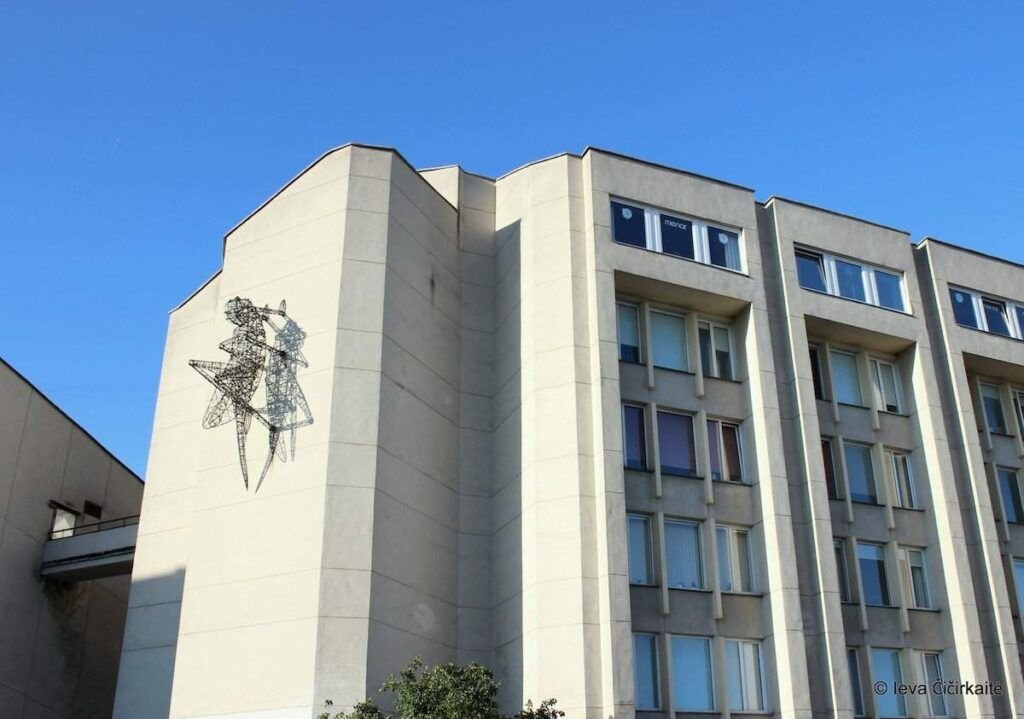
Rooster in Vilnius
In Viršuliškės, you will find the “Song” sculpture, better known as the Viršuliškės Rooster. This bird, which symbolically “wakes up” the neighborhood, was installed in 1990, later restored, and moved to a new pedestal.
↩︎ Back to listElephant in the courtyard gallery in Kaunas
Kaunas features a fascinating, story-filled space known as the Courtyard Gallery. In fact, we’ve even prepared a separate article about it and highly recommend both reading and visiting. The idea is to transform the courtyard into an open-air gallery, where every mural, portrait, or installation tells stories about people, their lives, and their relationship with the space. Notably, this is where we found an intriguing elephant sculpture perched on a rooftop.
↩︎ Back to list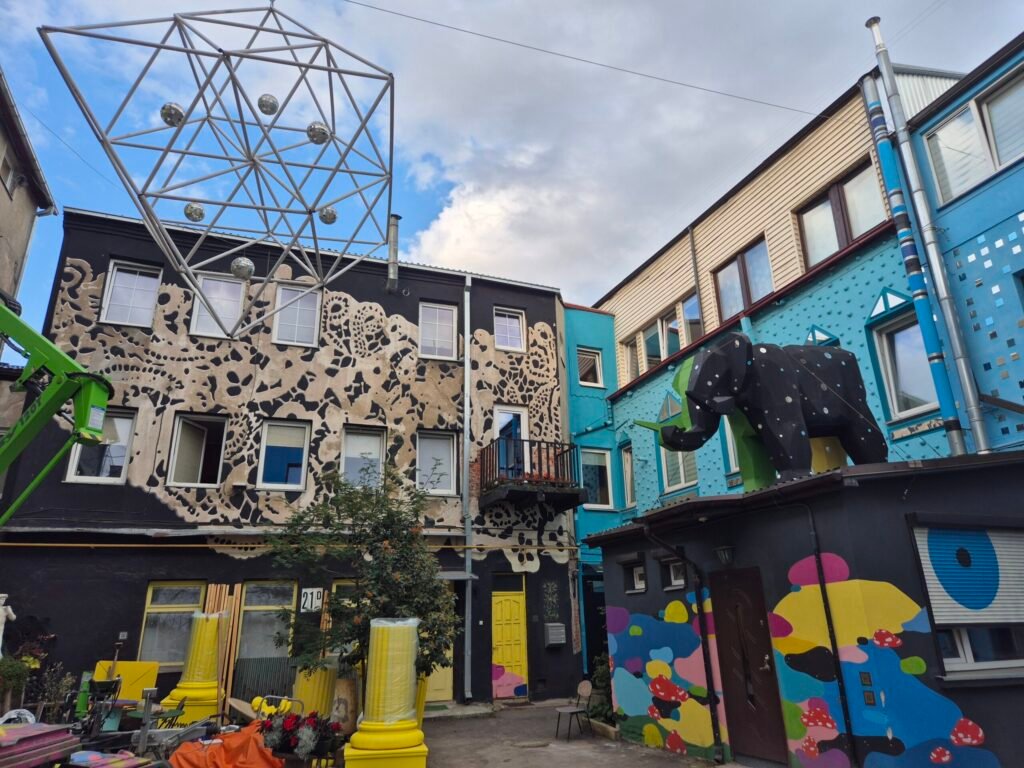
Boy and dog sculpture in Kaunas
As you stroll through Kaunas Old Town on Vilniaus Street, you will encounter the sculptural composition “Don’t Daydream!” – a boy on a bicycle chased by a puppy. Created by Kęstutis Balčiūnas, this playful work brings to life the history of Vilniaus Street and invites visitors to look more closely at the city’s past.
↩︎ Back to listSt. Bernard Bitė in Kaunas
Near the Žaliakalnis market stands a sculpture dedicated to the legendary St. Bernard Bitė, well known to many locals. In fact, this dog became famous not only for wandering the city alone and carrying groceries, but also for her good deeds. As a result, the sculpture now serves as a touching symbol of the city.
↩︎ Back to list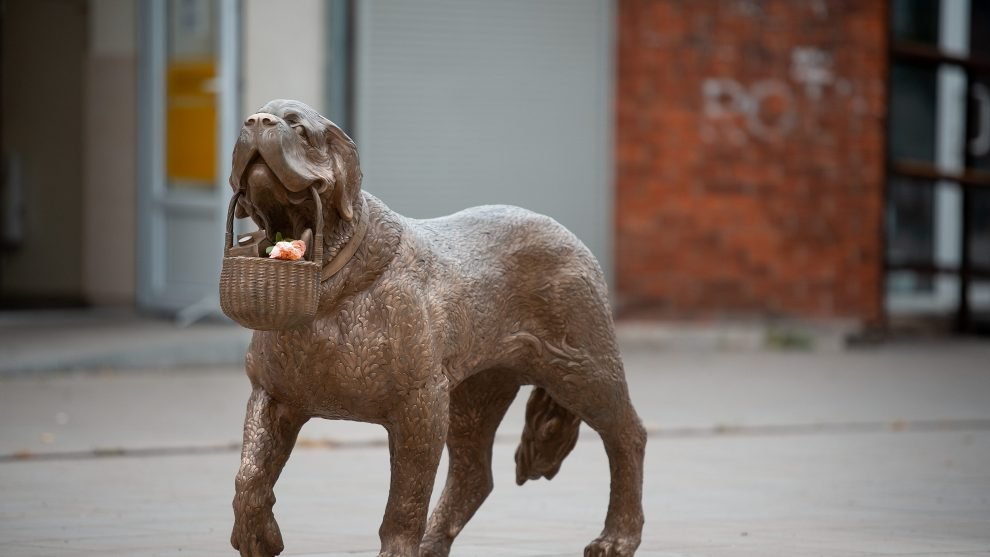
Lions of the War Museum in Kaunas
At the entrance to the Vytautas the Great War Museum, impressive lions stand guard – one of Kaunas’s most prominent symbols. In fact, these “guards” arrived in 1938 as a gift from Astravas Manor, and ever since then, they have welcomed museum visitors.
↩︎ Back to list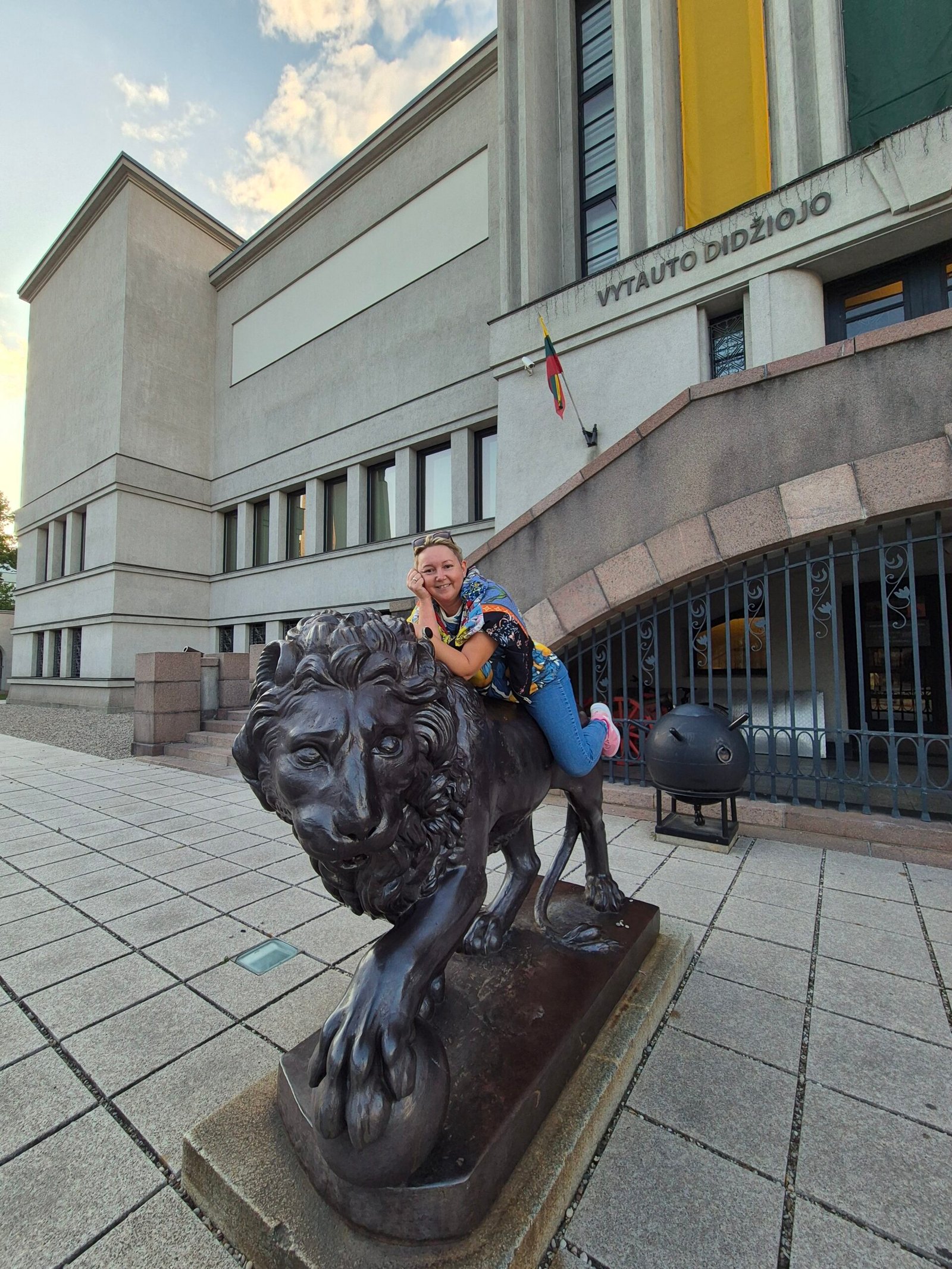
The Freedom Warrior (Vytis) in Kaunas
The large Vytis sculpture on horseback stands near Kaunas Castle and leaves an impression from afar. In 2018, the city erected this monument to commemorate the centenary of Lithuania’s independence, and it was funded by public donations.
↩︎ Back to list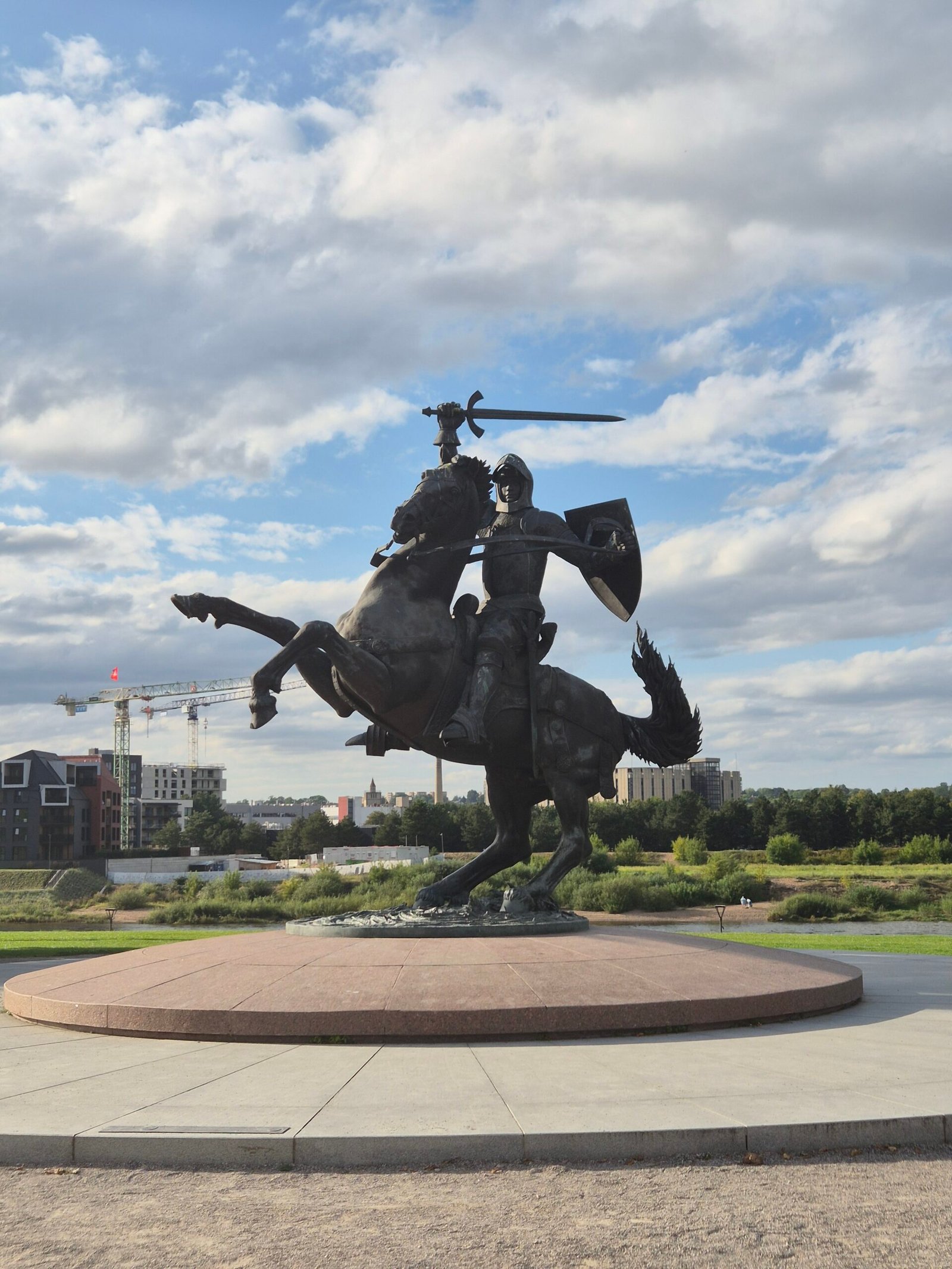
“Tauras” sculpture in Kaunas
This large, shiny “Tauras” sculpture (Aueroch) greets everyone arriving in Kaunas from the Vilnius side. Moreover, it serves as a modern city symbol, having been installed only recently. As a result, many people notice it for the first time while passing by – it’s truly hard to miss.
↩︎ Back to list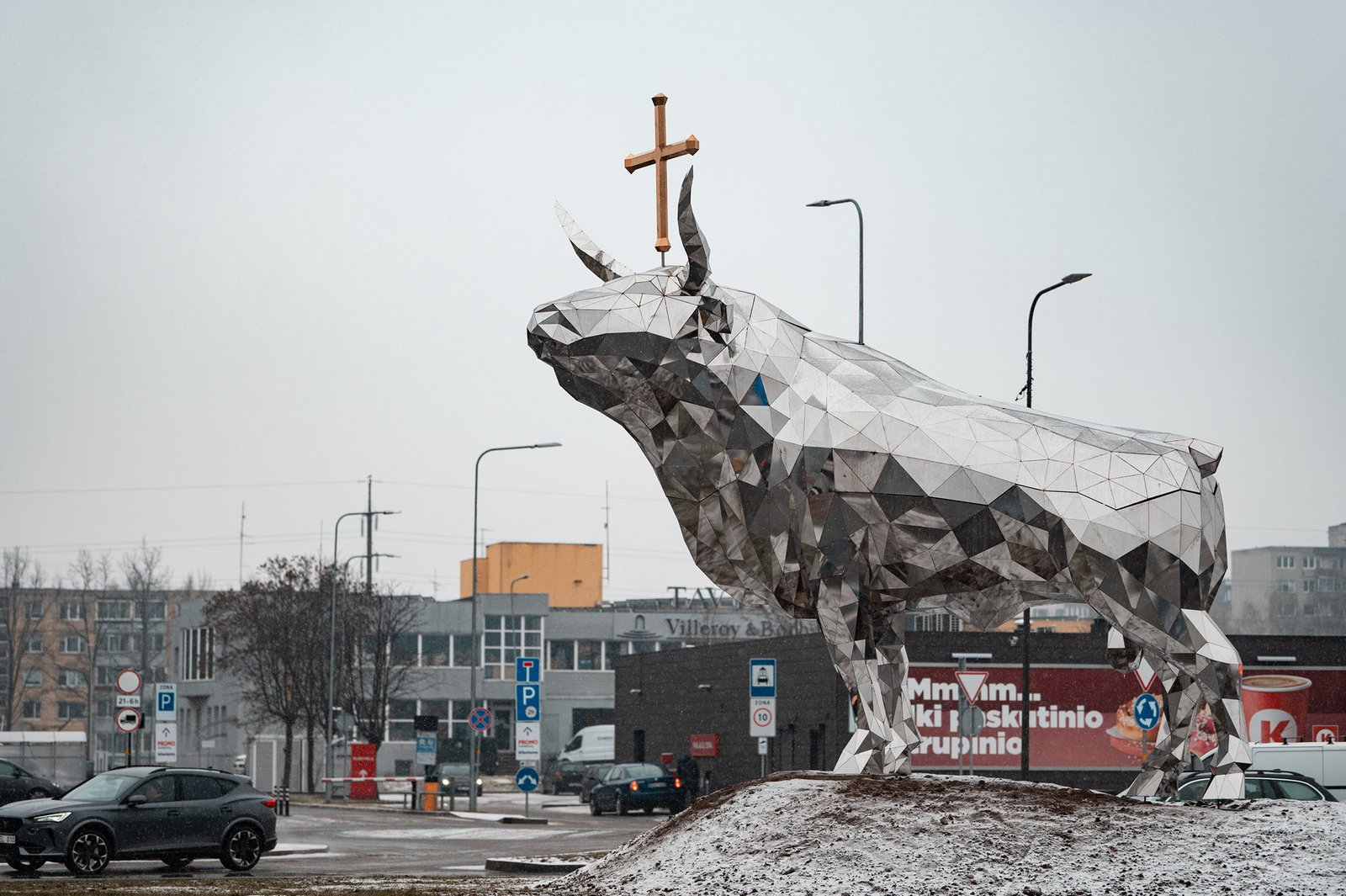
“Stumbras” sculpture in Kaunas
The “Stumbras” sculpture (European bison) standing in Ąžuolynas is one of the city’s oldest symbols. Indeed, it was created in 1979 and reminds us of the time when real aurochs lived in Lithuania. Additionally, this sculpture brings nostalgic memories to many locals.
↩︎ Back to list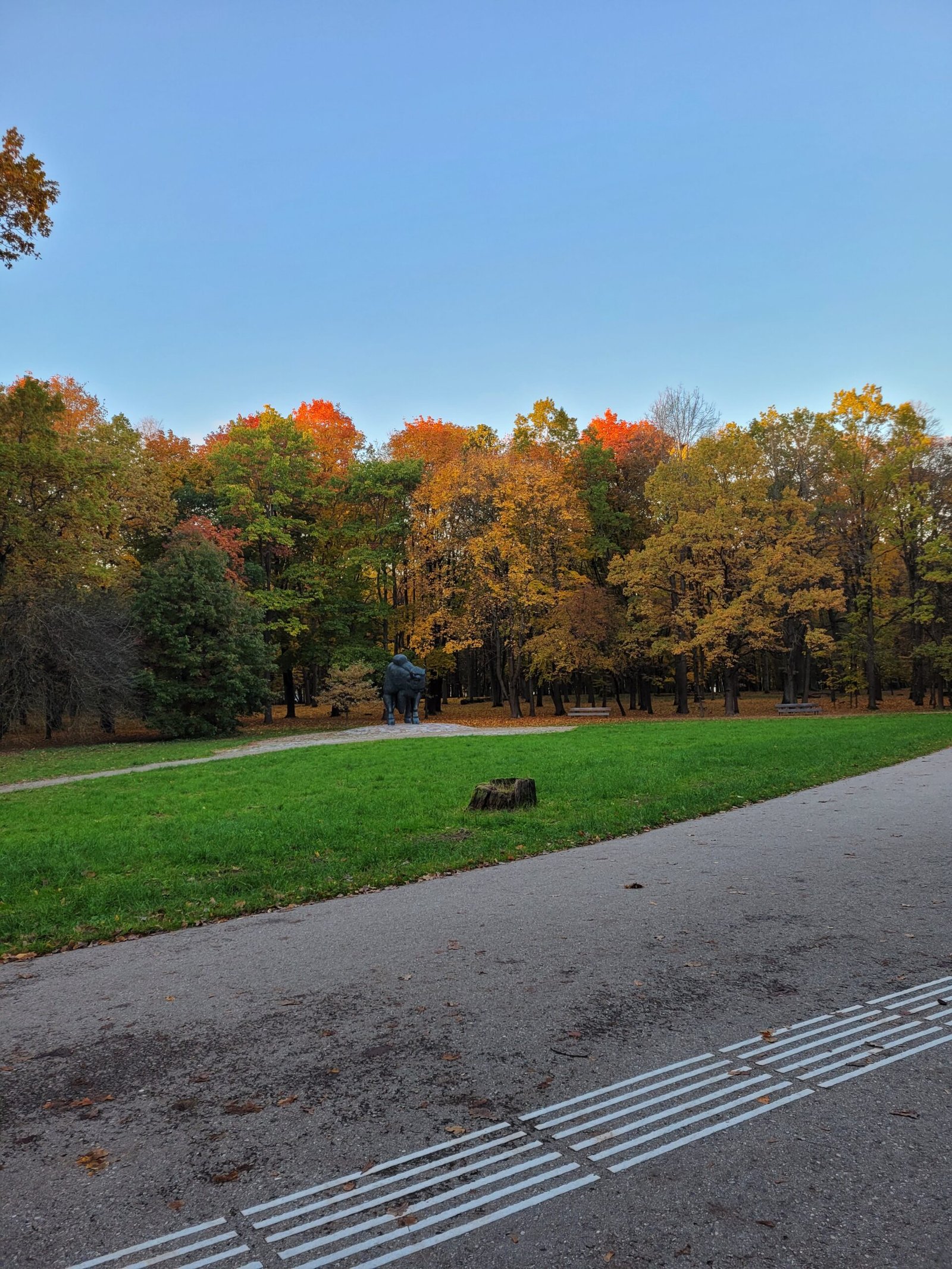
Gentleman cat in Klaipėda
A fun and somewhat unexpected sculpture of a cat with a hat and elegant posture awaits you in the old town. In fact, it’s one of the city’s small sculptures, making it a delightful discovery while exploring – especially for children.
↩︎ Back to list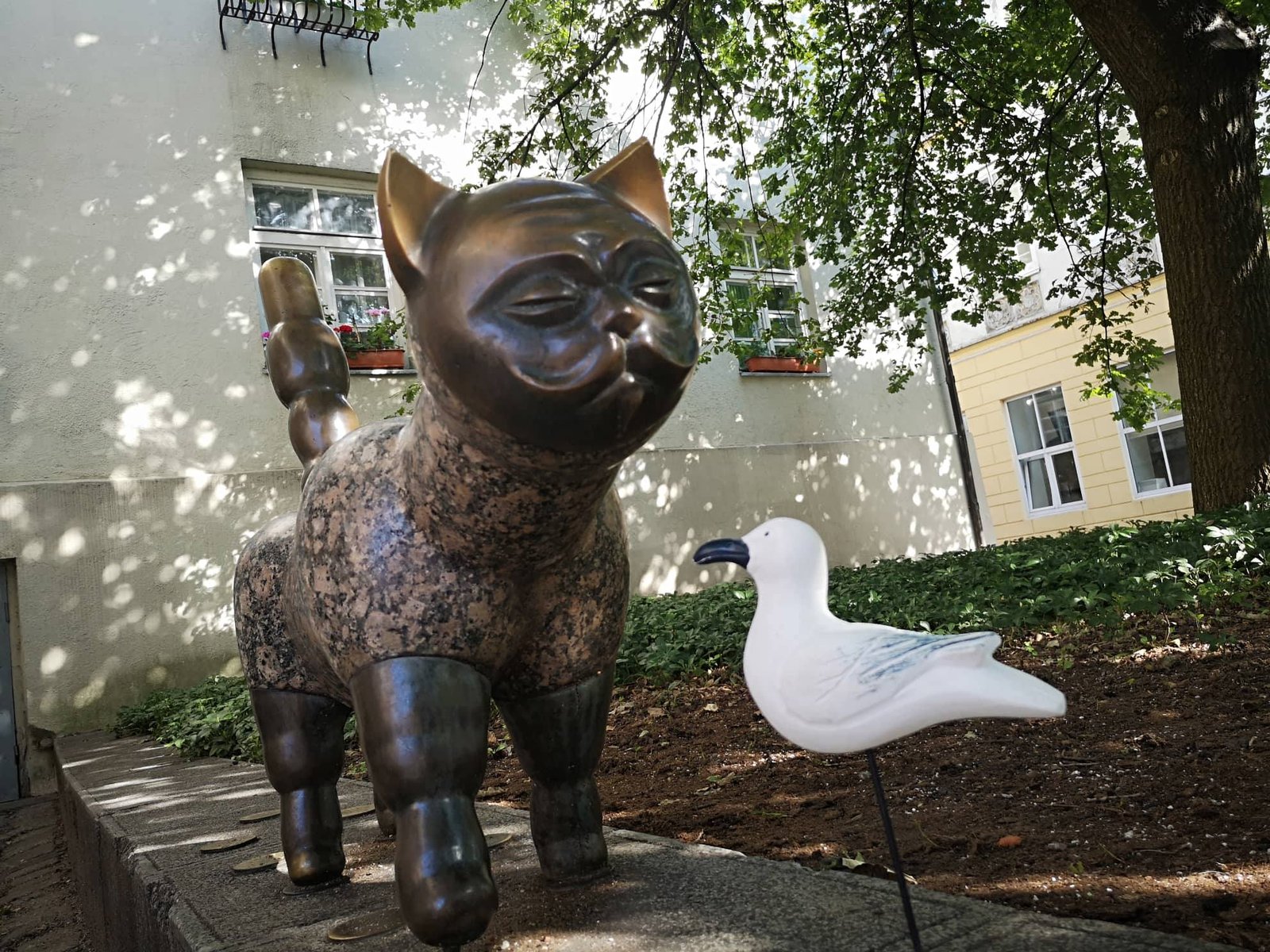
Magic mouse in Klaipėda
You may easily overlook the small bronze sculpture of the Magic Mouse. Nevertheless, locals say that if you whisper your wish to the mouse, it just might come true. For this reason, both children and adults often stop here.
↩︎ Back to list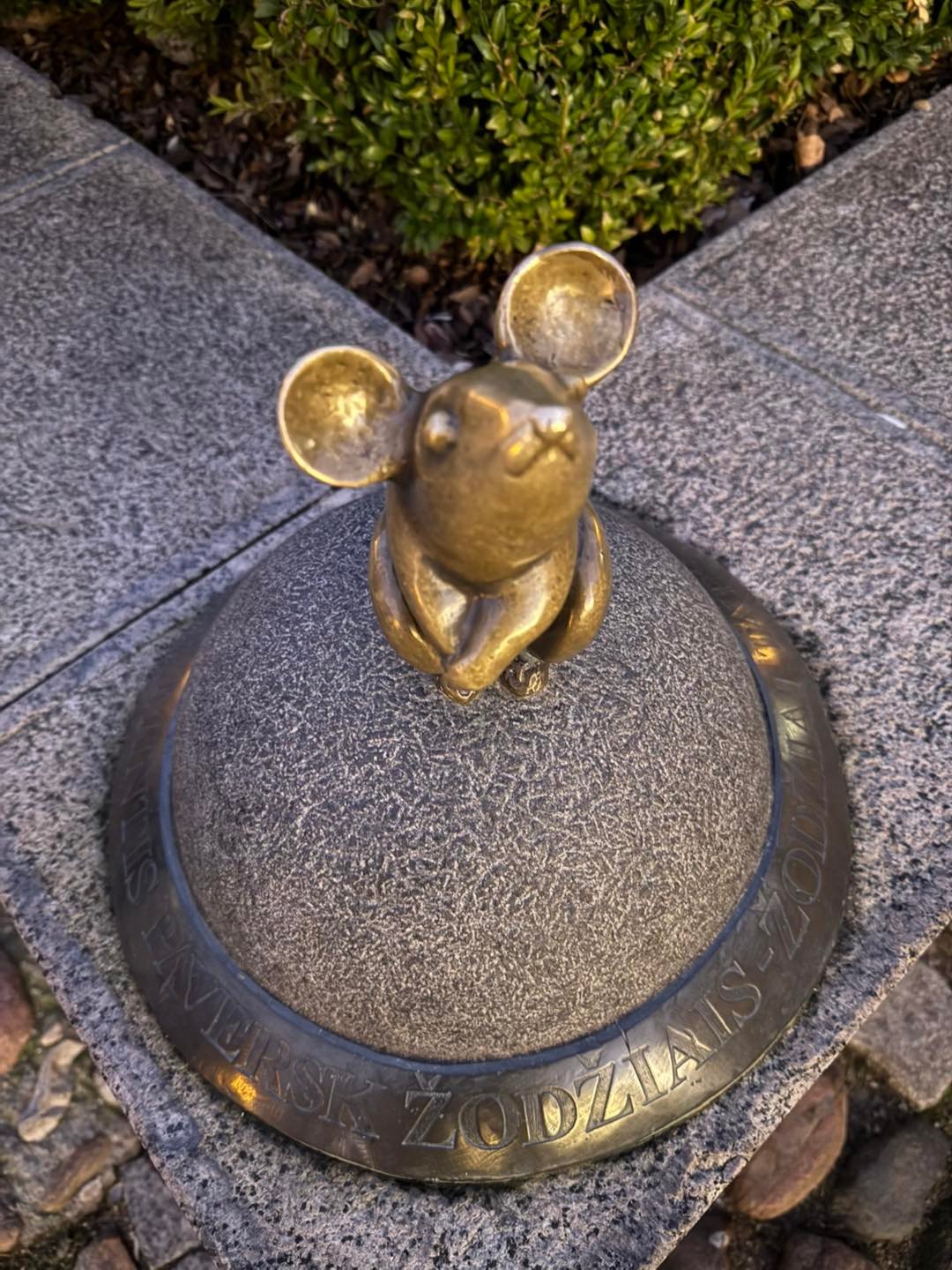
Iron fox in Šiauliai
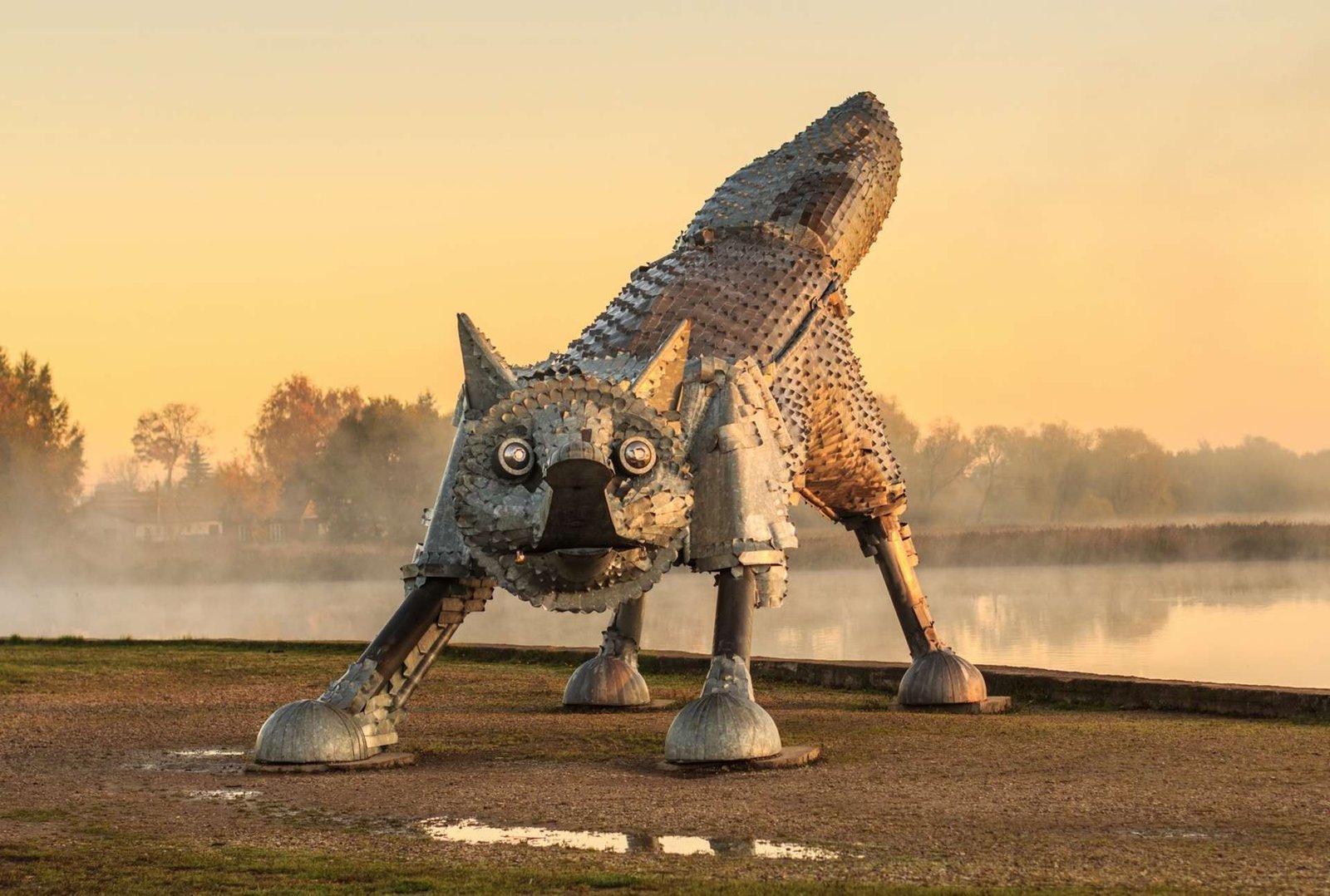
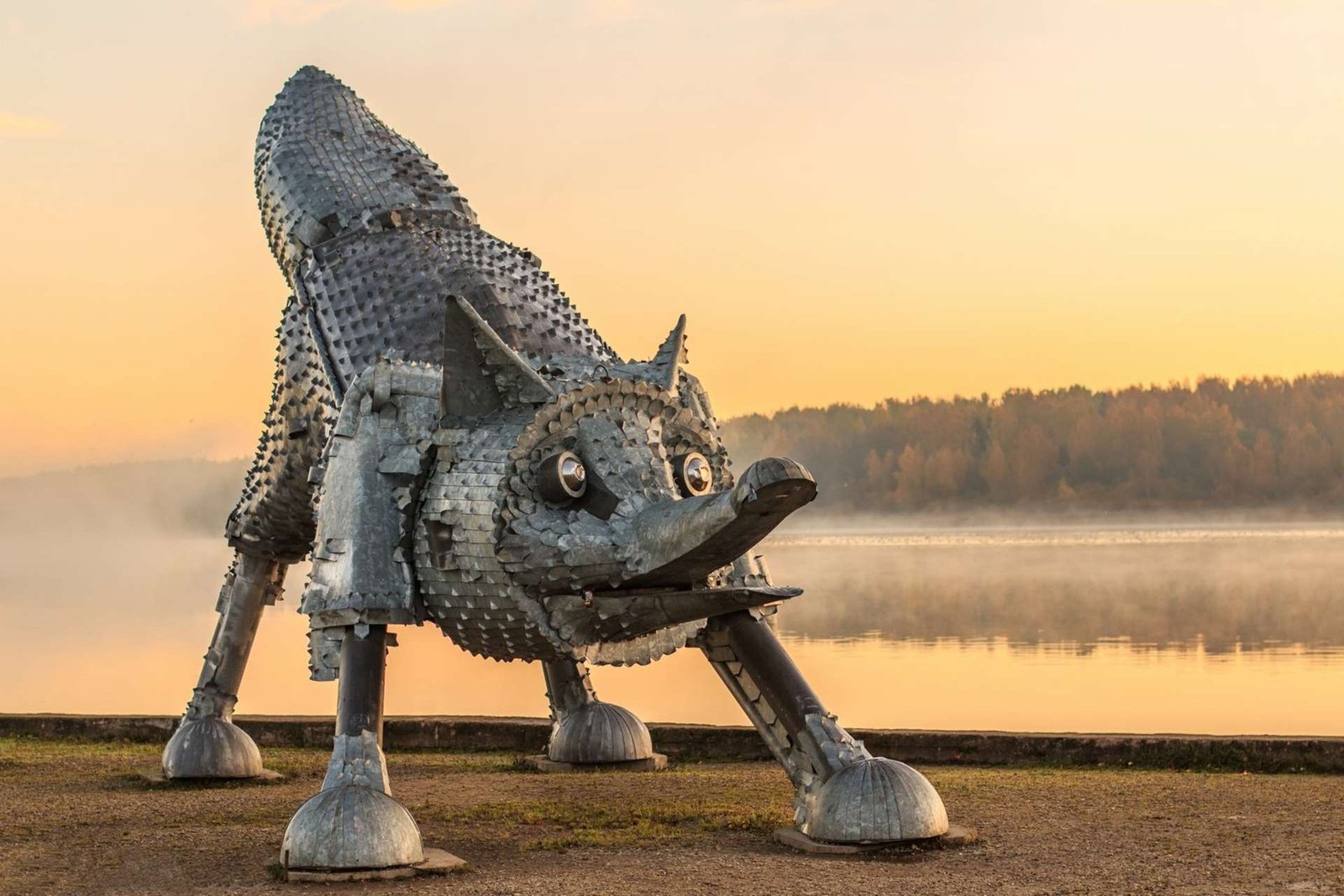
A huge, approximately 15-meter-long metal fox stands by Lake Talkša and is one of the largest animal sculptures in Lithuania. In fact, it is even listed in the Lithuanian Records Book as the biggest animal sculpture in the country. Notably, the Iron Fox looks especially beautiful in the evening when it is illuminated – truly an impressive sight.
↩︎ Back to list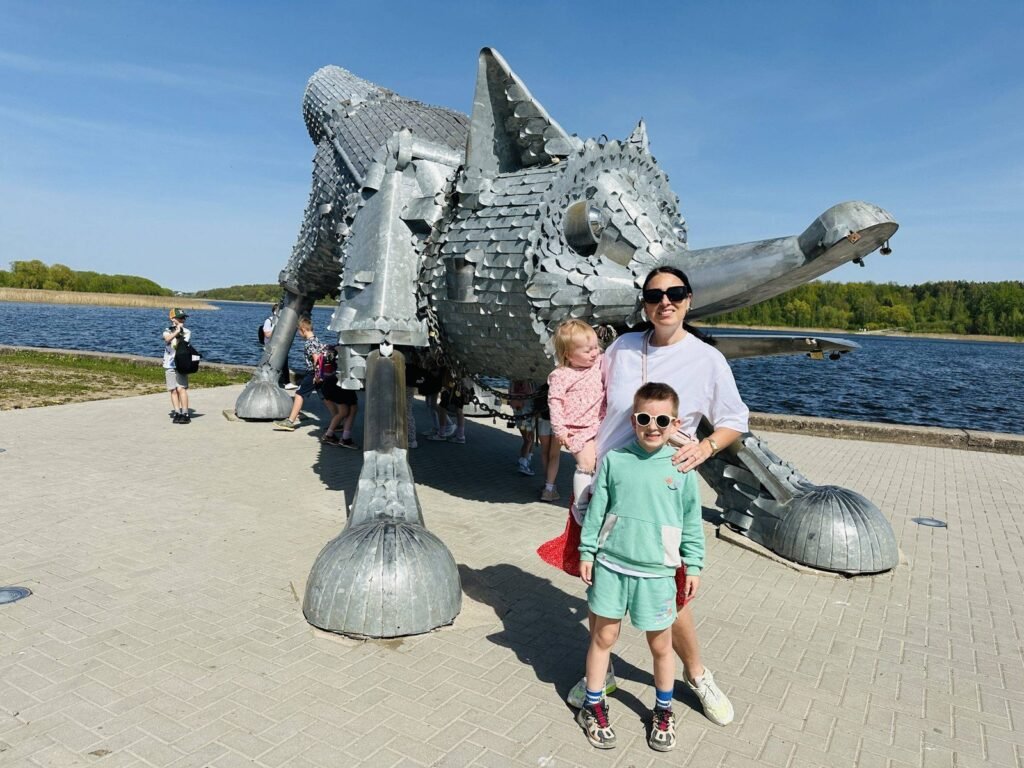
Chameleon in Šiauliai
This sculpture hides in a rather unexpected place – a tree near Didždvaris Gymnasium. Sculptor Gintaras Linkevičius created the chameleon, which looks almost alive as it slowly blends among the branches. Indeed, it is one of the more interesting places to visit in Šiauliai.
↩︎ Back to list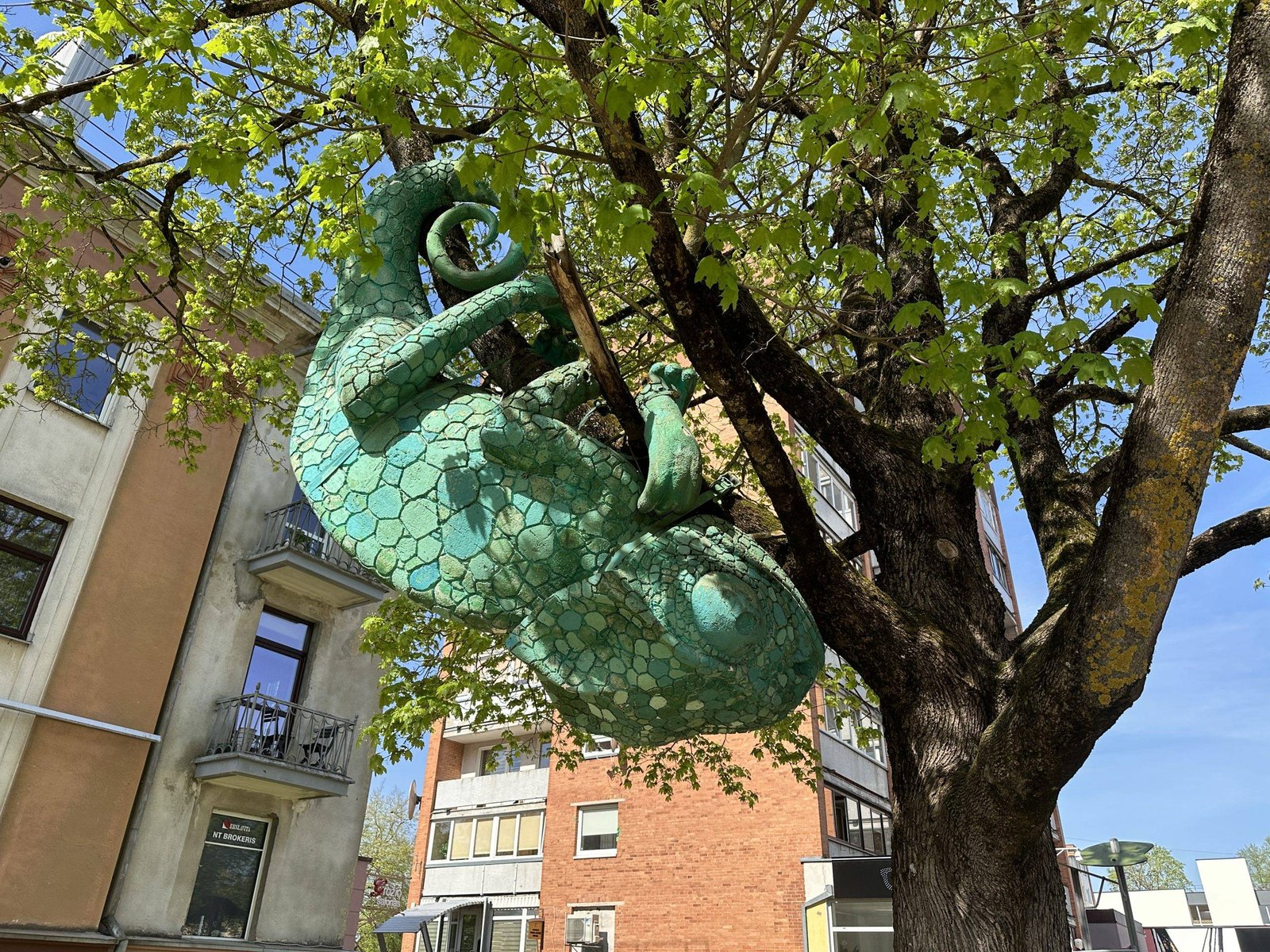
Pelican fountain in Šiauliai
Located on the busy part of Vilniaus Street boulevard, the “Pelicans” fountain was built in 1978 by Birutė Kasperavičienė. The concrete and copper pelicans quickly became one of the city’s oldest fountains. According to legend, two pelicans in love got lost and turned to stone in Šiauliai. For decades, passersby have enjoyed the fountain. Moreover, since its 2003 restoration, it continues to be one of the city’s most recognizable landmarks.
↩︎ Back to list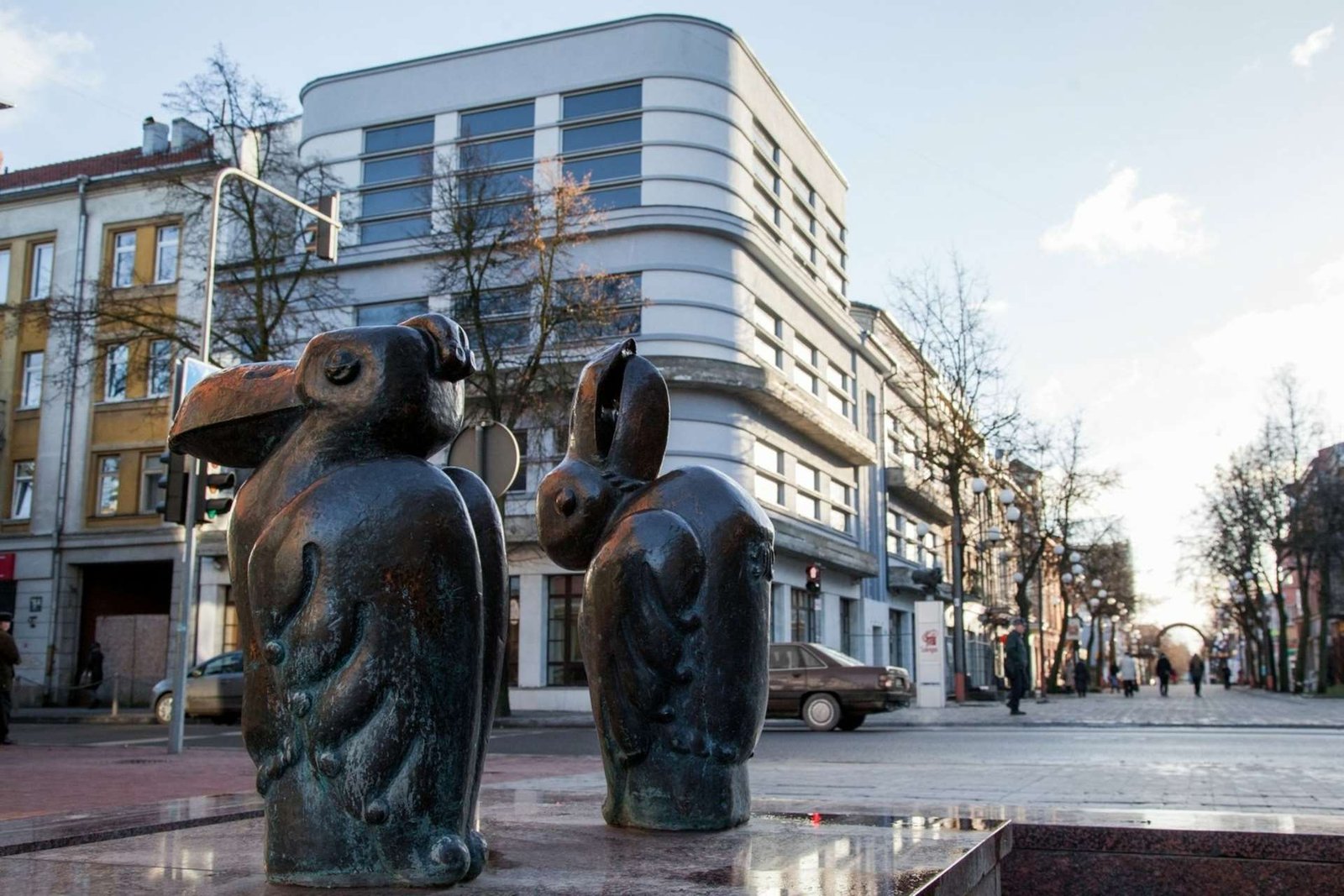
The cats of Countess Pranciška Butlerienė in Marijampolė
Marijampolė features more than one cat sculpture, all of them linked to Countess Butlerienė, who is considered the city’s founder and, according to stories, was very fond of cats. Moreover, these sculptures are scattered throughout the city. Searching for them has become a fun activity – especially for children.
↩︎ Back to list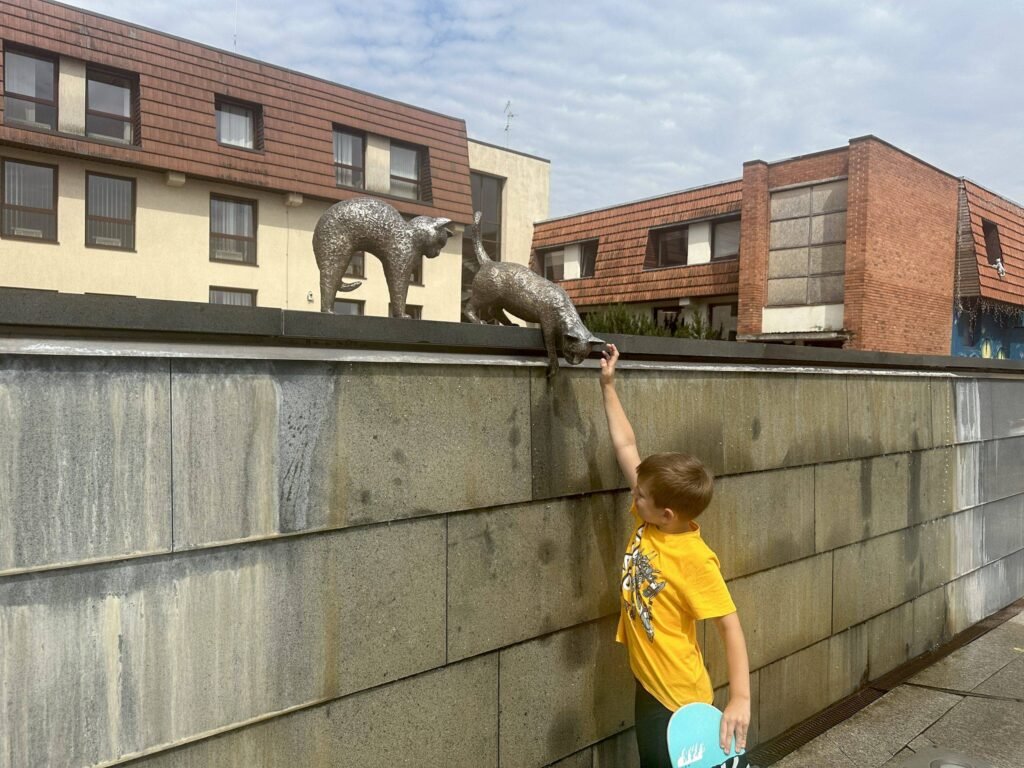
Squirrel Liusė in Alytus
Alytus’s city parks are well known for their lively squirrel population. In the summer of 2020, Liusė passed away; therefore, this sculpture commemorates her. She lived in „Jaunimo parkas (Youth Park)“ pine grove, always responded to her name, showed remarkable bravery, and happily took nuts from people’s hands.
↩︎ Back to list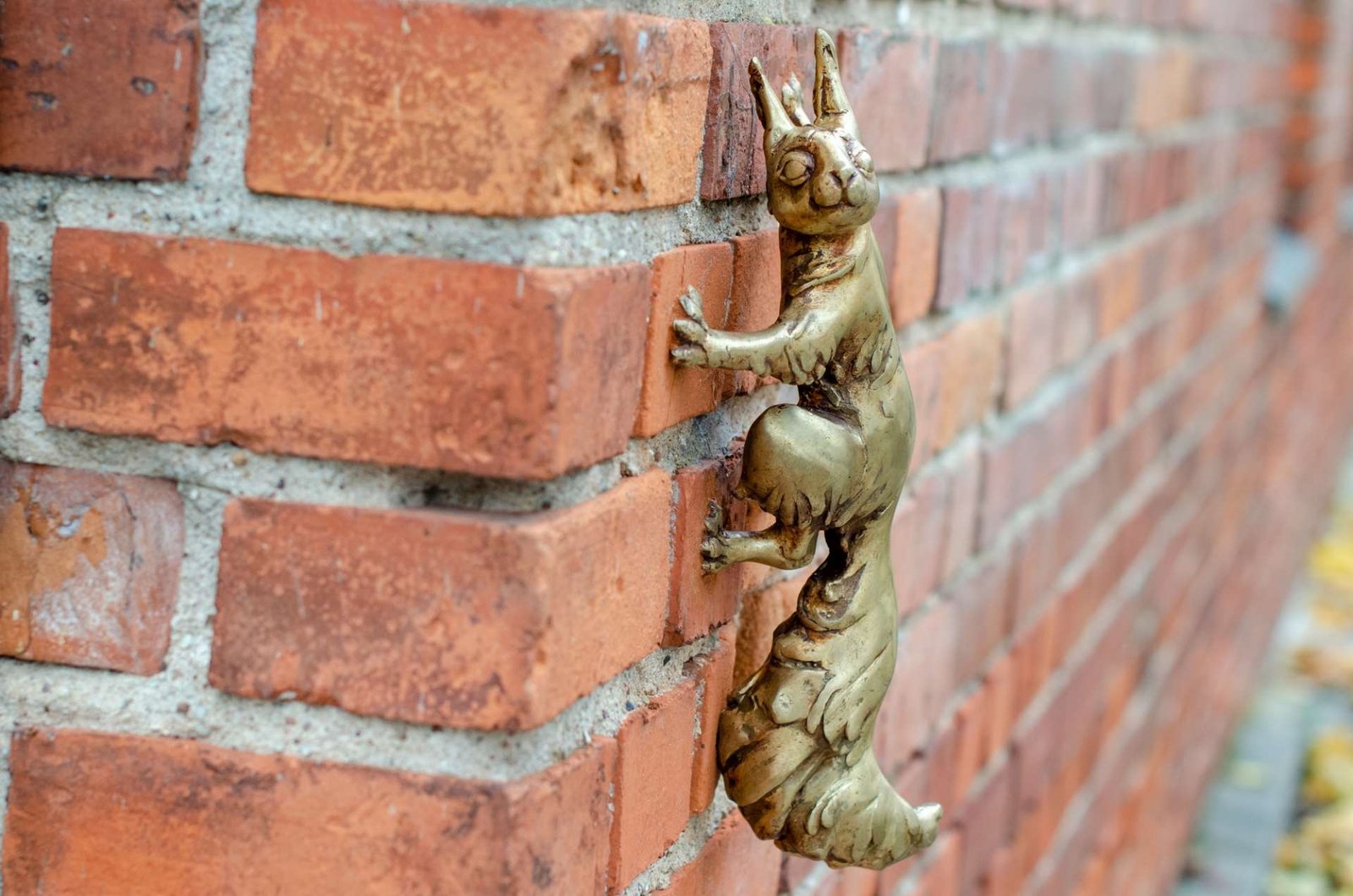
Squirrels Alsodra and Sodriukas in Alytus
Alytus’s parks invite visitors to discover the bronze squirrels Alsodra and Sodriukas – small yet heartwarming pieces that stand among the most delightful animal sculptures in Lithuania. Notably, these charming figures depict a mother squirrel and her little one together, accompanied by the words “We create our own happiness.” As you stroll through the parks, you’ll discover how these sculptures add a playful and heartwarming touch to the city’s green spaces.
↩︎ Back to list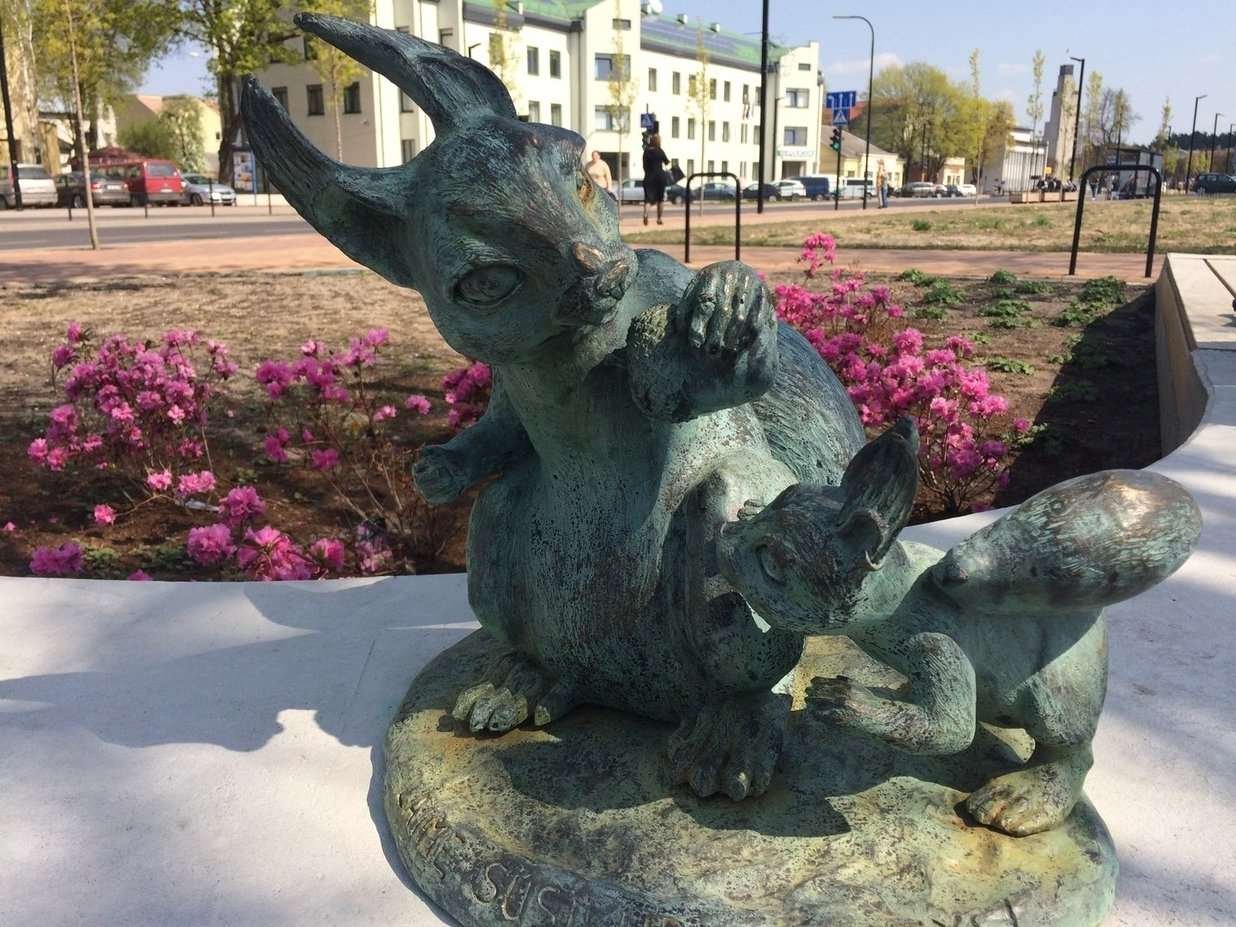
Old Town Square Squirrel in Alytus
At the beginning of 2020, a bronze squirrel sculpture by M. Zavadskis appeared on a bench in the Old Town Square, right next to the book exchange house. An inscription “Alytiškių iniciatyvos” surrounds the figure, and the book held by the squirrel reads “A book is a good way to surpass your yesterday’s self.” Many visitors find this sculpture adds a special charm to the square.
↩︎ Back to list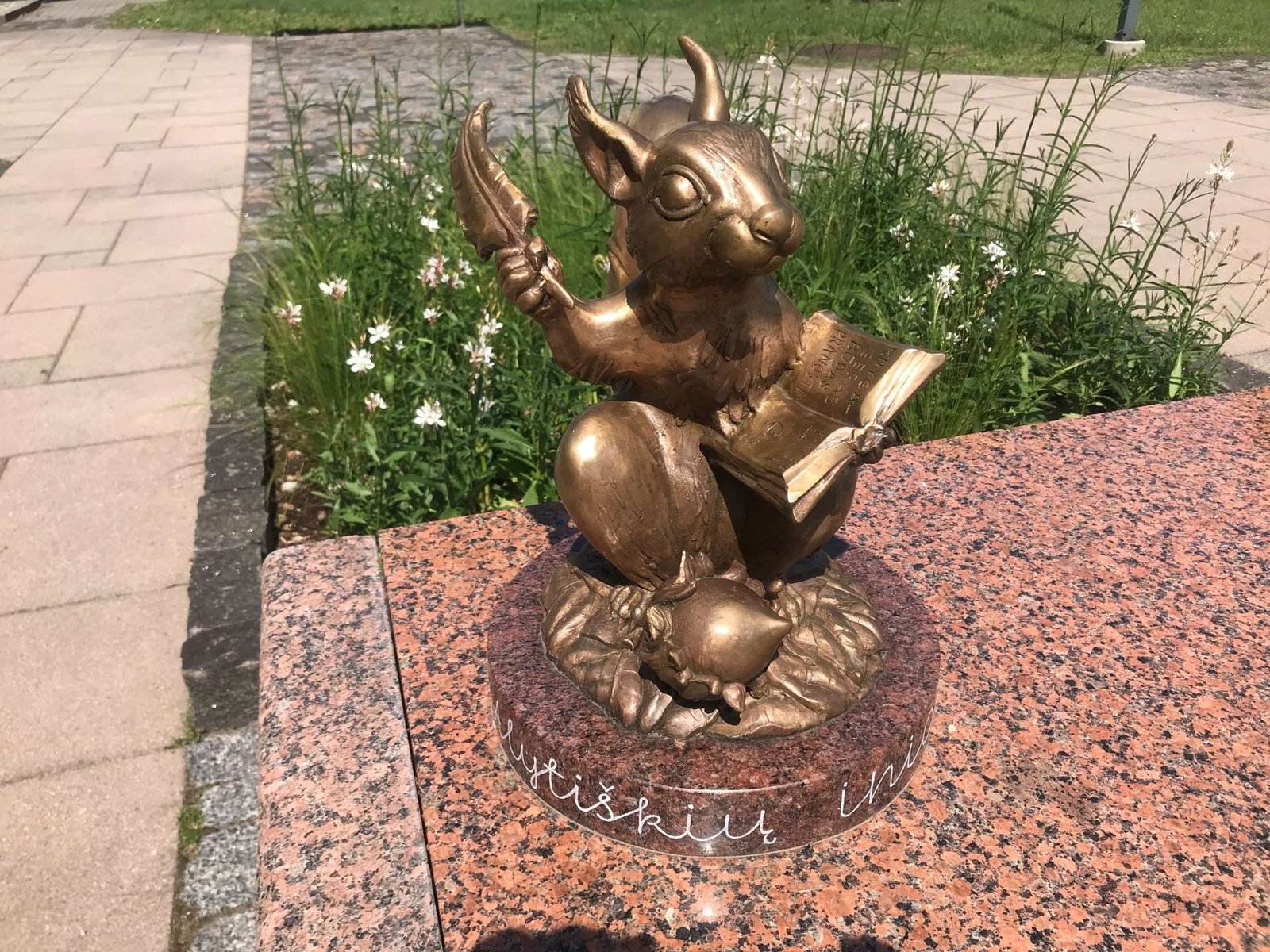
“Hedgehogs” sculpture in Ignalina district
Asta Vasiliauskaitė’s “Hedgehogs” settled cozily in the courtyard of the old library building. In addition, this sculpture symbolizes a rural community and encourages everyone to live in harmony and share warmth.
Moreover, the Palūšė village community initiated and, in 2012, carried out the project “Activating Palūšė Residents to Beautify Public Village Spaces.” As a result, artists created wooden sculptures that now decorate the village’s public areas.
↩︎ Back to list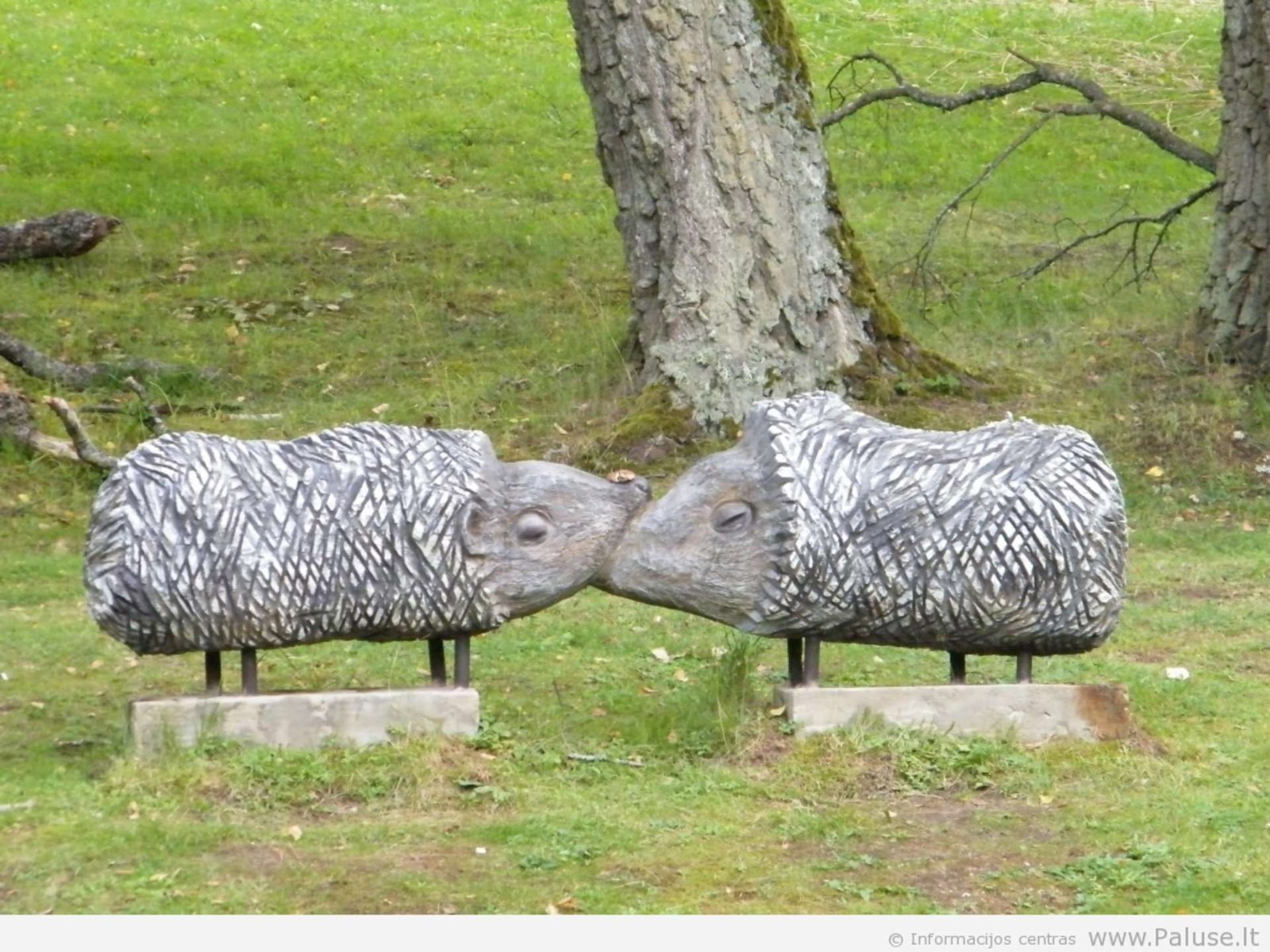
Rams in Druskininkai
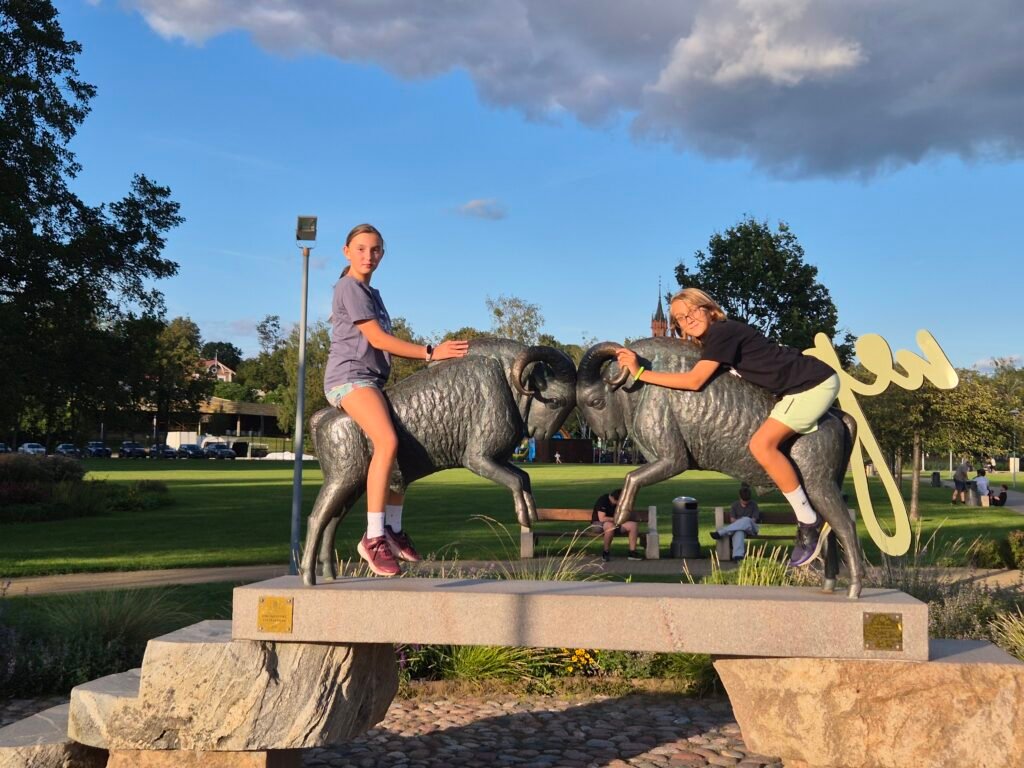
In Vijūnėlė Park, you will notice the “Rams” sculpture created by Dalia Matulaitė. Notably, the artist placed it right in the park’s main recreation area, among paths and greenery. In spring, daffodils bloom all around, and the sculpture becomes yet another highlight for families enjoying a walk or spending time together.
↩︎ Back to list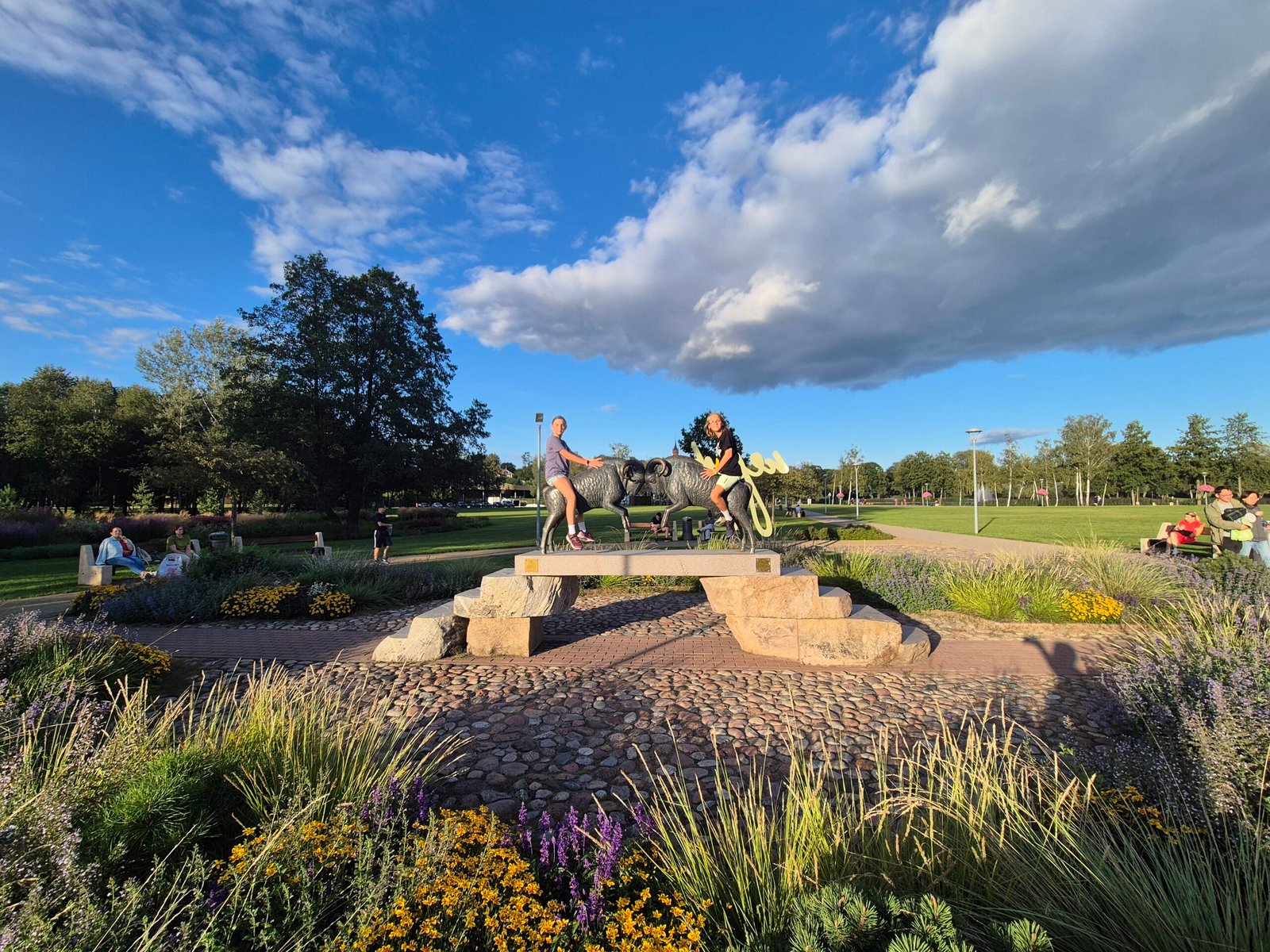
“Eglė – queen of serpents” in Palanga
In Palanga’s Birutė Park, right next to the main path, you will find the sculpture “Eglė – Queen of Serpents,” created by Robertas Antinis Sr. In fact, this bronze work, installed in 1960, depicts the Lithuanian fairy tale heroine Eglė together with the serpent and subtly conveys themes of love and mystery.
Moreover, the sculpture blends naturally into the park’s landscape. As a result, it stands out as one of the most famous artistic highlights in Palanga.
↩︎ Back to list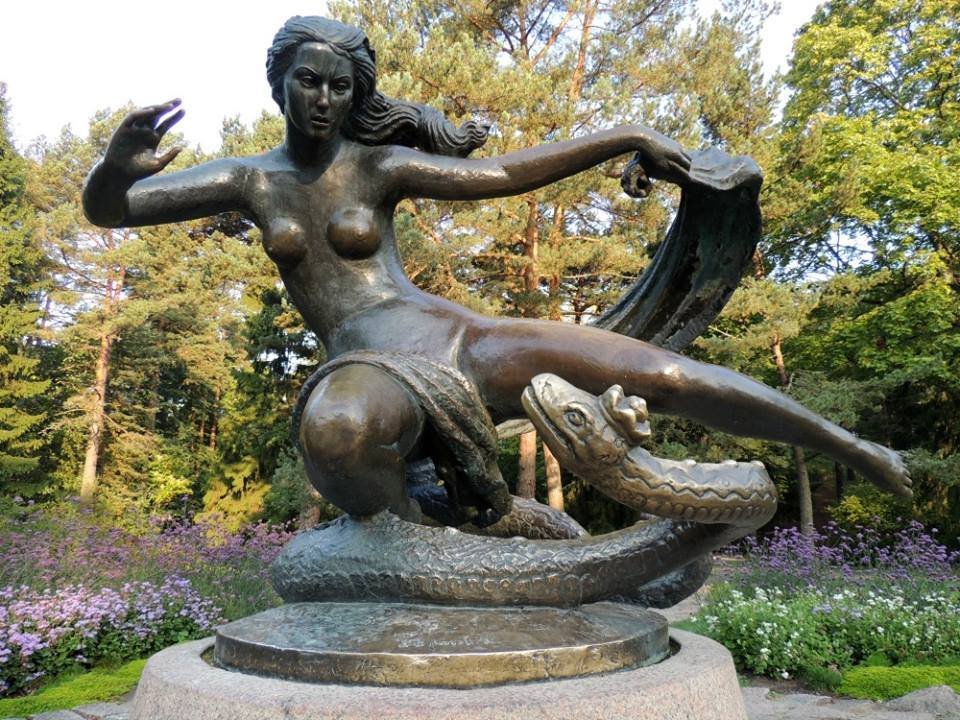
Puppy Keksas in Ukmergė
In Ukmergė, you will find a small but very charming city symbol – Puppy Keksas. Over time, this sculpture quickly became a favorite of the locals. In fact, the sculpture honors a real puppy, well known in the city, who left a memorable mark on Ukmergė’s history.
↩︎ Back to list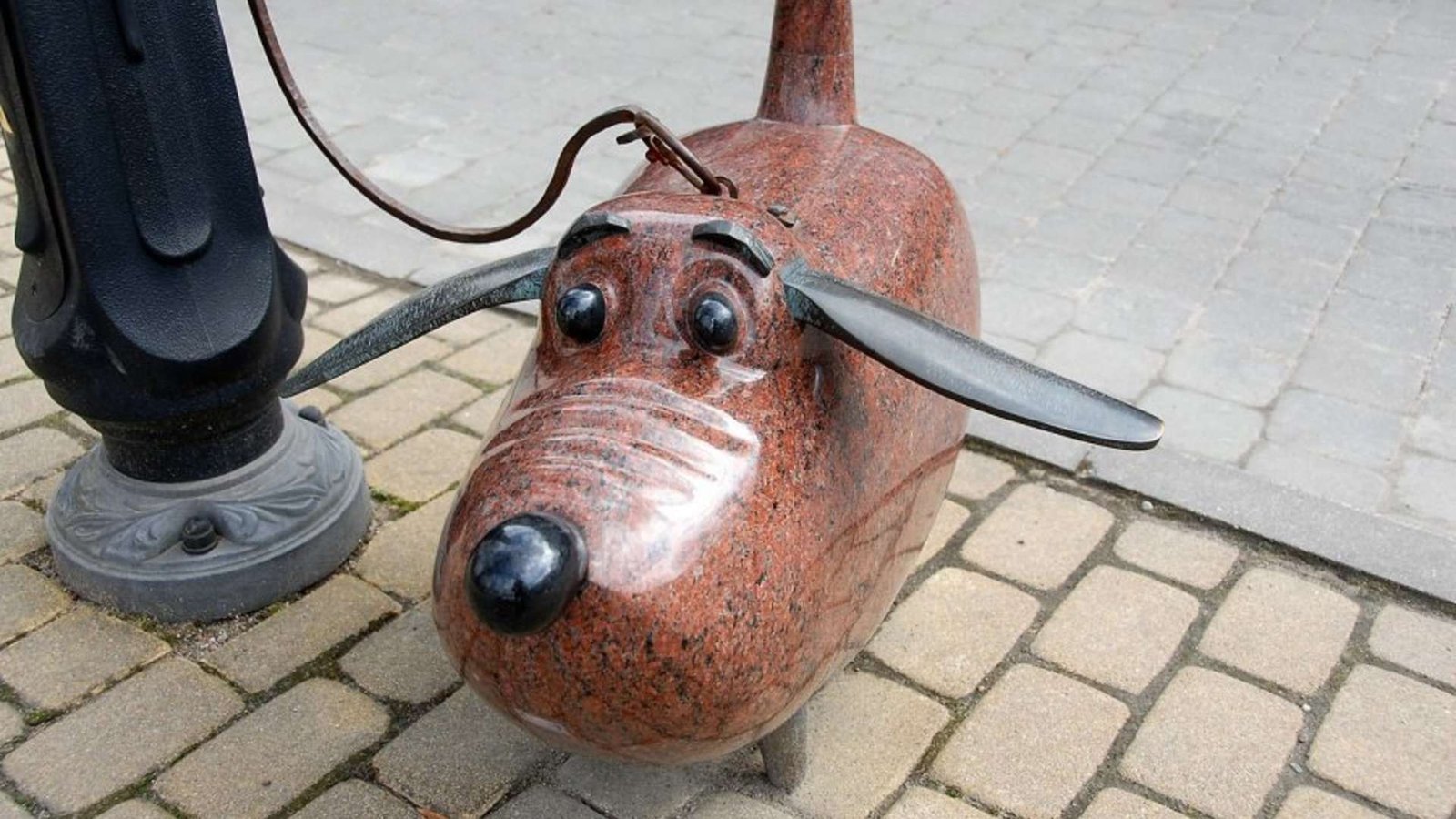
Pigeon sculptures in Ukmergė
As you explore Ukmergė, you might notice several small pigeon sculptures placed throughout the city’s public spaces. In fact, even though these sculptures are not large or grand, their unexpected appearance delights those who spot them. As a result, children and adults alike enjoy discovering these subtle works of art.
↩︎ Back to list“Bear cubs” („Meškutės“) sculptures in Telšiai
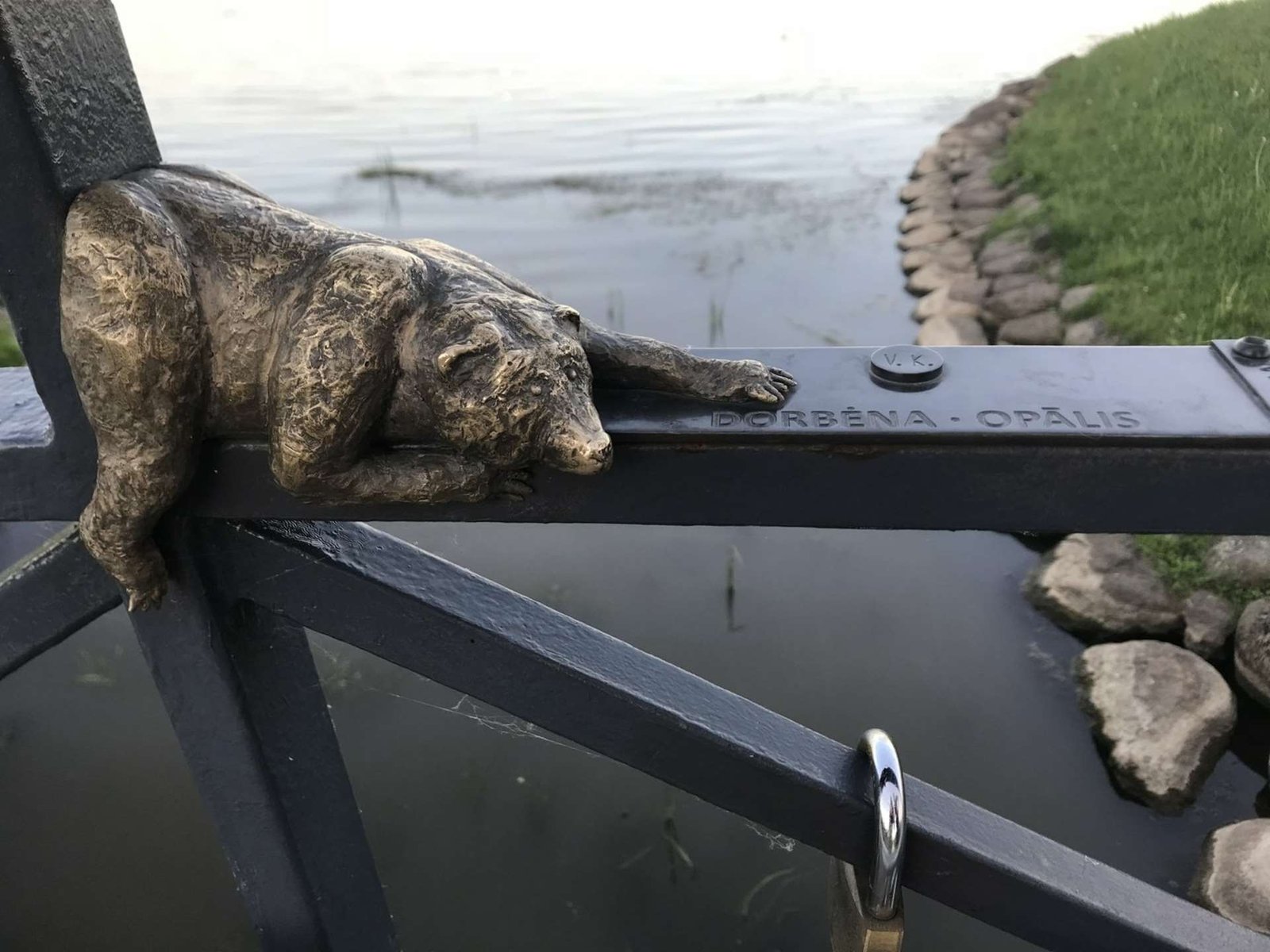
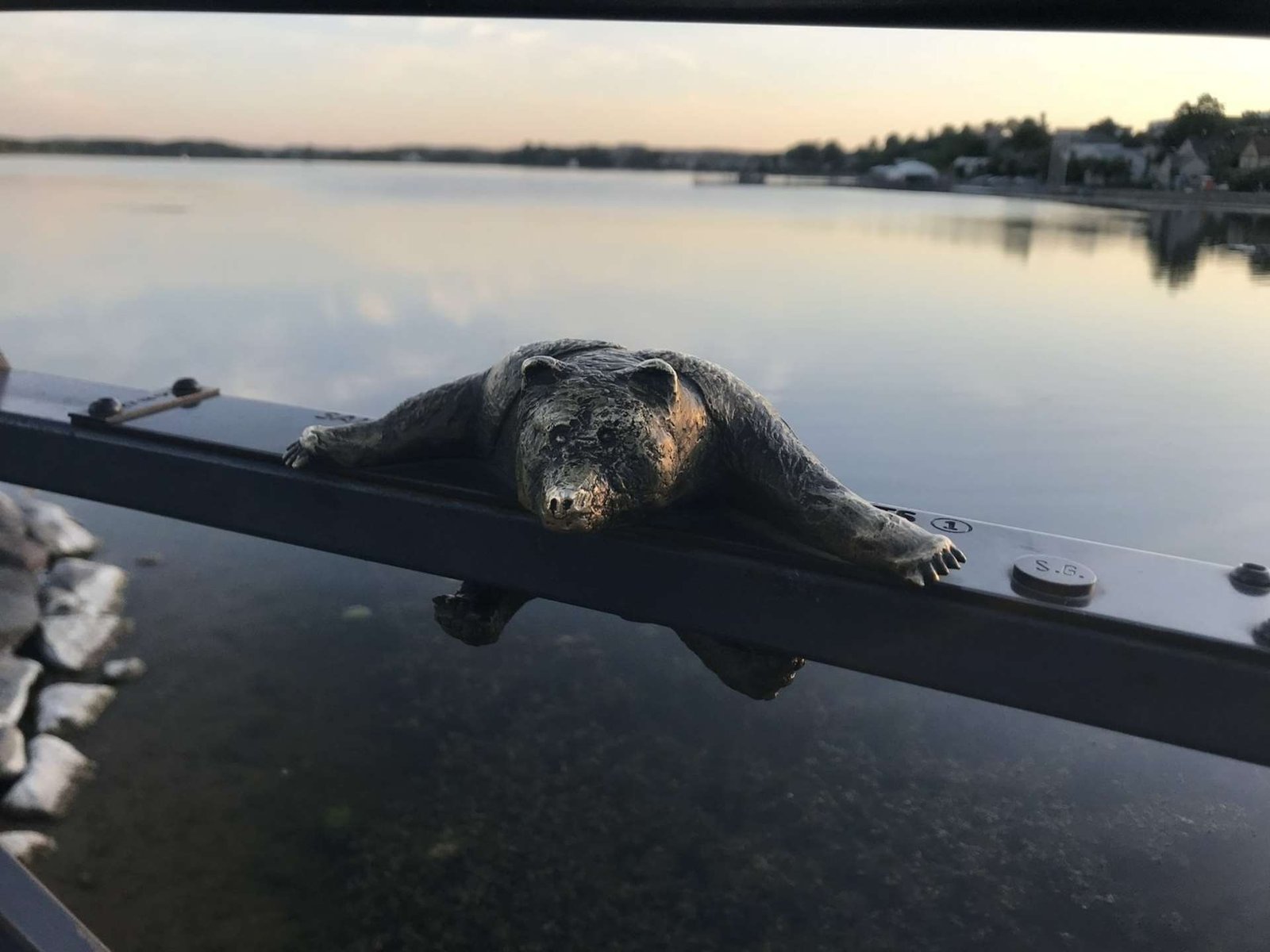
Along the shore of Lake Mastis in Telšiai, you will find playful “Bear Cubs” sculptures spread across six small bridges. In fact, each bear displays a different mood – some appear shy, while others seem playful, and, in some cases, a few even look as if they are hiding. Therefore, these sculptures not only subtly highlight the city’s close relationship with water, but also, at the same time, turn a simple stroll into a fun adventure of small discoveries.
↩︎ Back to list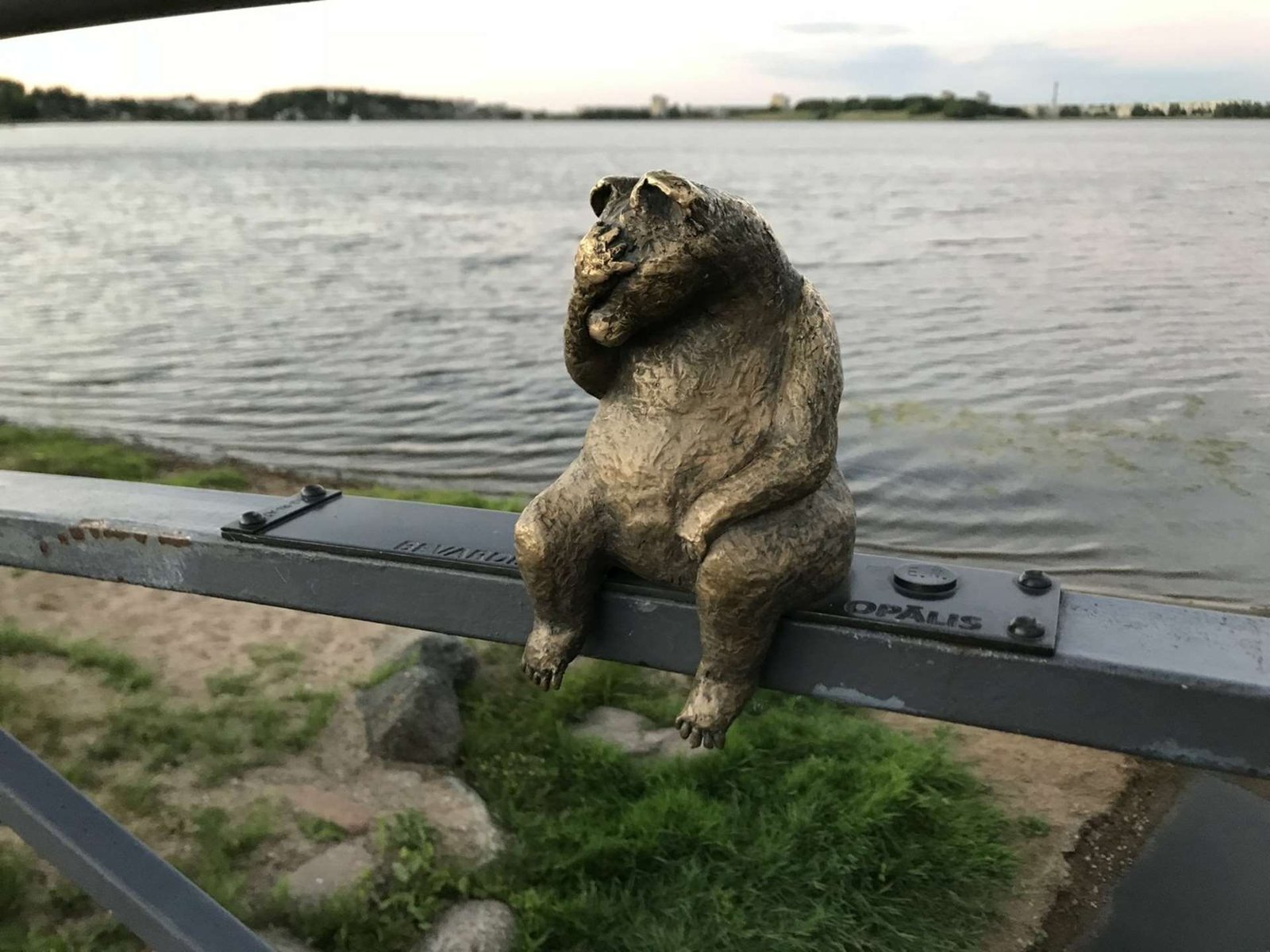
“Falcon’s eye” sculpture in Šilutė district
In Mantvydai village, Šilutė district, you can spot the wooden sculpture “Falcon’s Eye,” created by folk artist Rimantas Pilibavičius. Notably, this unique piece stands four meters tall and is visible from the Šilutė–Klaipėda road. The Lithuanian Records Book recognizes “Falcon’s Eye” as an outstanding achievement. It is also included among the country’s most remarkable records.
↩︎ Back to list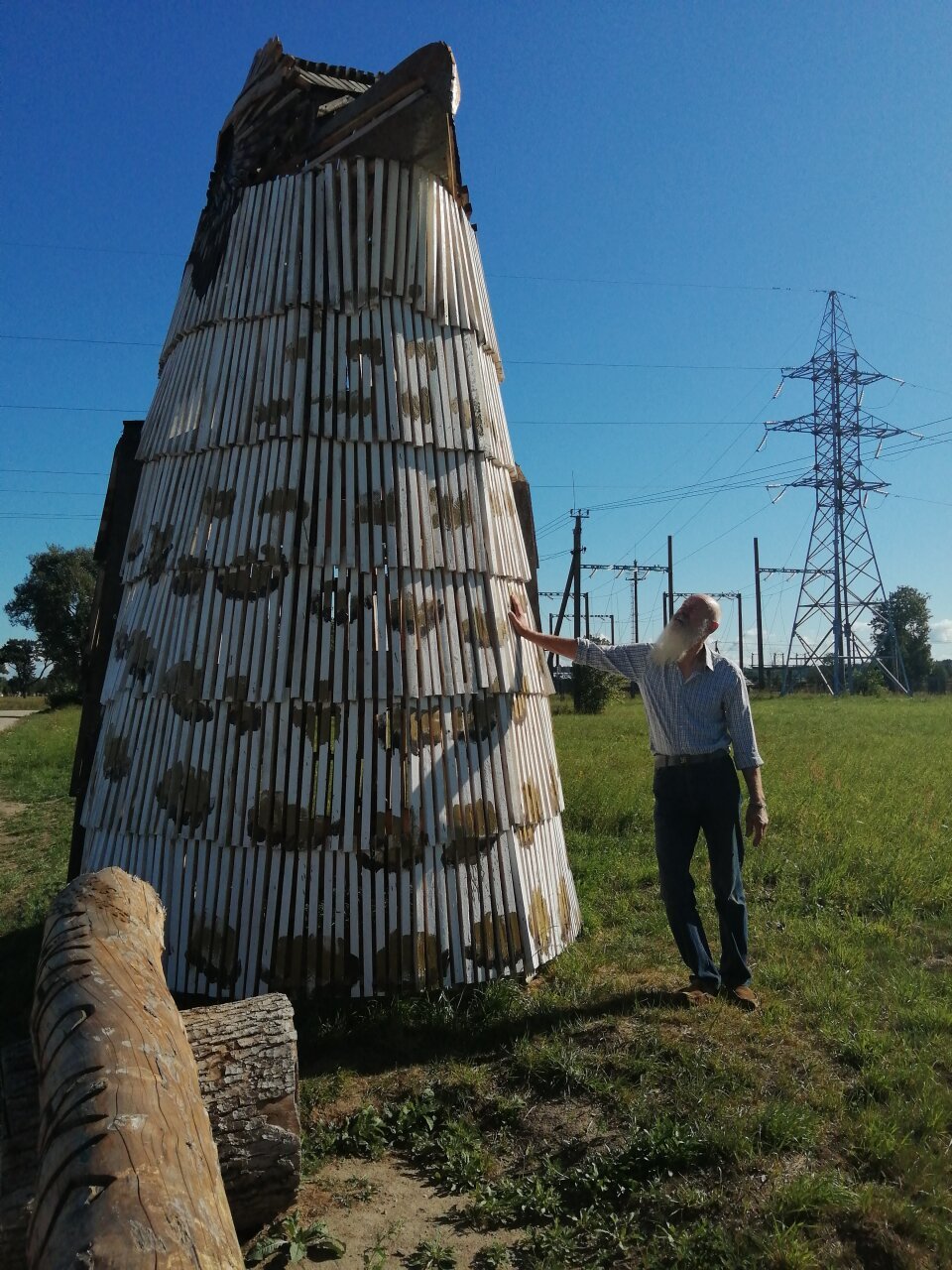
Man-Bird in Lazdijai district
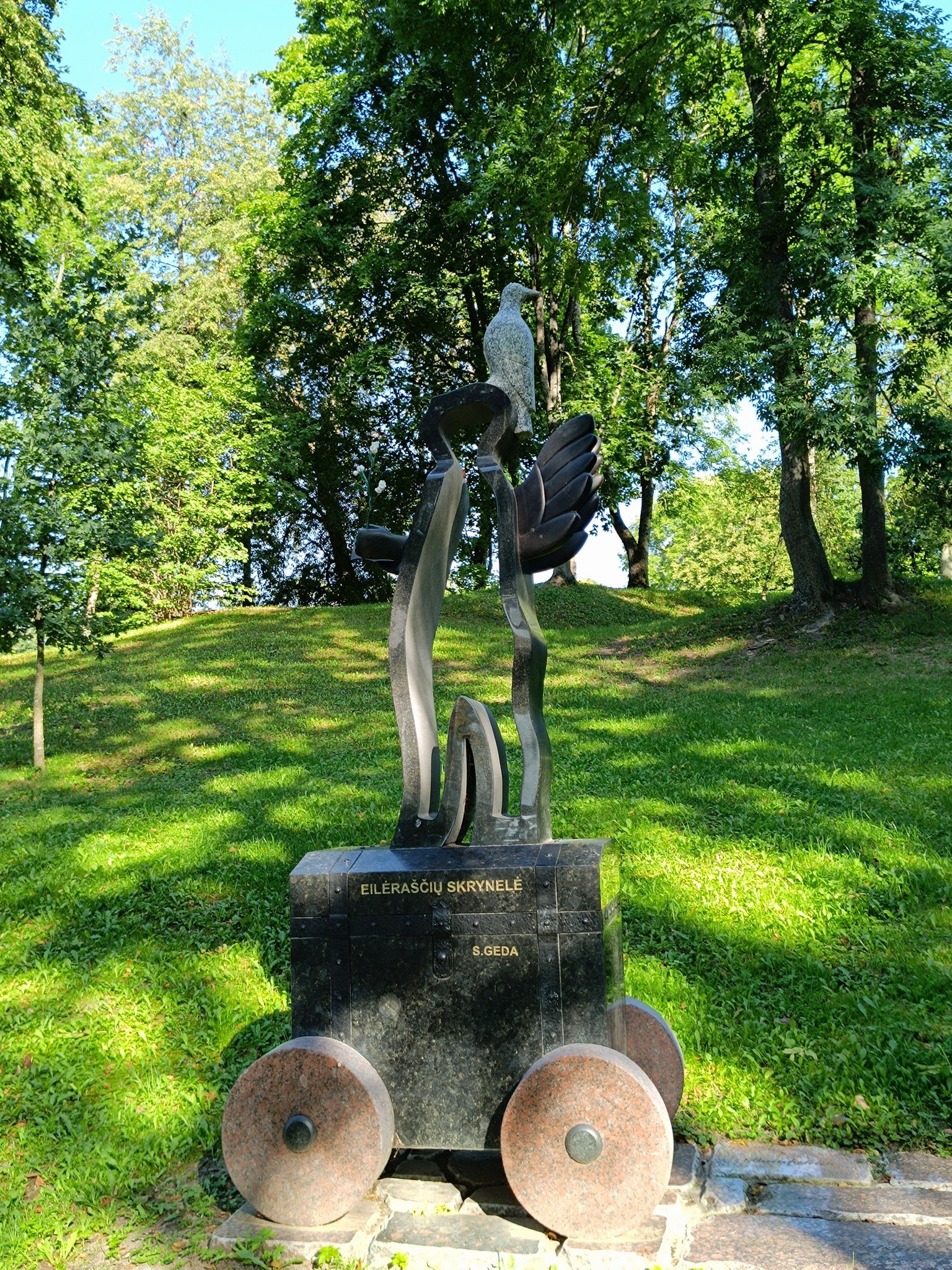
You can find this sculpture in Veisiejai Park, where the creators dedicated it to poet Sigitas Geda. In 2023, sculptor Kęstutis Musteikis erected the piece to celebrate the poet’s 80th birthday. Notably, the name “Bird-Man” fits perfectly, as the sculpture reflects Geda’s work, where man, nature, and freedom often intertwine.
↩︎ Back to list