On the island, you suddenly notice that a month has passed and you have eaten almost only fish. However, you do not miss meat at all. From market to restaurant: in this article, you will find a short guide to Canary Islands fish, what to try in Tenerife and how to buy it.
Even the most devoted meat lovers should try the variety of flavors these fish offer. Moreover, the fish here is always fresh, and the staff clean and prepare it in the store exactly how you ask. So now, let us go step by step: what fish to try in Tenerife, from market to restaurant. Our friend Lina shared her experience and advice with us. She loves cooking, writes reviews, and shares everyday and special recipes on her website „Lina gamina“ (Lina cooks) and on Instagram. Lina explained what fish you can find in Tenerife, how and what to buy, and how to cook it.
From market to restaurant: what fish to try in Tenerife
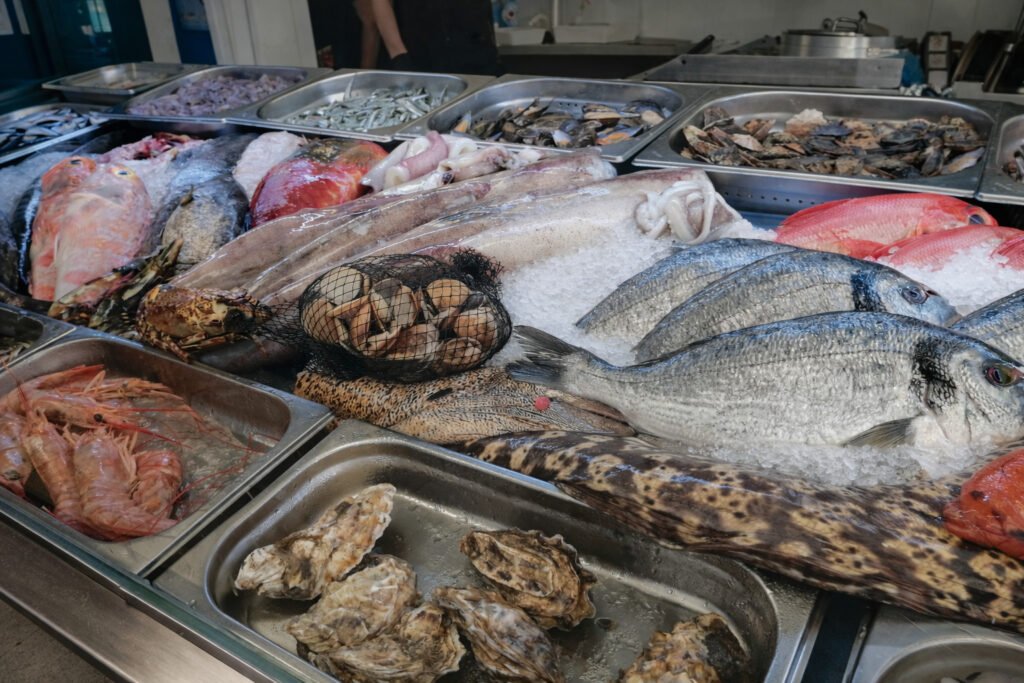
In Tenerife, Lina usually buys fresh fish at the supermarket. For example, there is a Mercadona nearby. Even in the evenings, you will find dorada, sea bass called lubina in Spanish, defrosted large prawns called langostinos, and squid. However, Lina advises not to wait until evening. Instead, go in the morning together with the locals. At that time, sellers display fresh seasonal fish on ice. Fishermen’s cooperatives deliver whatever they catch directly to the stores.
Once you choose your fish, you can simply point with your fingers, even if you do not speak the language. The staff will understand how you want it cleaned.
Vocabulary – how to ask for fish
Here are a few useful phrases:
- Me puede limpiar el pescado, por favor? This means: Could you clean the fish for me, please? When you say this, the seller will remove the scales, clean the inside, and take out the gills.
Sometimes they ask:
- Con cabeza? (head) – leave the head?
- Escamar – remove the scales
- La tripa – clean the inside
- Me puede quitar la espina? – Can you remove the bones?
- Me lo prepara en filetes? – Can you prepare it in fillets? One fish will give you two fillets.
A few more useful words:
- Entero – whole fish. Add the fish name, for example entero medregal or entera dorada.
- Rodajo – a slice or portion
- Cortado – a cut piece
- Filete – fillet
From market to restaurant: what fish to try in Tenerife and how to choose
Lina admits she does not buy salmon, dorada, and has bought sea bass only once. Dorada here is larger than in Lithuanian stores. It shines, looks fresh, has dark gills, and smells like the ocean. However, when you see so many other fish, you want to try something new.
Fish caught all year round
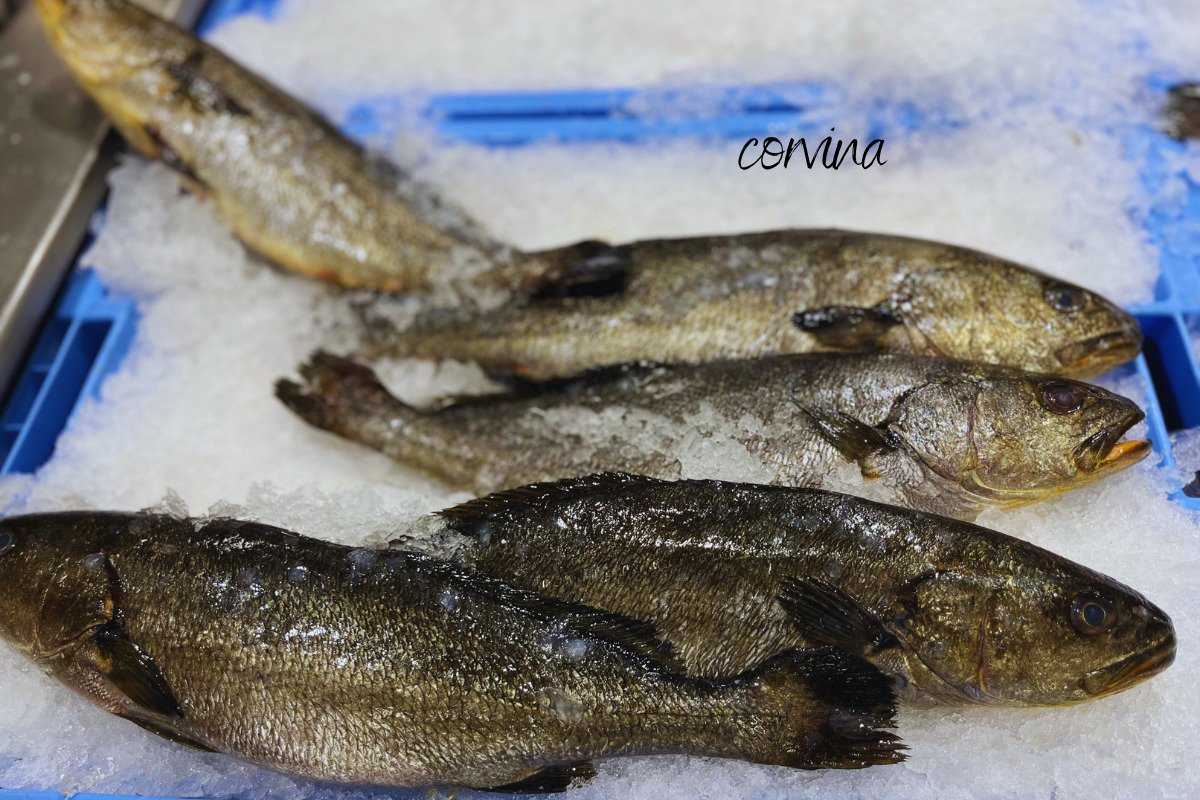
Corvina
Corvina, known in English as stone bass, is affordable. It costs around 9 to 10 euros per kilogram. It is not large. A medium fish weighs about one to one and a few hundred grams, while bigger ones reach close to two kilograms.
Ask the seller to clean it. At home, rinse it with cold water and pat it dry. Then sprinkle with salt and pepper, drizzle with olive oil, and bake at 170 degrees Celsius for about 20 to 30 minutes. However, do not overcook it. If you are unsure, pull the top fin gently. If it comes off easily and the inside is no longer pink, take the fish out. It will continue cooking for a few minutes while you serve it. Corvina has a firm and moist texture. It tastes great with fresh vegetable salad, Canarian potatoes, and mojo rojo or mojo verde.
- Taste: mild, slightly sweet, not fatty.
- Texture: firm, moist, white.
- Cooking: best baked in the oven. You can also grill it or use it for ceviche.
Rodaballo, turbot
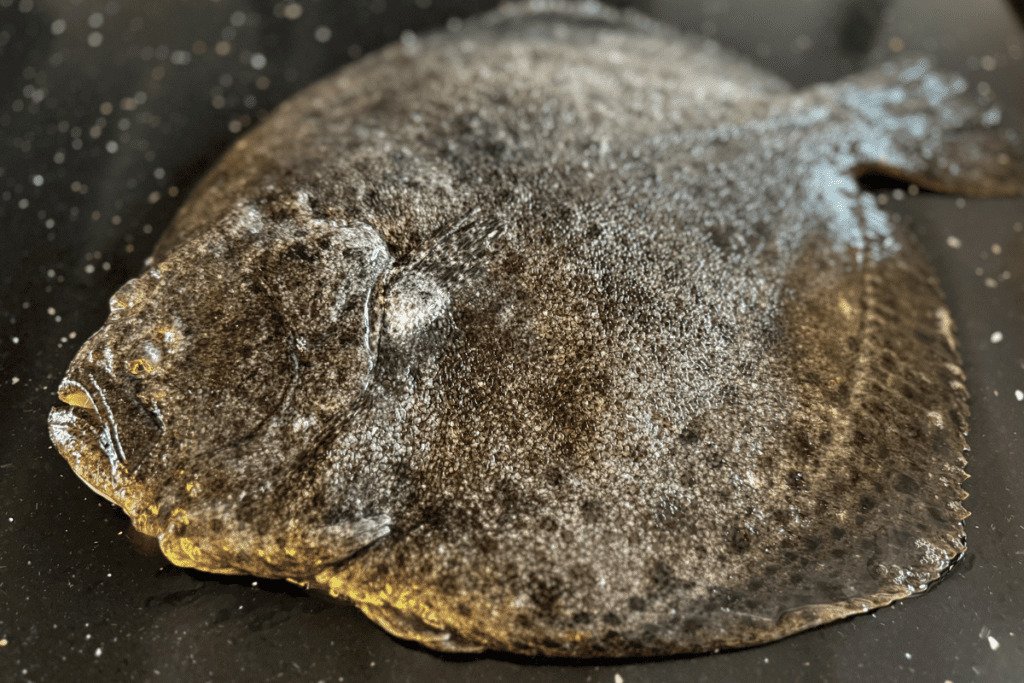
Rodaballo, or turbot, is not the cheapest fish. The price per kilogram is higher, and even the smallest fish weighs around two kilograms. However, for us, it is incredibly tasty. We bake turbot in the oven slightly longer than other white fish. Its flavor develops fully when it cooks through, the collagen melts, and the skin becomes crispy. Do not throw away the “wings” or fins around the fish. The small pieces of meat between them melt in your mouth. Baked turbot feels almost like pork rather than fish.
When we are few at the table, we divide the turbot into two or more pieces. We sprinkle it with pepper, drizzle with olive oil, and keep it in the fridge. If the fish was fresh, it will last four to five days.
If you have leftovers, remove the meat from the bones and place it in a container with the cooking juices. The next day, you can enjoy turbot aspic. It is full of collagen.
- Taste: mild, slightly sweet, juicy.
- Texture: firm but tender.
- Cooking: best baked whole in the oven.
Medregal
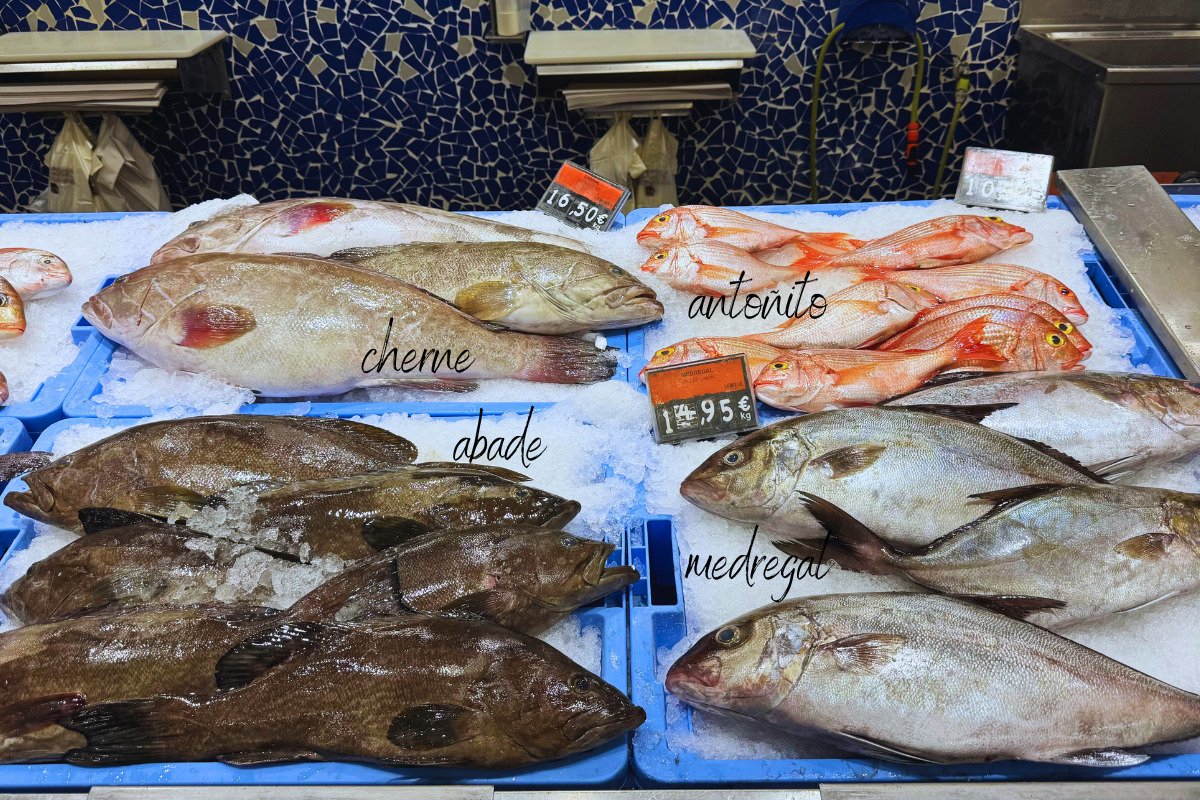
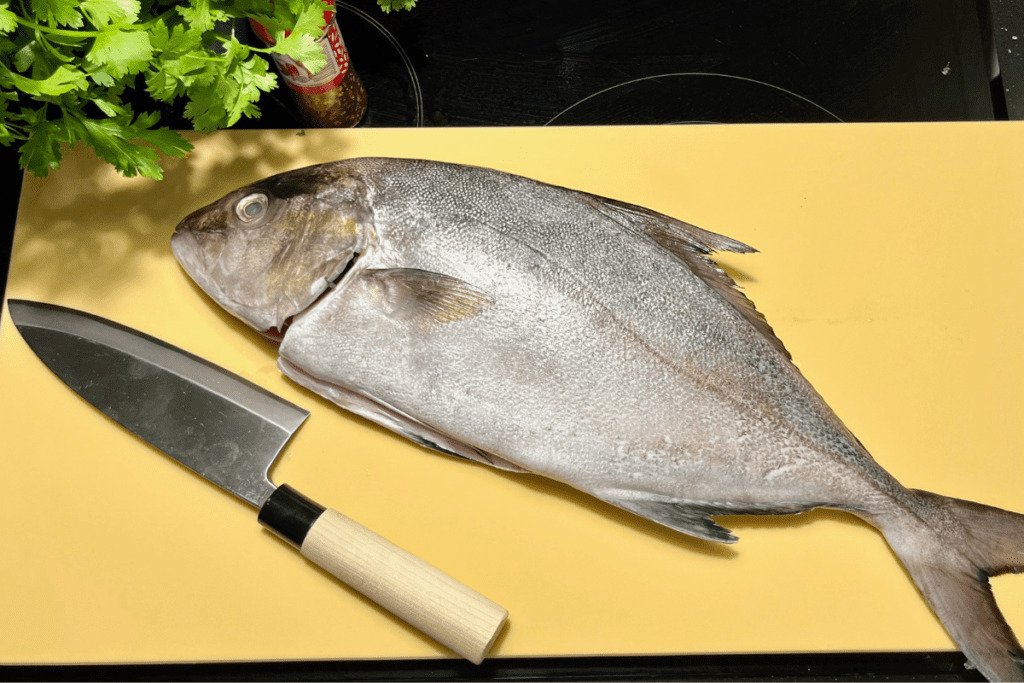
Medregal, known as amberjack, appears all year round. You will find different sizes. In supermarkets, you can buy smaller fish weighing a few kilograms. In local fish shops, they will cut a piece from a meter-long fish that can weigh dozens of kilograms.
Medregal meat is firm. Smaller fish have lighter flesh, while larger ones are darker. We baked a medium fish up to two kilograms in the oven. However, we felt other fish taste better this way. On the other hand, medregal works perfectly for ceviche.
- Taste: rich, buttery.
- Texture: firm, meaty.
- Cooking: best grilled or served raw as sashimi or ceviche.
Vieja
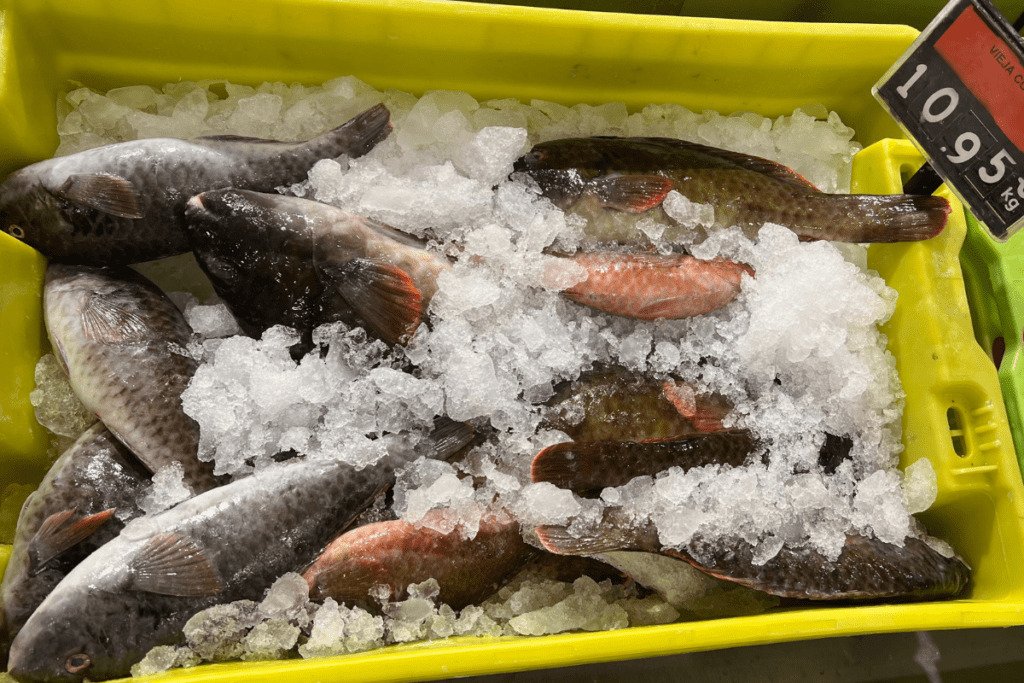
Vieja, also called parrot fish, is another local Canary Islands fish. You will find it at fishermen’s markets almost all year. These fish scrape algae from rocks, so they have strong teeth, which you notice after cooking. The meat is juicy, firm, and slightly grey. Locals love it and say it is one of the oldest species, which explains the name. Red fish are females, while grey ones are males. Bake it in the oven, fry it in a pan, or grill it. Serve it with Canarian potatoes and mojo sauces.
- Taste: slightly sweet, rich.
- Texture: firm, white to greyish.
- Cooking: best baked whole in the oven or grilled with olive oil and garlic.
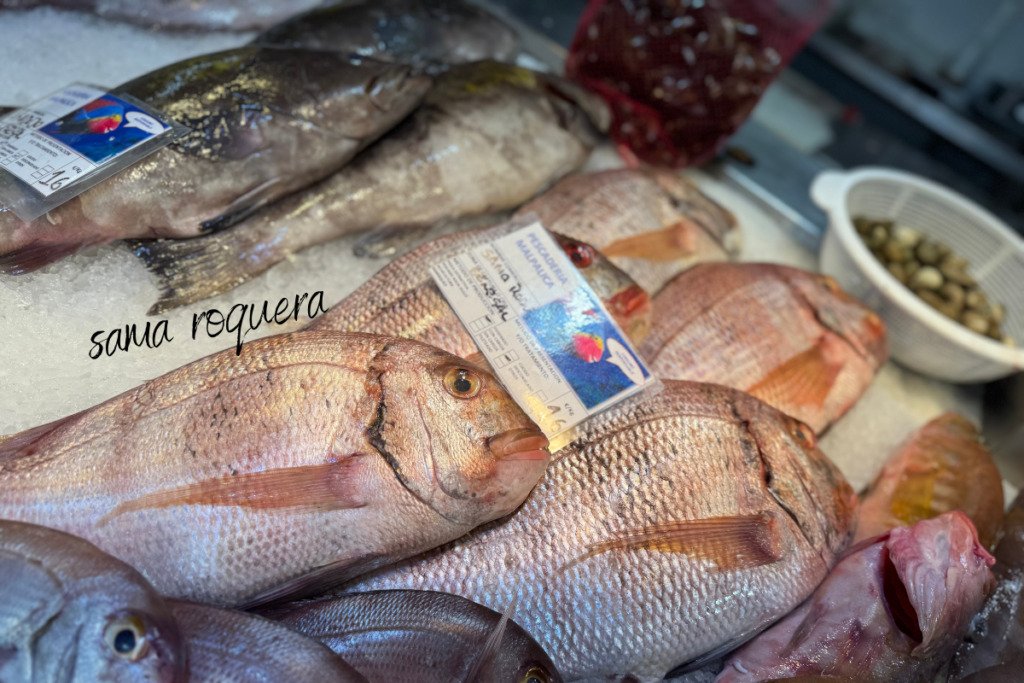
Sama
Sama, a type of sea bream, looks similar to dorada and sargo. However, dorada usually comes from fish farms, while sama and sargo are wild-caught.
- Taste: mild.
- Texture: soft. However, it can become dry if overcooked.
- Cooking: fry fillets in a pan. You can also grill the whole fish or bake it in the oven with olive oil and garlic.
Spring and summer fish
Atún
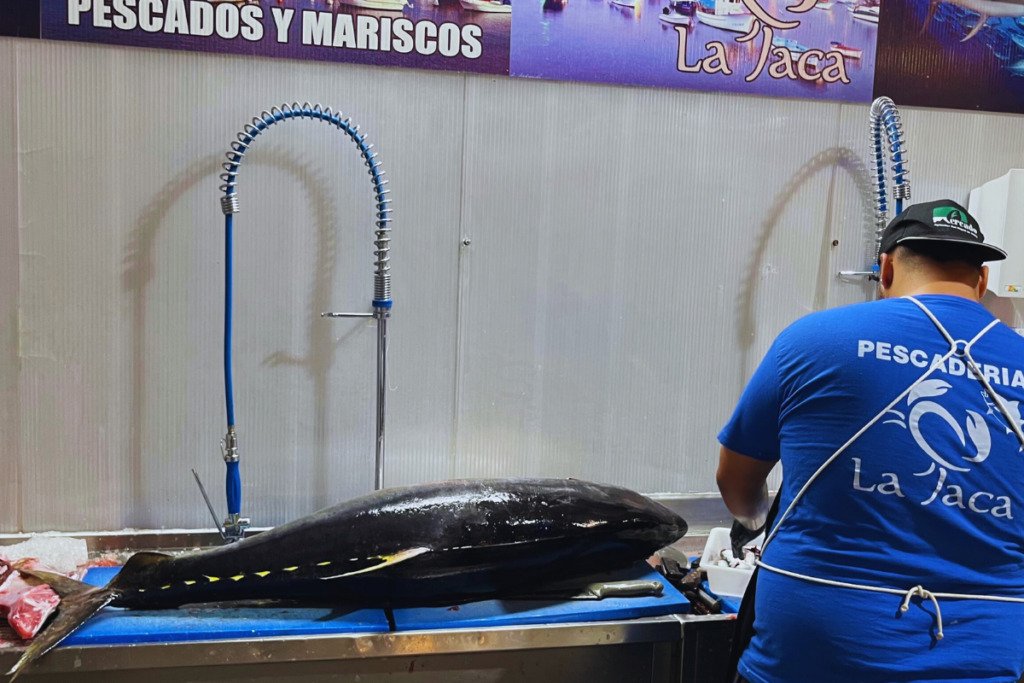
Atún, or tuna, is truly a royal fish when fresh. During the season, people gladly wait in line to get their piece. While supermarkets such as Mercadona or HyperDino offer many types of fish, you should look for tuna at the market. At Mercado del Agricultor San Miguel de Abona in Las Chafiras, a family shop at the back wall always has customers. Take a number and wait patiently.
Yellowfin tuna can be as large as a small pig. Sellers usually cut it into steaks. Larger fish are divided into smaller pieces that still weigh close to one kilogram. Naturally, you may want a beautiful piece from the top part. However, do not underestimate the belly. The Japanese pay the highest price for otoro, the fattiest belly part. For us, tuna tastes best with minimal heat.
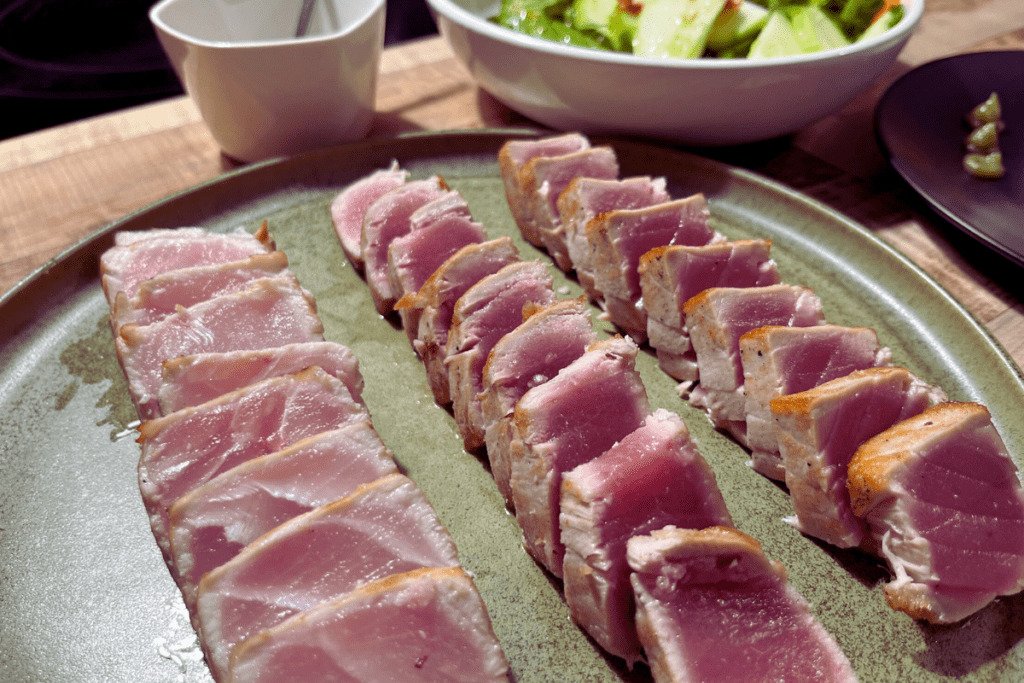
Lina also shares a tuna tartare recipe.
Local tuna is seasonal. We usually arrive in Tenerife in early November and still catch the end of the season. After tuna pass, peto appears, but it is not quite the same.
- Peak season: April to September. You may still find it in November, but later it disappears.
- Taste: meaty. Tuna tartare resembles beef tartare in texture and flavor.
- Texture: firm.
- Cooking: best raw as sashimi or tartare. You can also grill it briefly. Do not overcook it. Brush with oil so it does not stick and grill a few minutes on each side. Season with salt and pepper before serving. Rare to medium rare works best.
Bonito
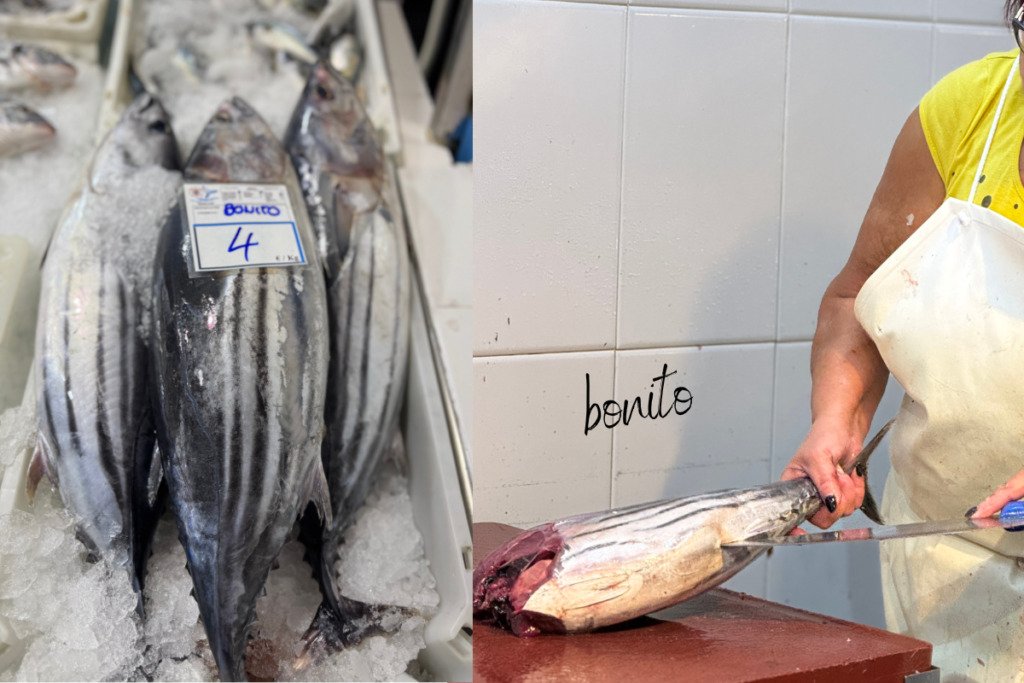
In Tenerife, you will also find bonito, a smaller tuna measuring 50 to 80 cm and weighing up to 12 kg. The meat is red, firm, and tasty. Like tuna, bonito tastes best raw or lightly cooked. You can season it boldly with soy sauce and prepare tartare. You can also grill bonito cuts.
Locals prepare stews with bonito. They fry onions, garlic, peppers, and tomatoes in oil. Then they add potatoes, season with salt and spices, pour in water, and cook until the potatoes soften. After that, they add bonito and stew for up to 10 minutes more.
By the way, bonito is also used for canned products. In stores, you will see many cans labeled Bonito del norte.
- Peak season: May to September
- Taste: strong, meaty
- Texture: firm, dark meat
- Cooking: best raw or grilled
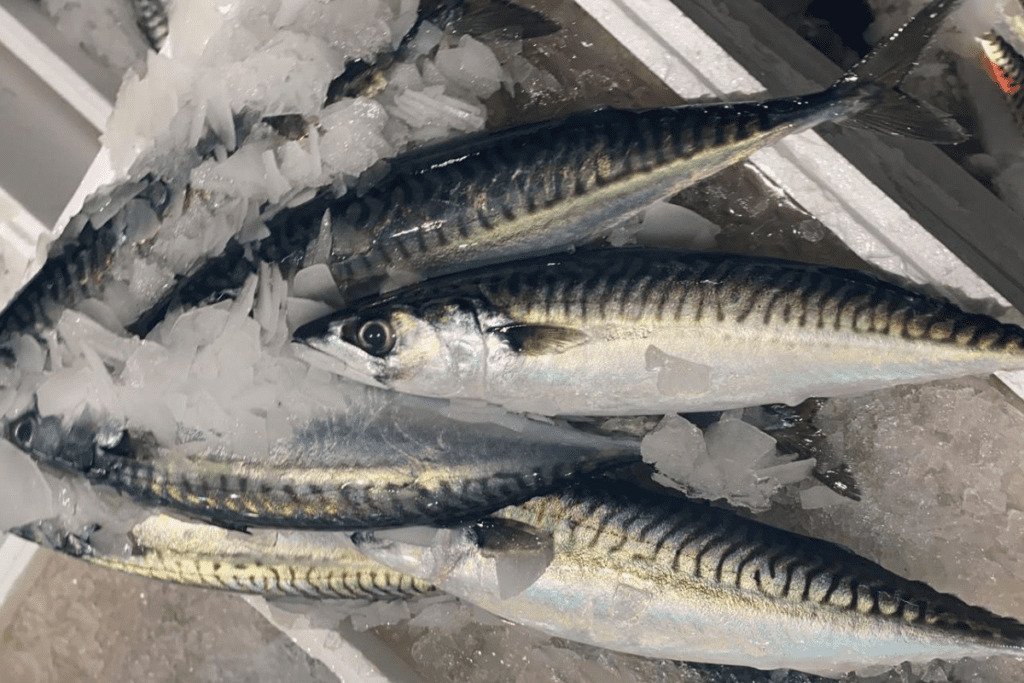
Caballa
Caballa is Atlantic mackerel.
- Peak season: March to June
- Taste: pronounced
- Texture: firm, fatty meat
- Cooking: best grilled or smoked; also tasty salted.
Autumn and winter fish
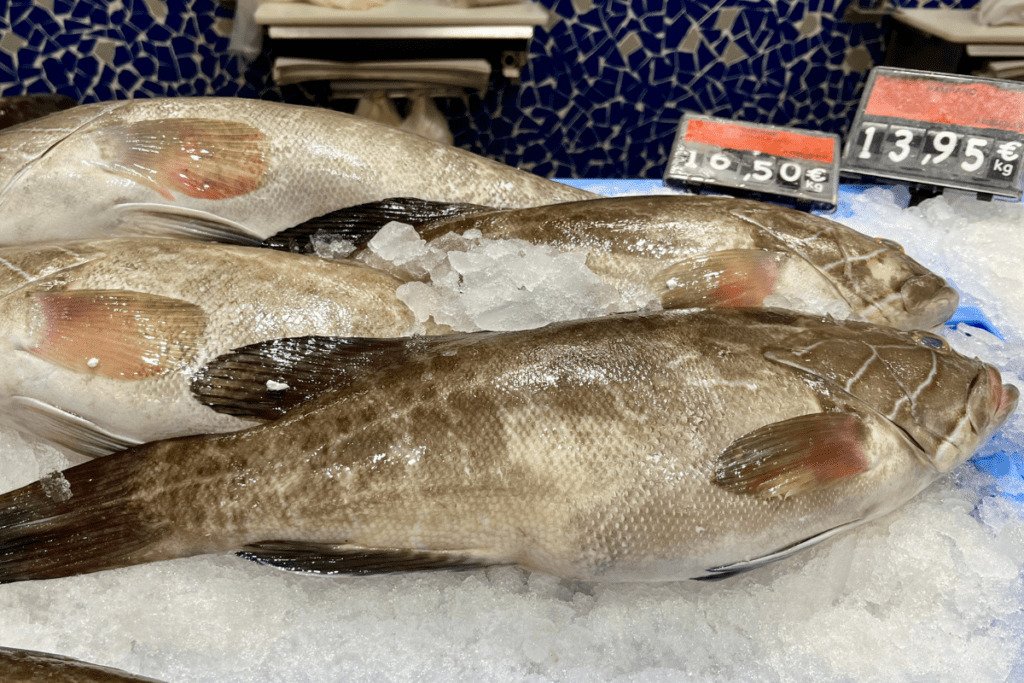
Cherne
Cherne, also called wreckfish or rock grouper, is a very popular fish. Stores usually sell younger fish, but even these weigh around three kilograms or more. I read that cherne can grow up to two meters long and weigh about one hundred kilograms. Even a store-sized whole fish requires a larger group of diners, so we buy it when we have guests at home.
Locals usually ask to clean and cut the whole fish into steaks. They keep the head, bones, and tail for fish broth called caldo. When I see ready-cut steaks, I buy them. Cherne steaks taste great pan-fried. If you have a cast iron pan, heat it very well. Then pat the steaks dry, brush them with oil, and cook like a steak for a few minutes on one side until a crust forms and you can turn it. Cook the other side the same way. Do not overcook it, or it will become dry. Season with salt and freshly ground pepper before serving.
For me, cherne is ideal for ceviche.
- Peak season: October to February
- Taste: mild, slightly sweet
- Texture: firm, white meat
- Cooking: best baked in the oven with herbs; also perfect for ceviche
Perro
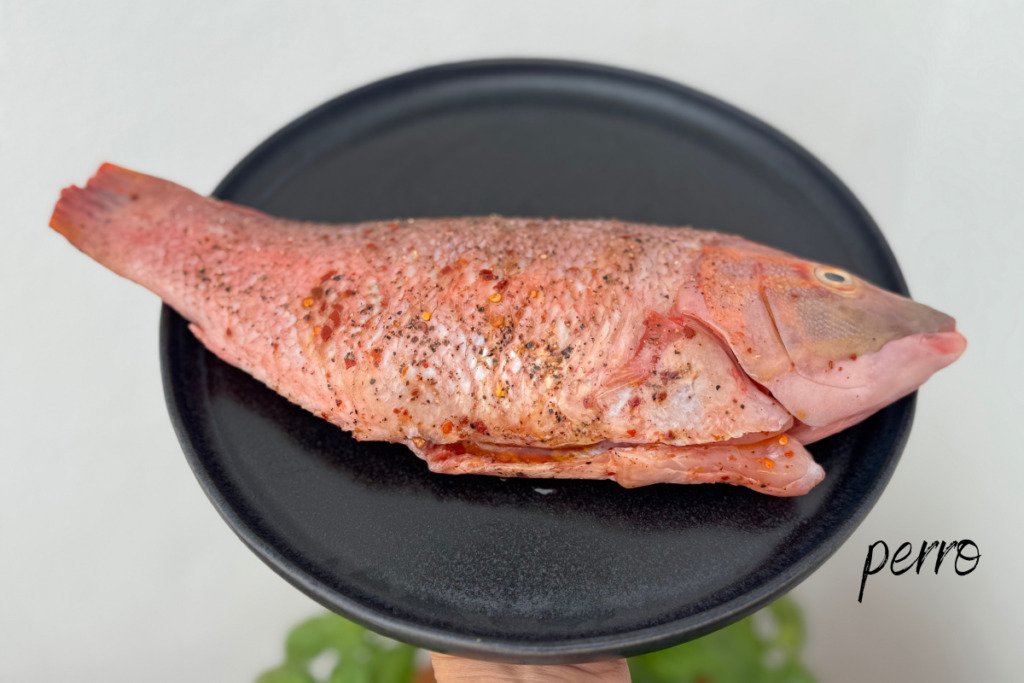
Perro, also known as dogfish, is caught in the Canary Islands from December to May. It can reach up to 80 cm. Males are larger, females smaller. I bought a smaller one at El Rabil, a local fish shop in Alcala. Perro meat is white, firm, and mild in flavor.
It contains high-quality protein, omega-3 fatty acids, vitamins B6 and B12, iron, and zinc. Therefore, it is a good choice for a healthy and balanced diet.
In gastronomy, perro is mainly used for soups, stews, and other traditional dishes.
- Peak season: December to May
- Taste: mild, subtle
- Texture: firm, white meat
- Cooking: best stewed, used in soups, baked in the oven with herbs; also suitable for ceviche
Available all year but with peak seasons
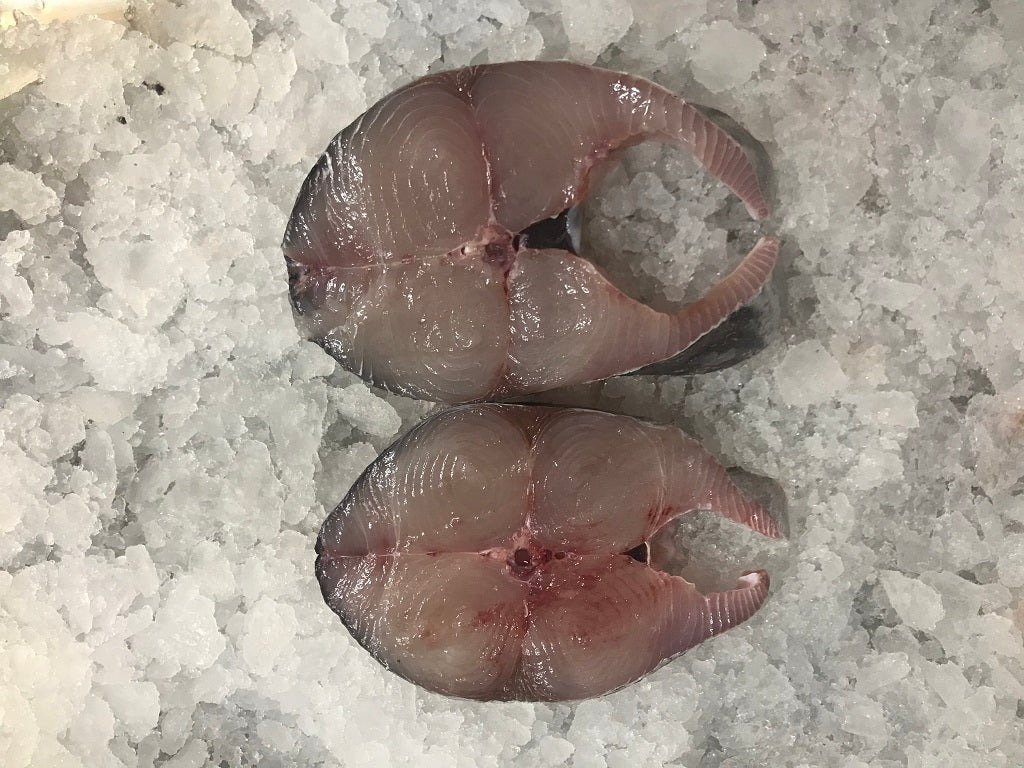
Peto
Peto, also called wahoo, resembles tuna. However, its meat is much lighter and softer. It works for tartare if needed.
- Peak season: summer
- Taste: mild, slightly sweet
- Texture: firm, light-colored meat
- Cooking: suitable for grilling
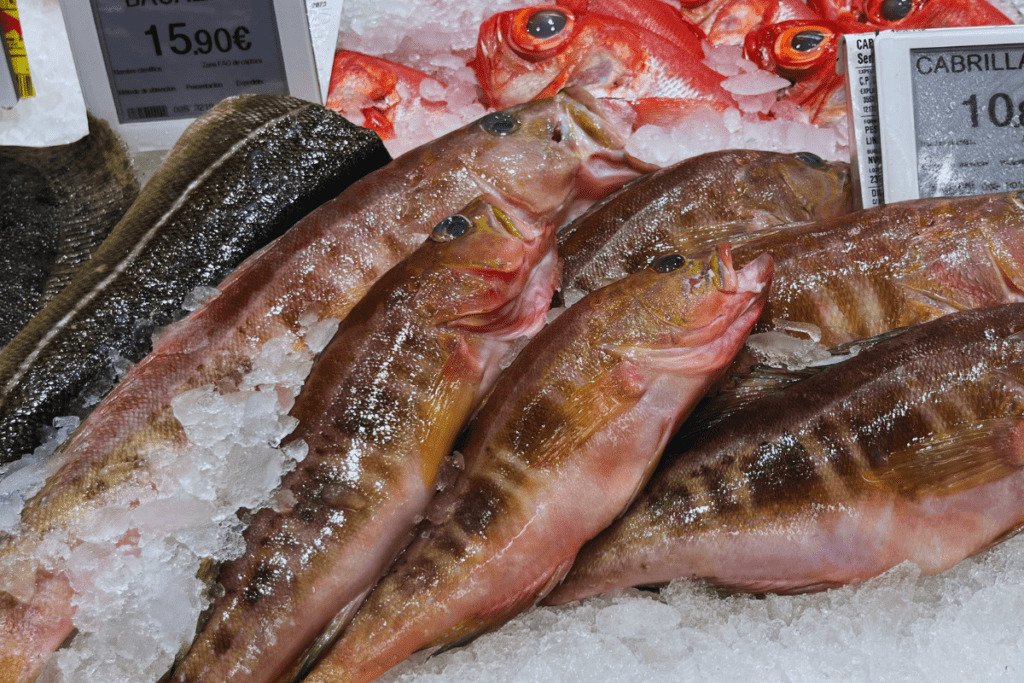
Cabrilla
Cabrilla is a local Canary Islands fish and a real discovery. These small fish are palm-sized, with white and juicy meat. You can fry them in a pan. First, pat them dry and lightly dust with flour so they stay dry and do not stick. Heat the pan well and fry in a small amount of oil. At the end, sprinkle with salt and pepper. You can also find cabrilla in supermarkets. The photo below was taken in Hyper Dino. However, it is much more enjoyable to eat fish bought from local fishermen. On weekends, you will find two or three fishermen selling fish at Mercado de Pescado in Las Galletas. However, hurry. After 11 a.m., there may be little left.
- Peak season: summer
- Taste: mild, slightly sweet
- Texture: tender, light meat
- Cooking: best pan-fried
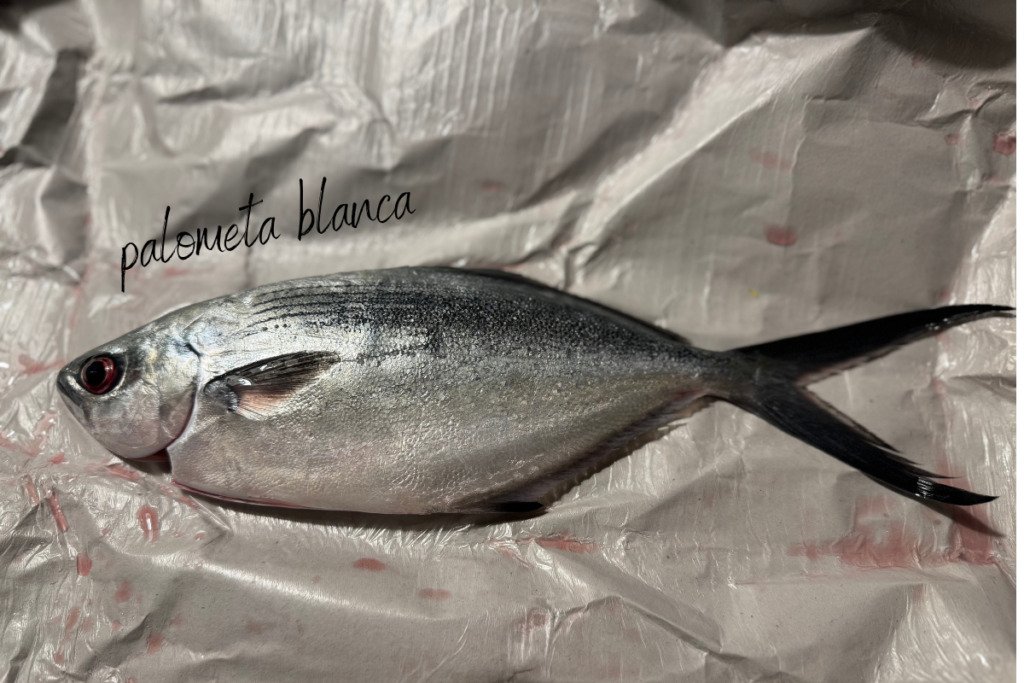
Polometa blanca
Polometa blanca, known in English as silver pomfret. The seller proudly says it is local from the Canary Islands. And how do you cook it? “Frito!”
That means you coat the fish in flour and fry it in hot oil. Then you sprinkle it with salt and eat it while the skin is crispy. It works very well as a snack with beer.
We tried both frito and oven-baked in parchment paper. We placed sliced peppers, onions, and cherry tomatoes at the bottom. Then we added the fish, sprinkled salt, drizzled olive oil, sealed the paper well, and baked at 160 degrees Celsius for twenty minutes. For me, baked with vegetables tastes much better.
Polometa costs 5 to 6 euros per kilogram. One fish costs about one and a half euros. Therefore, you can easily try different cooking methods.
- Peak season: all year
- Taste: mild
- Texture: firmer
- Cooking: best pan-fried or baked with vegetables
Congrio and morena
Congrio and morena. Snake-like fish. One is tasty, morena. The other is not very good.