We have probably visited most of Lithuania’s best-known museums. However, as we travel around Lithuania, we increasingly realise that small-town museums can sometimes surprise us the most. This time, we want to share one such special place. Seven Lithuanian records in one place – that is how many you can discover at the Textile Crafts Centre in Darbėnai, Kretinga District. The centre is called Tekstilės kelias (Textile Road). However, its impressive collections and records are only part of what made the Textile Crafts Centre in Kretinga District so special to us.
The hosts are incredibly kind and welcoming. The exhibits have fascinating stories, and the personal accounts create such a cosy atmosphere that we did not want to leave. We visited with our children, and we can confidently say that the Textile Crafts Centre in Kretinga District is one of the most unique small museums we have visited in Lithuania.
Textile Crafts Centre in Kretinga District
The Textile Crafts Centre in Kretinga District is a unique place created by textile artisans and collectors Daiva and Arūnas Dudėnai. This family-founded museum brings together collections gathered over several decades. They have become not only an impressive exhibition but also the basis for Lithuanian records.
The museum opened its doors to visitors in 2021. At the time, the owners could already celebrate two Lithuanian records. Today, their collections have earned an impressive seven records.
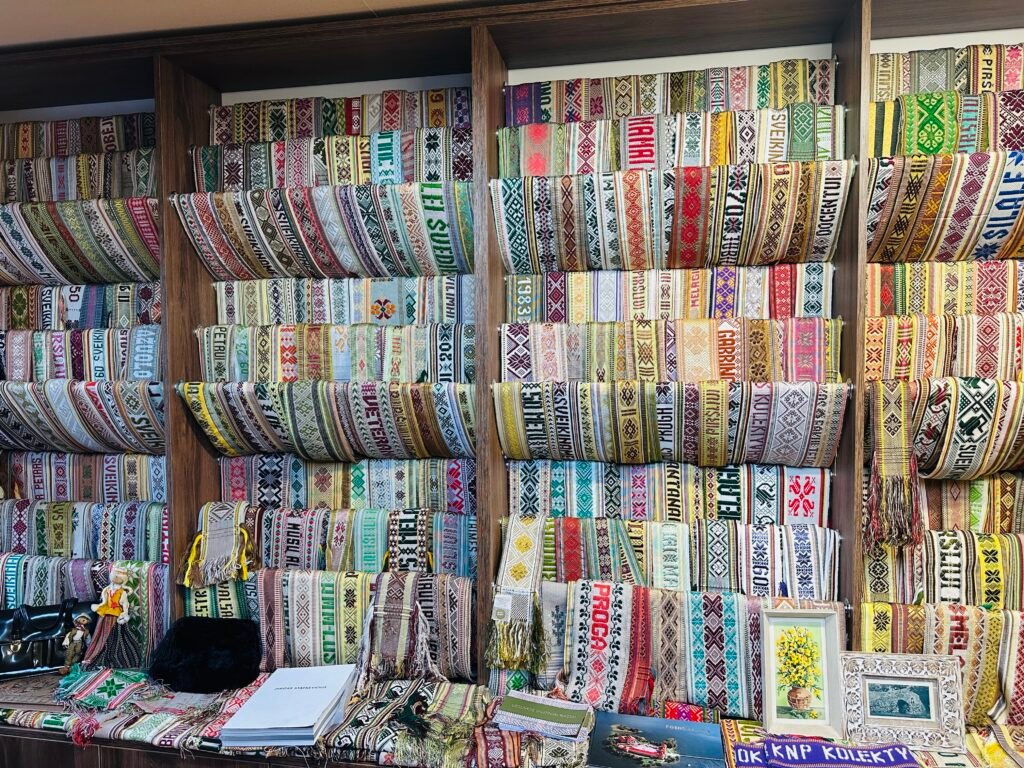
Here, you can see hundreds of traditional Lithuanian sashes, towels and bedspreads, as well as traditional wooden clogs, more than a thousand thimbles, various sheep figurines and over 25,000 ties!
In our opinion, the museum’s greatest highlight is the opportunity to hear the stories told by the owners themselves.
Textile Crafts Centre in Kretinga District – a chance to see seven Lithuanian records
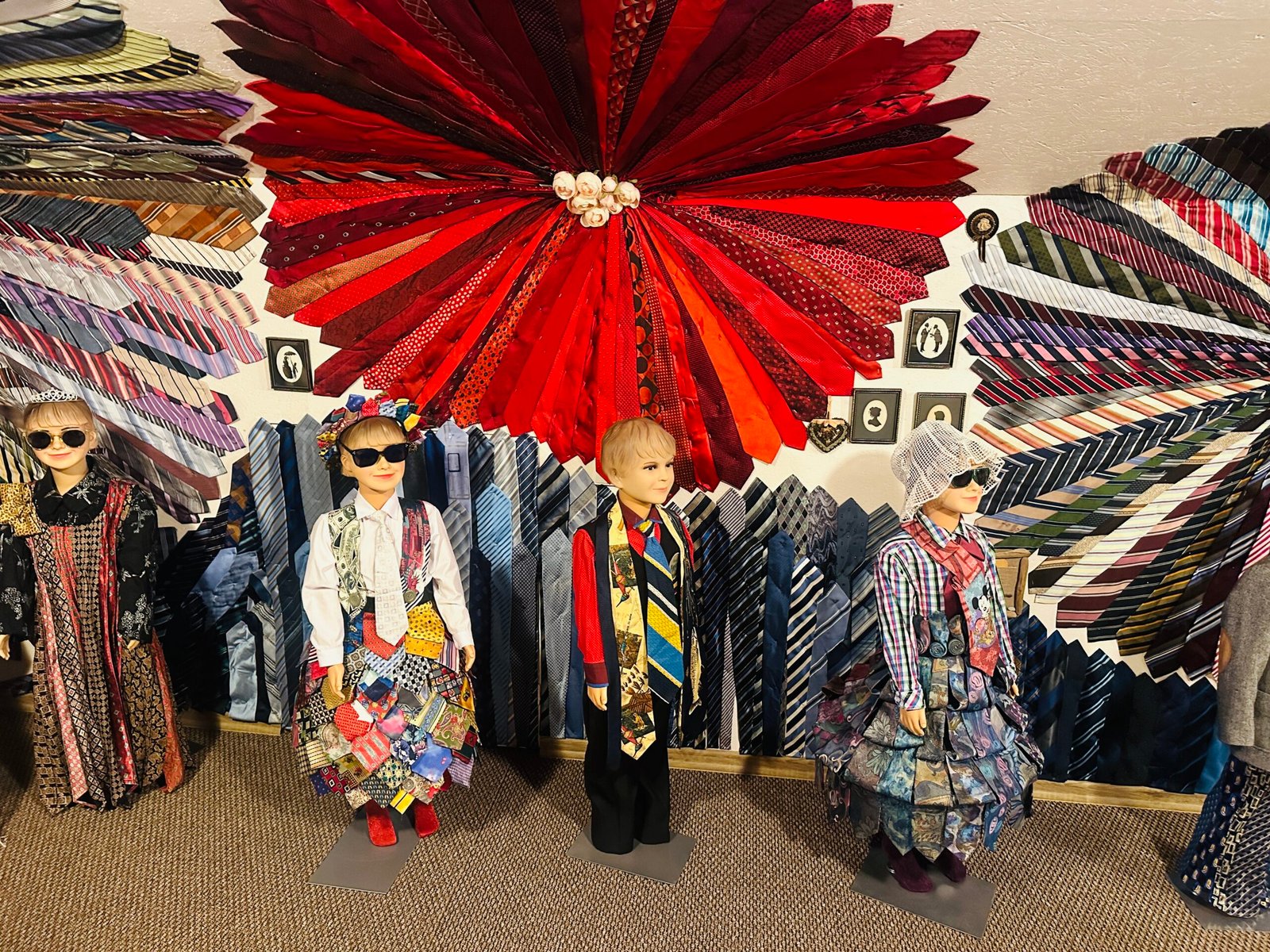
More than 25,000 ties
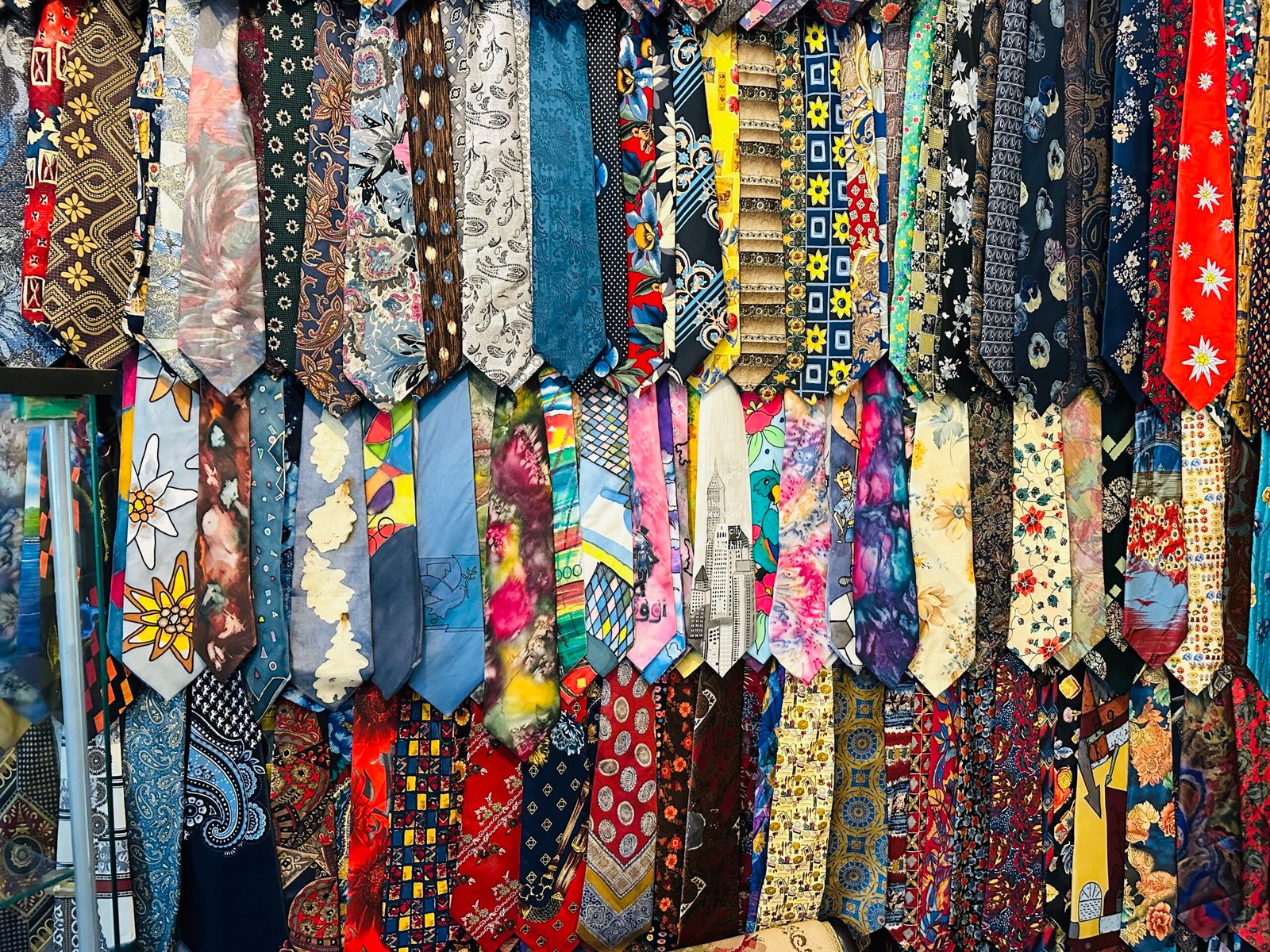
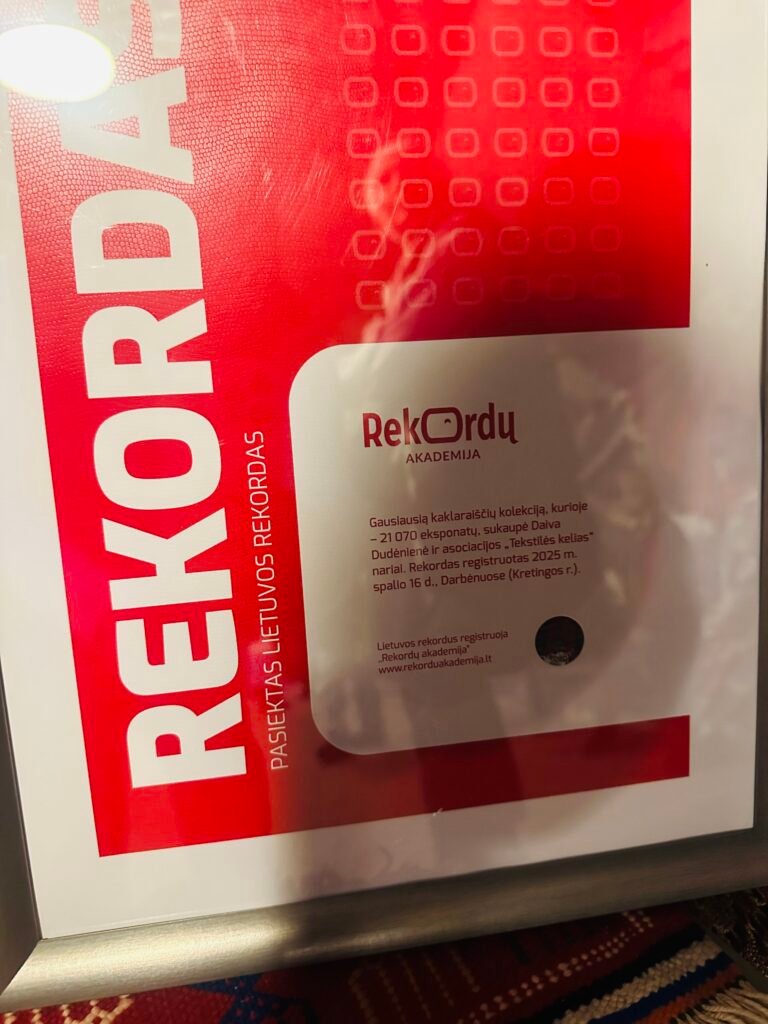
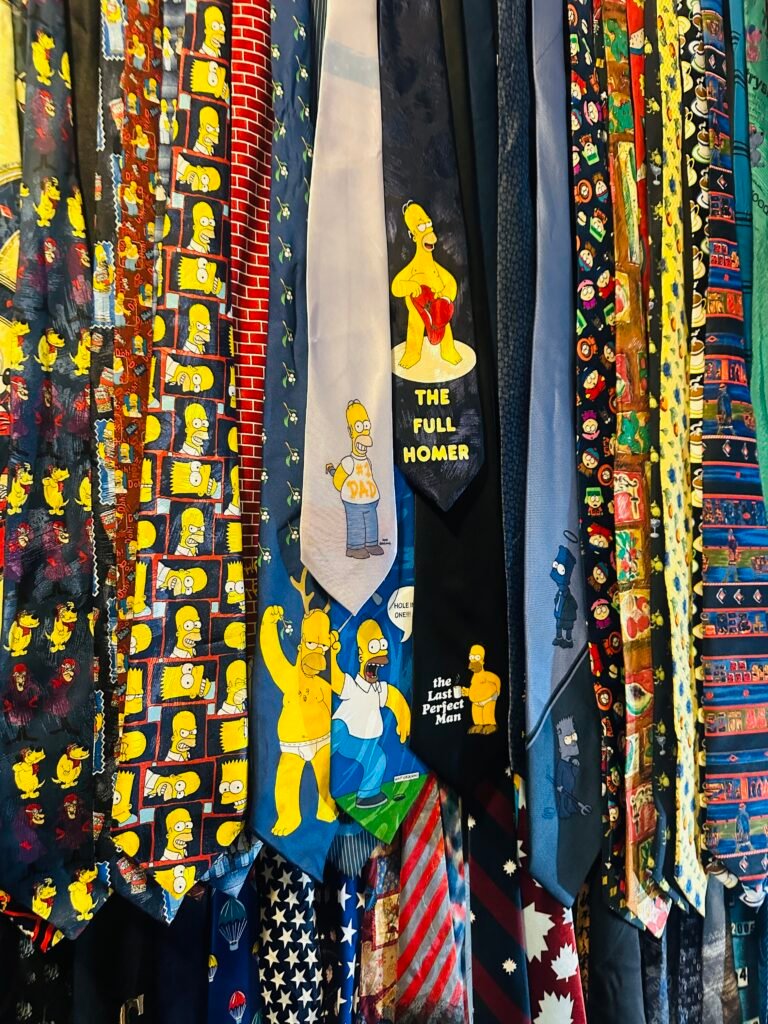
One of the museum’s most impressive achievements is its enormous tie collection. In October 2025, the seventh Lithuanian record was officially registered: 21,070 different ties. Daiva and Arūnas Dudėnai, together with members of the Tekstilės kelias (Textile Road) association, collected them over approximately 25 years. Today, the museum holds more than 25,000 ties.
The collection features ties in an incredible variety of colours, patterns, fabrics and styles. They include silk, wool and cotton ties, designs by famous fashion houses, unique one-of-a-kind pieces and even ties associated with well-known people.
What makes the collection especially interesting is that some ties bear the autographs of famous people. Others have arrived from different countries around the world. The museum owners also treasure traditional Lithuanian ties, whose patterns reflect the country’s textile heritage.
The family has set an even more ambitious goal: to achieve a world record. This once again shows that the owners’ ideas and enthusiasm go far beyond the records they have already achieved.
757 traditional Lithuanian sashes
One of the museum’s most important collections features traditional Lithuanian sashes. The officially registered collection consists of 757 sashes. The record was confirmed on 29 December 2023.
The collection includes linen, cotton, wool and silk sashes woven in Lithuania. The oldest dates back to around 1920. The longest measures an impressive 3.1 metres, while the shortest is just 20 centimetres.
But the most important thing isn’t the number of sashes, it’s their stories.
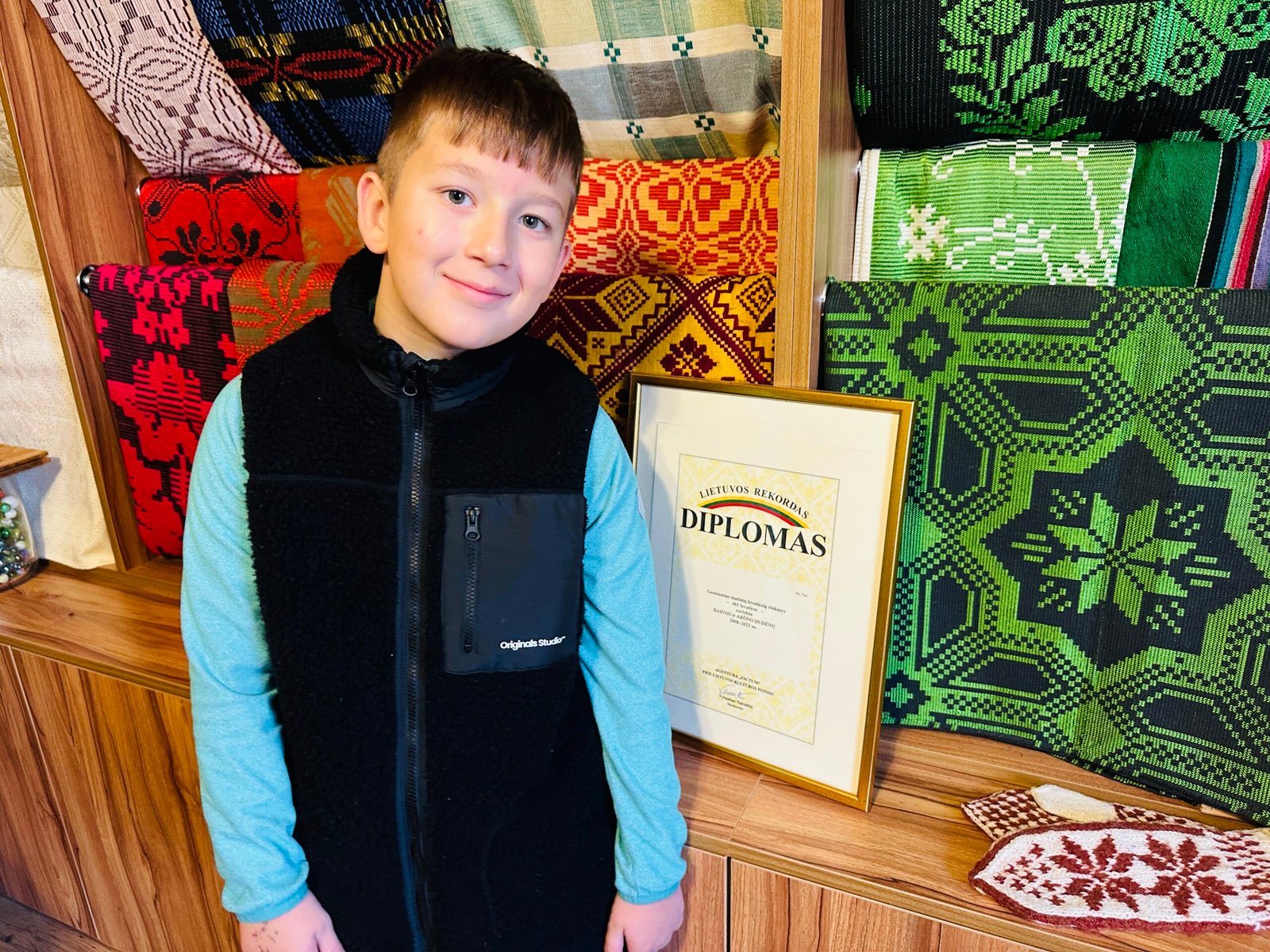
461 traditional Lithuanian bedspreads
Another record-breaking collection has been officially recognised – 461 traditional Lithuanian bedspreads. These colourful textiles, adorned with impressive patterns, reflect Lithuania’s rich weaving traditions. Bedspreads were once an essential part of home textiles, and their production required great precision, patience and craftsmanship.
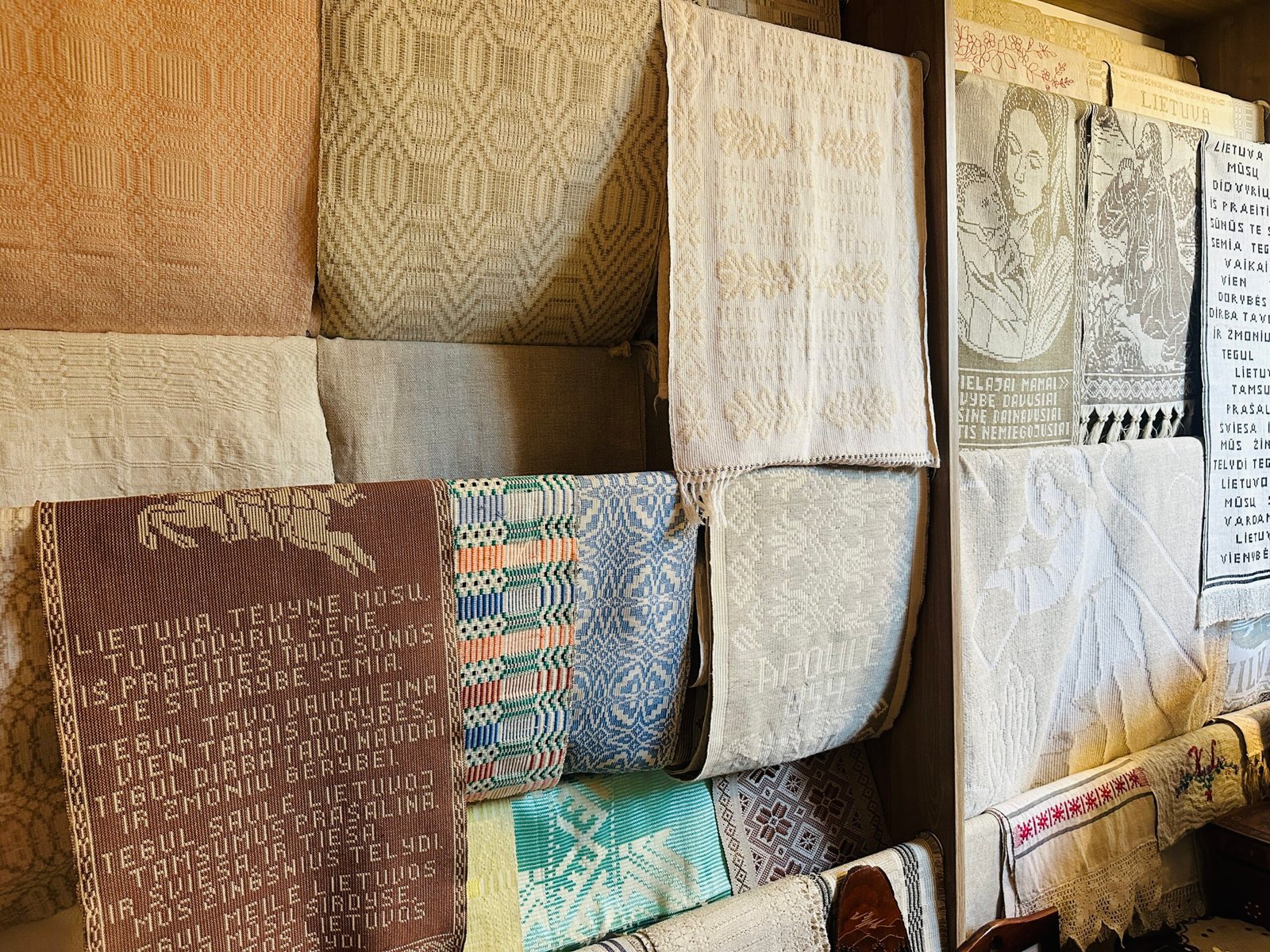
602 traditional Lithuanian towels
Another record-breaking collection consists of 602 traditional Lithuanian towels.
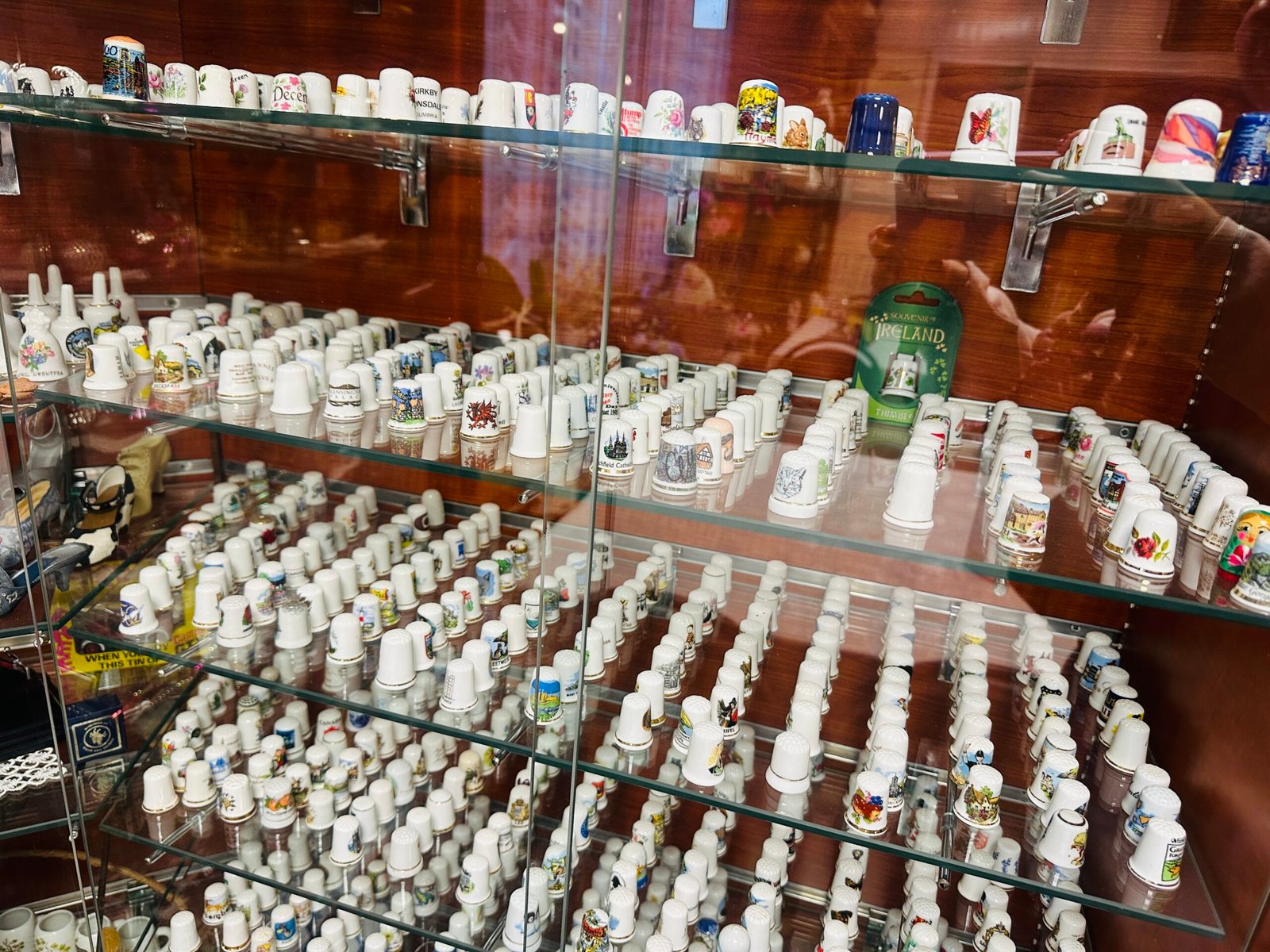
More than a thousand thimbles
Have you ever imagined that such small sewing tools as thimbles could become a Lithuanian record?
A collection of 1,026 thimbles has been gathered in Darbėnai. Its oldest exhibit dates back to around 1890.
Thimbles differ in size, shape, materials, and decoration. They were once essential sewing tools that protected fingers from needle pricks. Today, however, they have become an interesting collector’s item.
A record-breaking collection of 92 wooden clogs
Another unusual record is a collection of 92 wooden clogs. These traditional shoes were once widely worn in Lithuanian villages, especially in Samogitia. Today, many people associate them with national heritage. However, they were once everyday footwear.
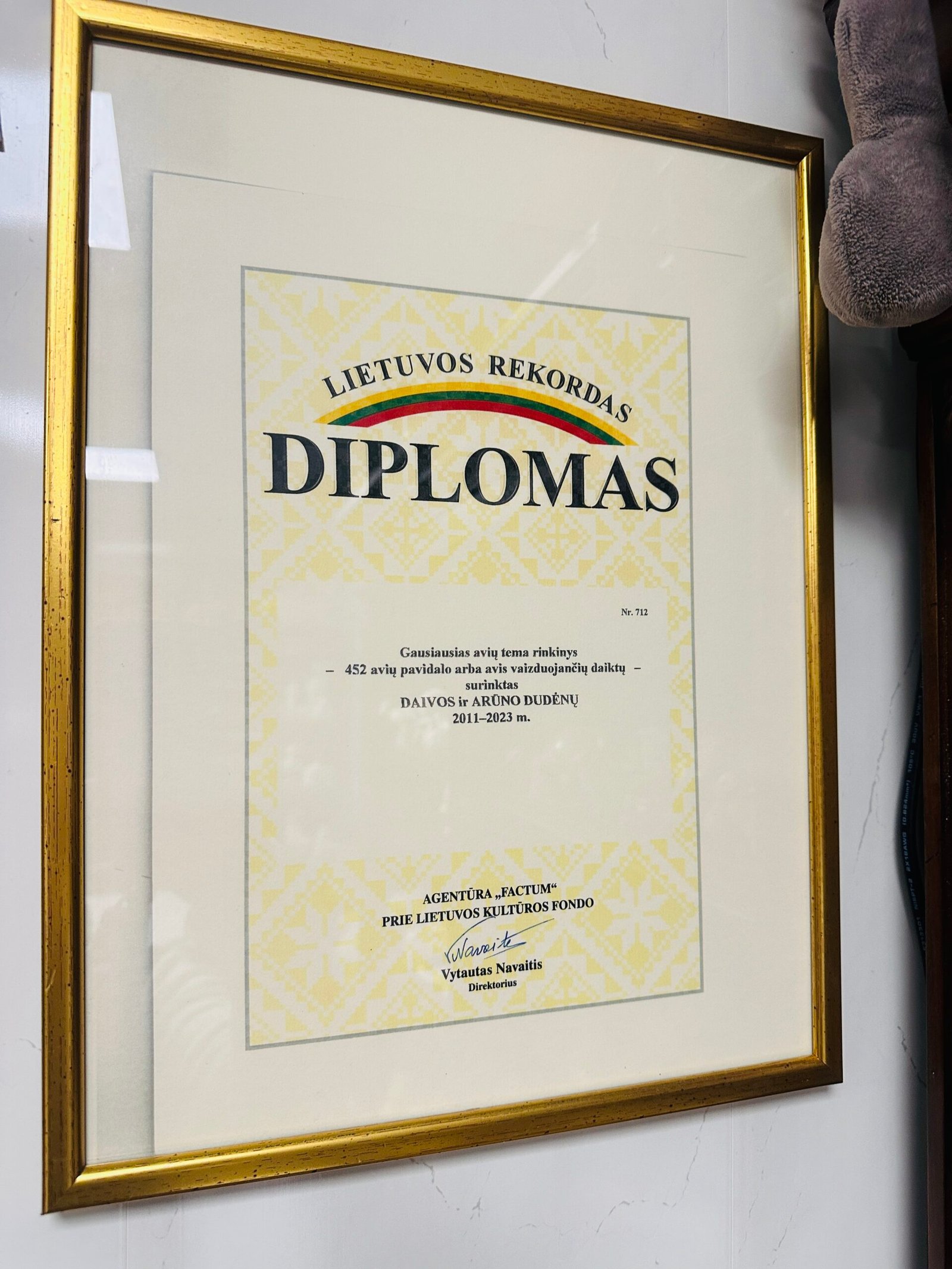
452 sheep figurines and sheep-themed objects
The final record is no less interesting: a collection of 452 sheep-shaped figurines and other objects depicting sheep. Sheep are closely connected to textile history because wool has long been one of the most important materials for making fabrics and clothing.
Why visit with children?
Although seven Lithuanian records sound impressive, what we enjoyed most about this museum was not the numbers. It was the owners and their stories. They talk about their collections, how they began, the search for exhibits, Lithuanian customs and old traditions. Their stories are so interesting that time simply flies by.
The museum also has much more to offer than its record-breaking collections. You can see antique sewing machines, dowry chests, irons, furniture and other exhibits that tell the story of everyday life in Lithuania. The centre also organises educational activities where visitors can discover traditional textile crafts, wool felting and other activities.
We were also impressed by another aspect of this place. The museum is part of the family’s life, and their hobby has grown into an incredible project. Most importantly, the owners are always moving forward. The museum continues to welcome new exhibits and ideas. Each new record seems to inspire them to achieve even more.
That is why we wholeheartedly recommend visiting this place with children. It is not just about seeing record-breaking collections. It is also an opportunity for children to hear fascinating stories. Please remember to arrange your museum visit in advance.
Spilgutė Café in Darbėnai – another reason to visit
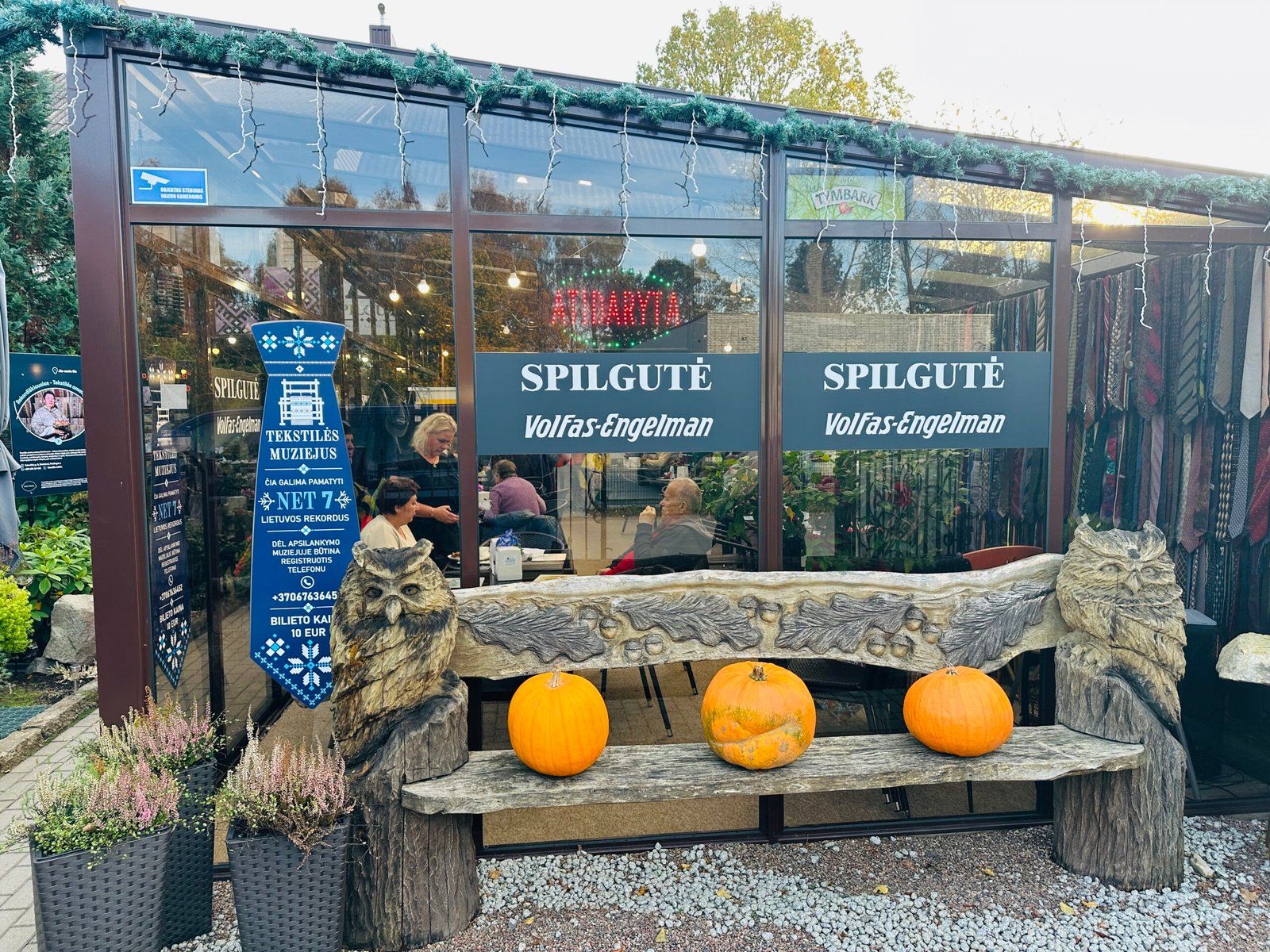
There is one more place we definitely want to tell you about: the family-run Spilgutė Café. It is located in the same building, right next to the Textile Crafts Centre.
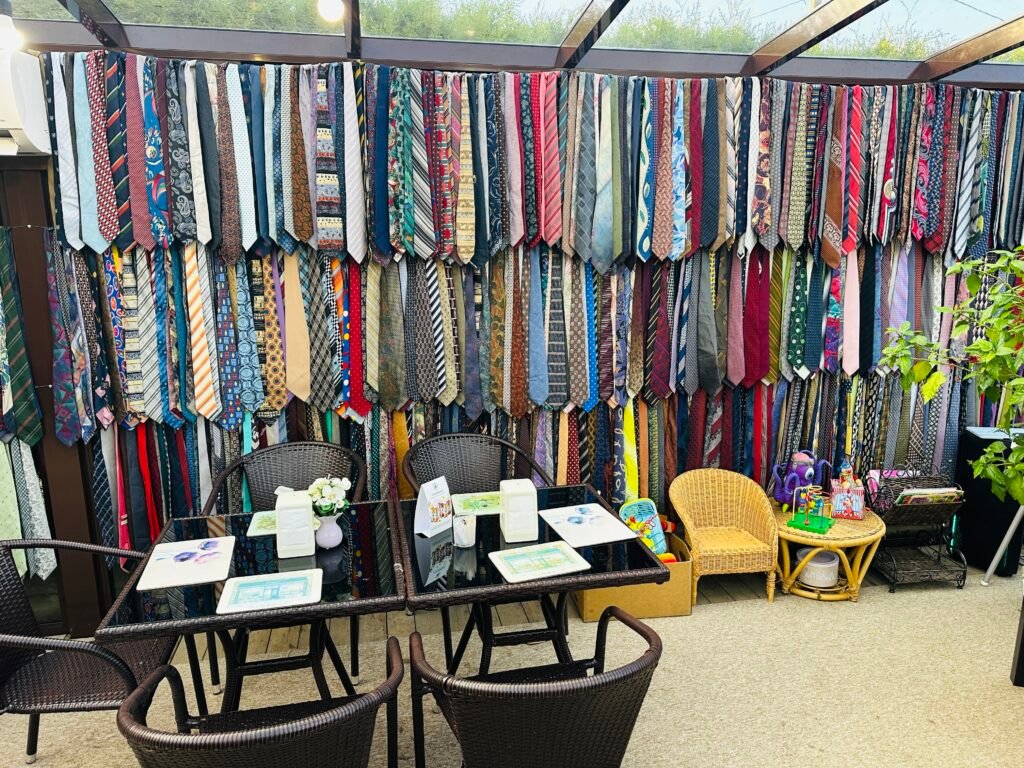
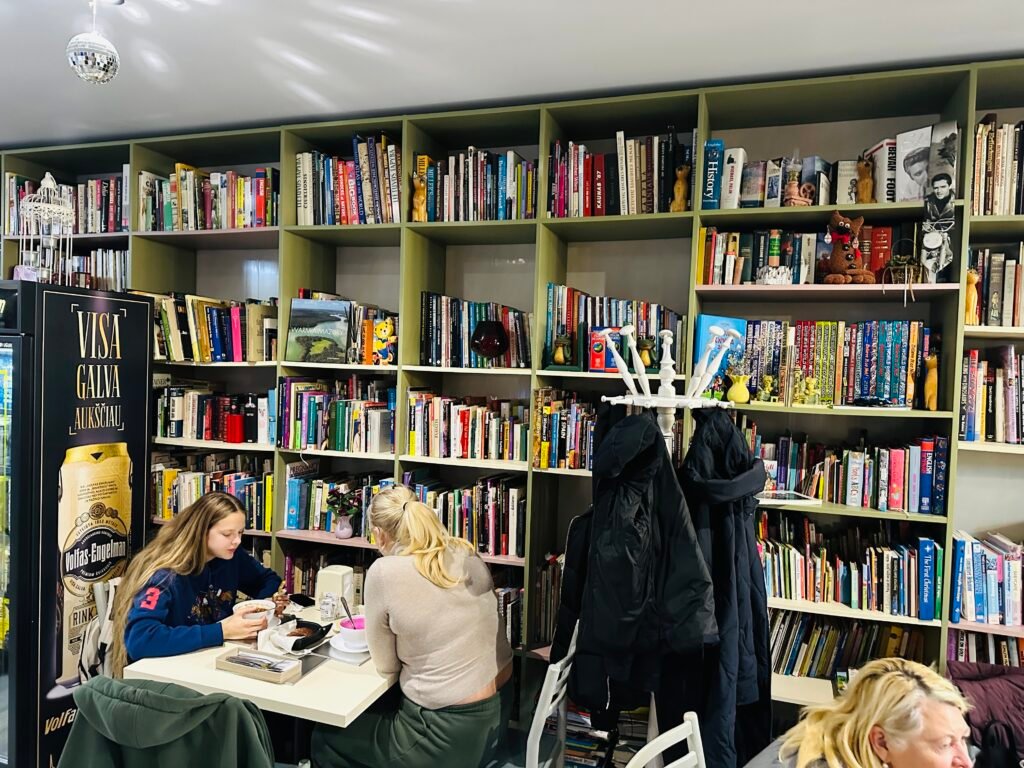
And this is certainly not an ordinary small-town café! First, its interior caught our attention. One room has an entire wall decorated with ties – it looks truly incredible. In the other room, the interior features board games that visitors can not only admire but also play. So, both adults and children will find something interesting here.
Spilgutė Café has been open since March 2022. The same Dudėnai family runs it. Interestingly, the name comes from the Samogitian word “spilgutė”, meaning a small pin used to fasten clothes or fabrics. So even the café’s name also reflects its connection to textiles!
However, we were impressed not only by the interior but also by the food. It was genuinely delicious, fresh, and prepared with great attention to quality. The owners told us that they try to buy ingredients from local farmers and choose their products very carefully.
The café places great emphasis on traditional Lithuanian dishes.
Therefore, if you are planning a trip around Kretinga District or heading to the seaside, we wholeheartedly recommend visiting the Textile Crafts Centre. Make sure to set aside some time for lunch or dinner at Spilgutė Café, too.
You can always find more interesting places to visit in Kretinga District on the Kretinga District Tourism Information Centre website.