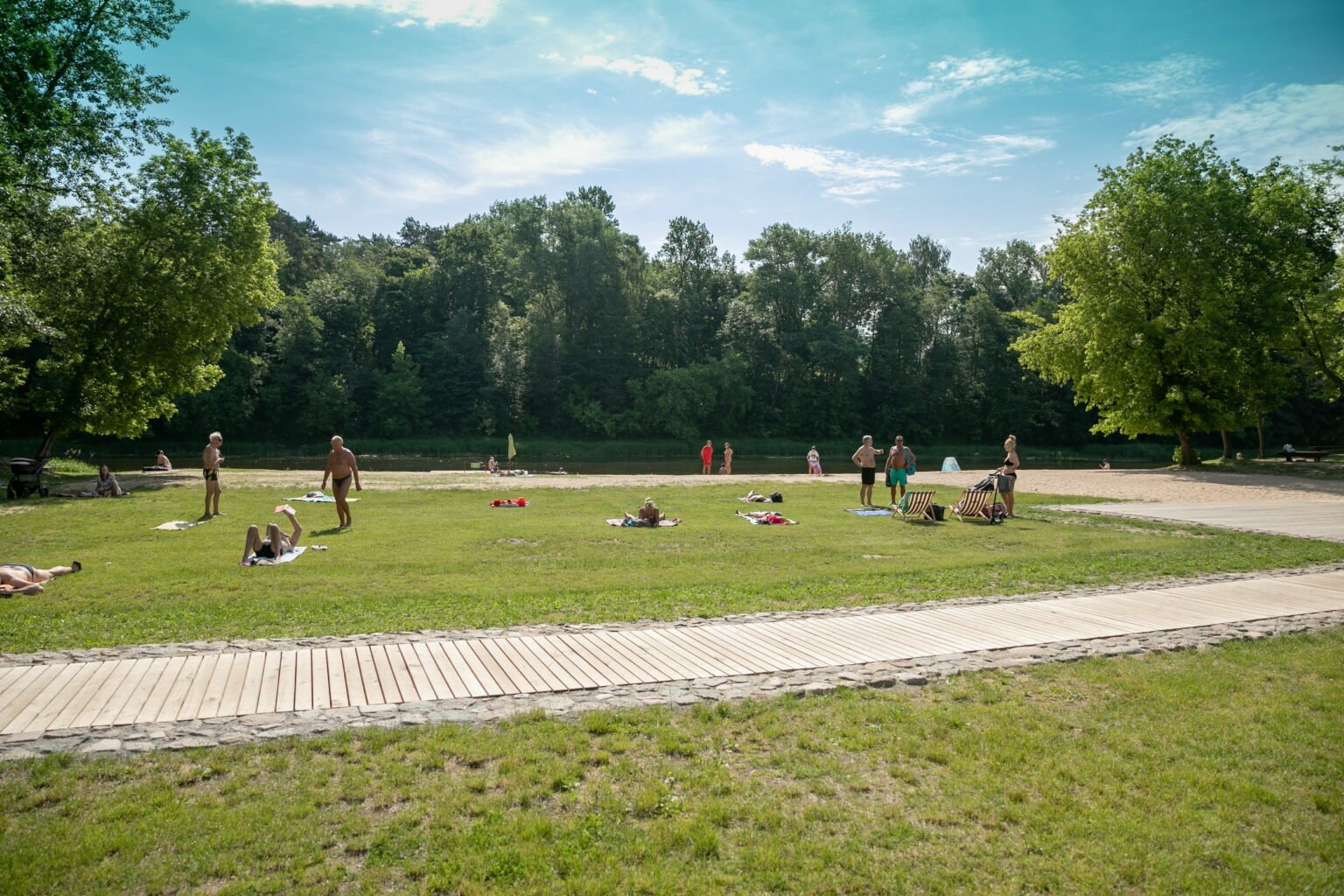
Gelūžė, Balsys, Salotė lakes and their beaches – have you ever wondered what these names actually mean? The Neris River and its tributaries flow through Vilnius. In fact, the city boasts 18 lakes and 15 official beaches for summer fun. However, these relaxation spots are interesting not only for their water and sand. Moreover, the beaches are set by lakes, rivers, and places whose names hold unique stories. For example, they may recall old villages and manors, reveal local landscape features, or even preserve local legends.
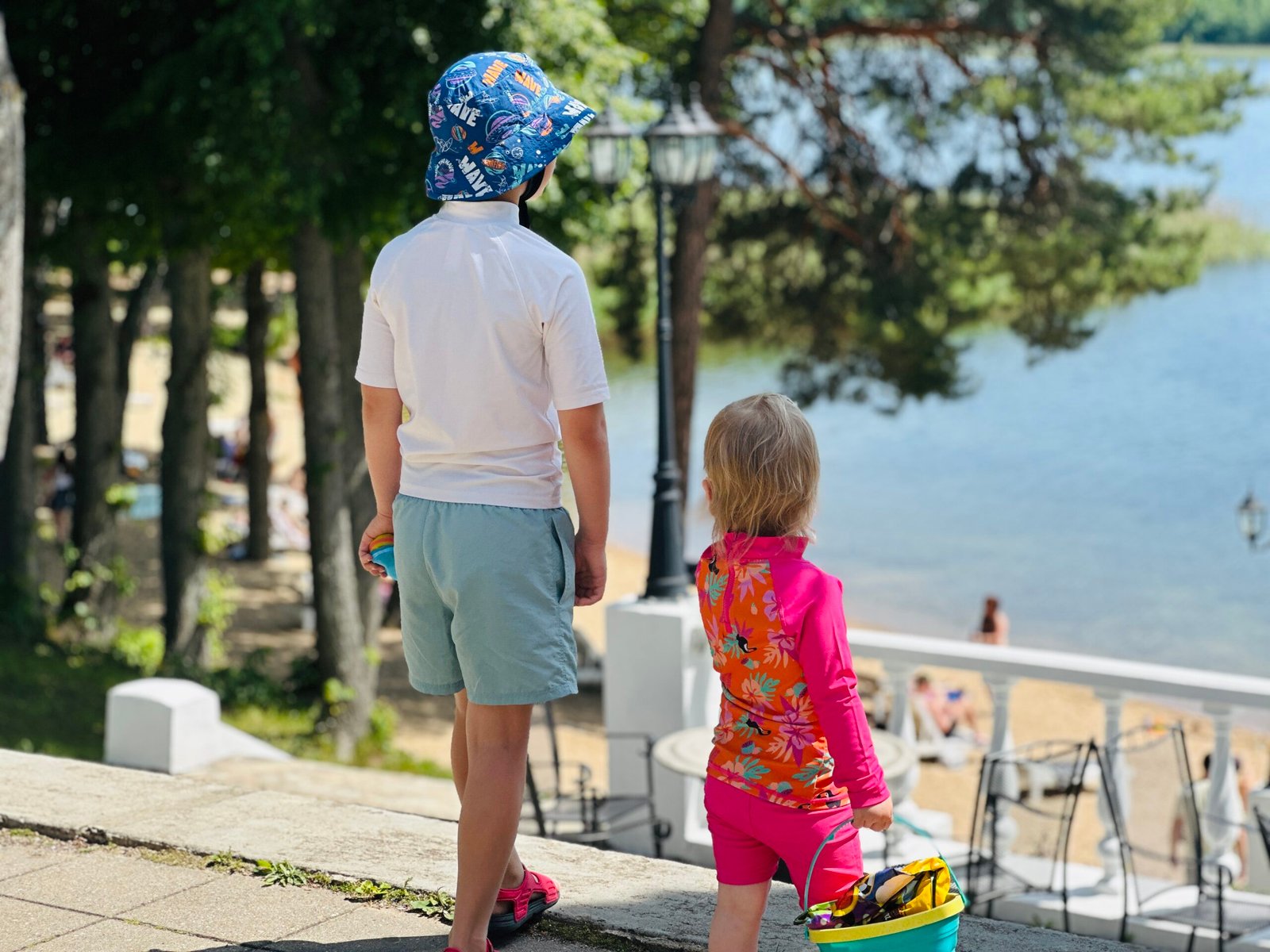
Swimming with history: from Balsys to Valakampiai
Swimming with history: what do Vilnius beach names reveal? Before diving into summer fun, take a moment to explore the origins of the names of the lakes, rivers, and places surrounding Vilnius’ beaches, and discover the stories worth sharing with your children. While the summer heat sets in, we recommend checking our guide to swimming with children in Vilnius. Furthermore, there you can find detailed beach descriptions and see which ones suit different ages.
Swimming with history: what do Vilnius beach names reveal?
Balsys Lake (Green Lakes) beach
Balsys, together with five other lakes – Gulbinas, Mažasis Gulbinas, Raistelis, Baržys, and Akys – forms the Green Lakes group. The name “Balsys” comes from the word “baltas,” meaning “white,” referring to a “white animal.” The Green Lakes got their name from the water’s color – it appears green because of a limestone bottom and clear water reflecting the surrounding trees and sky.
Exact location of Balsys Lake beach
↩︎ Back to list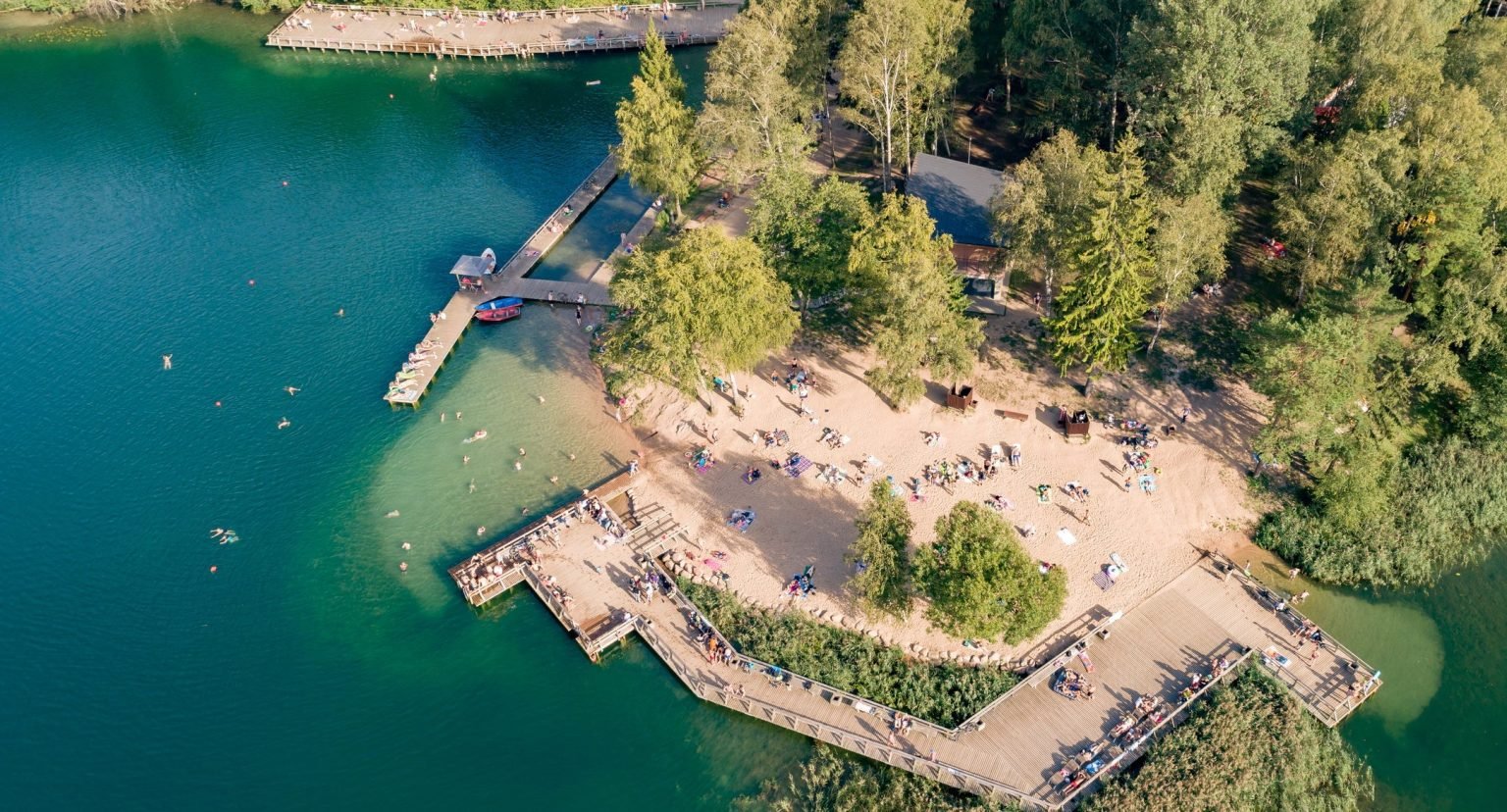
Balžys Lake I, II beaches
The name Balžys (also called Bildžiai) comes from the word “balžas,” which means “sober, blue, bright.”
Location of Balsys Lake beach I
Location of Balsys Lake beach II
↩︎ Back to listDvarčionys Lake beach
The name Dvarčionys comes from the name of the village (Russian: Дворчаны, Polish: Dworczany).
Exact location of Dvarčionys Lake beach
↩︎ Back to listGelūžė Lake beach
Gelūžė Lake in Pilaitė is often called Gilužis, Gelužė, or Gėlužė. Pilaitė also has Gilužio Street and a kindergarten with the same name. However, the official name is Gelūžė, as registered in the rivers and lakes cadastre. There is also a Gilužis Lake about 1 km from Avižieniai. The name Gelūžė likely comes from the Lithuanian word “gilus,” meaning “deep” or “deep place.”
Exact location of Gelūžė Lake beach
↩︎ Back to list
Grigiškės beach
The Grigiškės name comes from the founder of the Grigiškės paper factory, Grigas Kurecas, who built the factory here in 1923. Additionally, the Vokė River appears in 14th-century chronicles of the Teutonic Knights’ campaigns in Lithuania. In fact, the name “Vokė” may come from words meaning “to clean, to harvest grain, to tidy up.”
Exact location of Grigiškės beach
↩︎ Back to listNaujoji Vilnia beach
In the mid-19th century, after the railway was built, a train station by the Vilnia River was named Новая Вилейка. In fact, “Vileika” is a Slavic derivative of Vilija, the Slavic name for the Neris River. As a result, the river inspired the name of the new train station, and people added the Russian word for “new” (Новая). In 1904, they called the settlement Novovileisk (Нововилейск in Russian). Later, it became “Nauja Vilnia” in Lithuanian, and by the 20th century, the form “Naujoji Vilnia” became established.
Exact location of Naujoji Vilnia beach
↩︎ Back to listSalotė Lake beach
This lake got its name from the settlement of Salotė (Polish: Sałata) on its northern shore. According to legend, where the lake now lies, there was once a castle ruled by a harsh king. The king punished people daily. One day, a wizard disguised as an old man came to the castle. The king was unfriendly, so the wizard created a huge lake beneath the castle as punishment.
Exact location of Salotė Lake beach
↩︎ Back to listTapeliai Lake I, II beaches
The lake’s name comes from the Tapeliai (Polish: Topiele) village in Vilnius district.
Location of Tapeliai Lake beach I
Location of Tapeliai Lake beach II
↩︎ Back to listValakampiai I, II beaches
According to one version, the name Valakampiai comes from the words “valakas” and “kampas.” Another version connects it to a local stream called Valakupis or Valakupė, meaning “valakas river.” The form Valakampiai has a longer tradition in Lithuanian and is used as the main name.
Location of Valakampiai Lake beach I
Location of Valakampiai Lake beach II
↩︎ Back to list
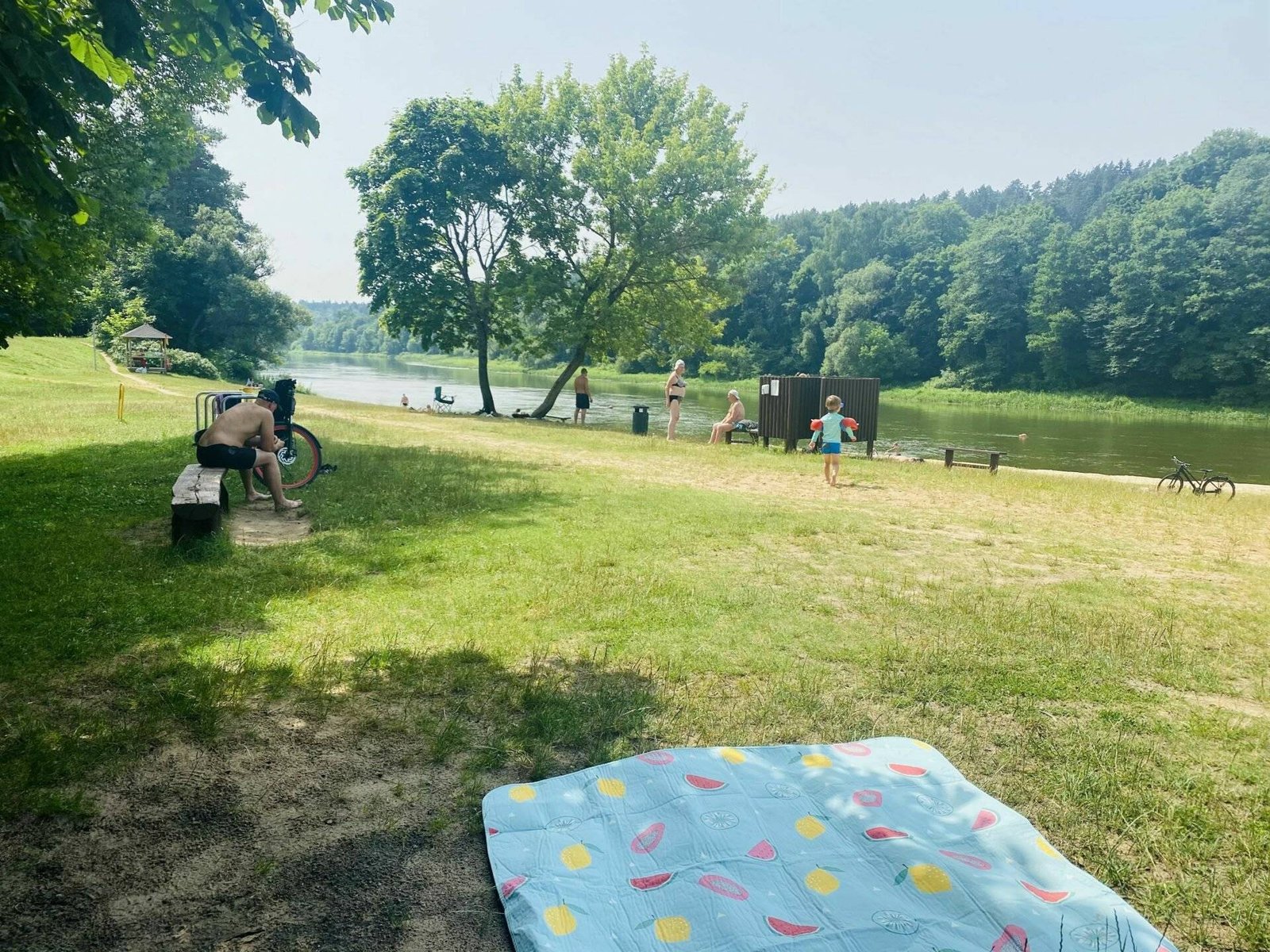
Vingis Park beach
Until the mid-20th century, the current park area was called Zakret (Polish: zakręt – “bend”).
Exact location of Vingis Park beach
↩︎ Back to listŽirmūnai beach
The name Žirmūnai comes from a small street that existed in the area during the Polish–Lithuanian Commonwealth. In fact, that street name was likely related to the village of Žirmūnai. Moreover, Žirmūnai (Belarusian: Жырмуны, Russian: Жирмуны) is an agrotown in Belarus near the Lyda–Varanavas road. Interestingly, it is considered a Lithuanian language island.
Exact location of Žirmūnai beach
↩︎ Back to list